In an emergency, follow your local emergency services. This guide covers smoke at home when there’s no immediate fire threat. If a fire is threatening your area, follow official warnings: in Australia, your state fire service and ABC Emergency; in the US, local emergency management and AirNow. If you have health concerns, contact your doctor or a health service. In an emergency, call 000 (Australia) or 911 (US).
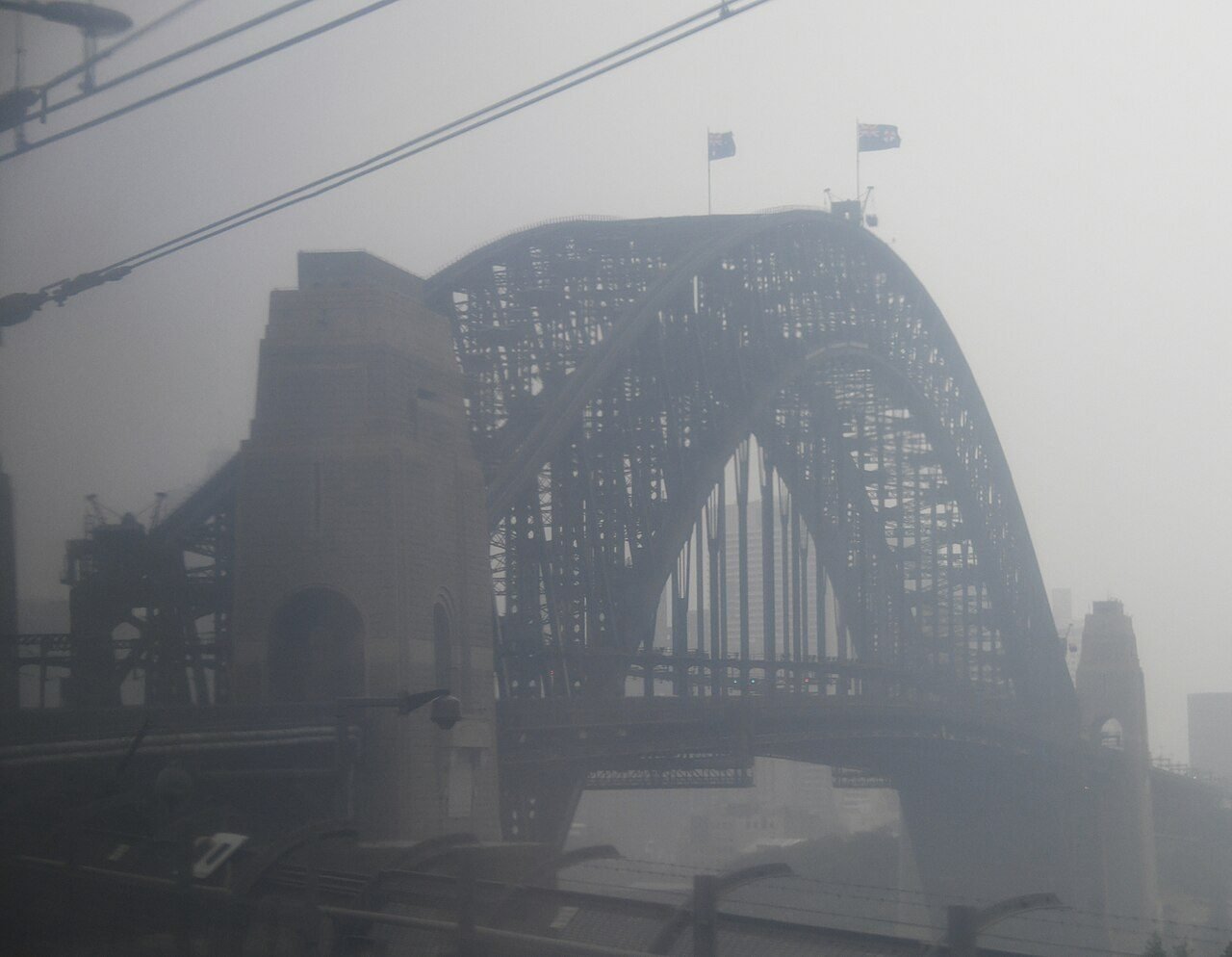
Bushfire smoke can drift hundreds of kilometres and hang around for days. Most of what you can do at home comes down to three things: keep smoky air out, filter the air that’s inside, and know when it’s safe to air out again.
This guide summarises what Australian and US health agencies advise, with links so you can read the original guidance.
1. Check the air where you are
Before you change anything, check current air quality:
- Australia: your state’s air quality site. NSW: airquality.nsw.gov.au. Victoria: EPA Victoria smoke advice and AirWatch. Queensland: Live air data. Western Australia: Check air quality in Western Australia. South Australia: EPA South Australia. Other states and territories publish their own.
- United States: AirNow.gov and its fire and smoke map.
Air quality can change hour to hour, so check again before you open up.
2. Keep smoke out
Stay inside with doors and windows shut. NSW Health says this is the best way to reduce exposure to smoke. (NSW Health)
Set your air conditioner to recirculate. If your system has a recirculate setting, NSW Health advises using it. (NSW Health)
Don’t use evaporative coolers or air conditioners that draw air in from outside. WA Health advises against both while it’s smoky, and recommends reverse-cycle units that circulate indoor air. (HealthyWA)
Close off outdoor air. If your heating and cooling system has a fresh-air intake, the US EPA says to set it to recirculate mode or close the outdoor intake damper. (US EPA, Wildfires and indoor air quality)
Don’t add indoor smoke. The EPA’s clean-room guidance lists things to avoid while it’s smoky, including smoking or vaping indoors, gas or wood stoves, aerosol sprays, frying or broiling food, burning candles or incense, and vacuuming unless the vacuum has a HEPA filter. (US EPA, Create a clean room)
If your home is leaky and smoke gets in easily, WA Health suggests spending time in a public building with better indoor air, such as a library or shopping center. (HealthyWA)
3. Filter the air inside
A portable HEPA air purifier
NSW guidance supports HEPA air purifiers sized for small, well-sealed rooms. (NSW Air Quality) The US EPA gives a sizing rule: choose a purifier whose smoke CADR is at least two-thirds of the room’s floor area in square feet (for an 8-foot ceiling). (US EPA)
Metric version of the same rule: one square meter is about 10.8 sq ft. A 15 m² bedroom (about 160 sq ft) needs a smoke CADR of at least about 108 cfm. A 25 m² living area (about 270 sq ft) needs about 180 cfm. Some brands publish CADR in m³/h instead; 1 cfm ≈ 1.7 m³/h.
The EPA also advises: – Run the purifier continuously on its highest setting while it’s smoky, in the room where people spend the most time. – Choose a model that produces little or no ozone. – Keep spare filters, and expect to change them more often during heavy smoke.
(US EPA, Indoor Air Filtration)
What doesn’t help: NSW advises that humidifiers, negative ion generators and odor absorbers don’t remove the fine particles in bushfire smoke. (NSW Air Quality)
For help choosing a purifier, see Best air purifiers for small apartments, and how CADR works.
Browse HEPA air purifiers on Amazon (US)
Ducted systems (US homes with central HVAC)
The EPA notes that a higher-efficiency filter in a central heating and cooling system can help, if the system can take it. It suggests a MERV 13 filter, or as high a rating as your system can accommodate, and says you may need an HVAC technician to tell you what your system can handle. It also suggests setting the fan to “On” instead of “Auto” to remove particles while the air quality is poor. (US EPA, Wildfires and indoor air quality)
Browse MERV 13 HVAC filters on Amazon (US)
A DIY box-fan filter, as a fallback
The US EPA has researched do-it-yourself air cleaners made from a box fan and one or more furnace filters, which can reduce smoke particles indoors. EPA says commercial portable air cleaners with a known CADR are generally preferred, and the DIY option is a fallback if those aren’t available or affordable. (US EPA, DIY air cleaner research)
If you build one, follow EPA’s safety notes. EPA recommends using only a newer box fan (made in 2012 or later) with a UL or ETL safety mark, because those have fused plugs and thermal cutoffs, and says older fans may pose fire risks. If you must use a fan built before 2012, EPA says not to leave it unattended and not to use it while sleeping. (US EPA, DIY air cleaners)
4. Set up a “clean room”
If you can’t filter the whole home, the EPA suggests making one room the cleanest: usually a bedroom with as few windows and doors as possible. Close it up, run a properly sized portable air cleaner in it, and avoid activities that add particles. (US EPA, Create a clean room)
Keep the room comfortable. Bushfire smoke often comes with heat, and a sealed room can get hot. The US EPA says scientific evidence suggests that exposure to smoke and heat at the same time may be much worse for your health than exposure to either of them alone, and suggests running fans or setting your air conditioner to recirculate. (US EPA, Protect yourself from heat and smoke)
5. Air out when it clears
When the smoke clears, open up and let fresh air through. Queensland Health advises airing out your home when there’s a break in smoky conditions. (Queensland Health) Check the air quality reading first. Then check your purifier and HVAC filters, which may need replacing after a heavy smoke event.
6. Masks
NSW Health advises considering a “P2/N95 mask to protect you from bushfire smoke if you are unable to avoid exposure”, and says the masks must fit properly “with an air-tight seal to work well. Surgical and cloth masks do not protect you from smoke.” (NSW Health) If you have a heart or lung condition, or you’re thinking about a mask for a child, follow the official advice at NSW Health, P2/N95 masks. Read your state health department’s current guidance before relying on a mask.
People who may be more affected
NSW Health lists groups at higher risk from bushfire smoke, including people with heart or lung conditions (such as asthma, angina or emphysema), pregnant people, infants and children, and people over 65. (NSW Health, Know if you are at higher risk) If that’s you or someone you care for, follow any action plan from your doctor and the advice of your local health department.
A smoke-season checklist
- [ ] Bookmark your local air quality site (or AirNow in the US).
- [ ] Learn your air conditioner’s recirculate setting.
- [ ] Choose a room to be your clean room.
- [ ] If you have a purifier, check its smoke CADR suits that room, and buy a spare filter.
- [ ] Find a public building nearby with good indoor air, in case your home gets smoky.
- [ ] Save your state’s fire and emergency warnings app or website.
How we wrote this
Everything in this guide comes from government health and environment agencies. We have linked each source next to the advice it supports. We don’t give medical advice, and we haven’t added any health claims of our own. Where we couldn’t confirm a point against a current agency page, we left it out.
Sources
- NSW Health, Protect yourself from bushfire smoke: health.nsw.gov.au
- NSW Government, Bushfire health advice (Air Quality NSW): airquality.nsw.gov.au
- HealthyWA, Smoke hazards from bushfires: healthywa.wa.gov.au
- Queensland Health, Bushfire conditions (PDF): health.qld.gov.au
- Australian Government Department of Health, Bushfire smoke: general information fact sheet (Dec 2020, still the current version on the department’s publications page as of 31 Oct 2026): health.gov.au
- US EPA, Indoor Air Filtration: epa.gov
- US EPA, Create a Clean Room to Protect Indoor Air Quality During a Wildfire: epa.gov
- US EPA, Wildfires and Indoor Air Quality: epa.gov
- US EPA, DIY Air Cleaners: epa.gov
- US EPA, Protect Yourself from Heat and Smoke: epa.gov
- NSW Health, P2/N95 masks: health.nsw.gov.au
- NSW Health, Know if you are at higher risk from bushfire smoke: health.nsw.gov.au
- US EPA, Research on DIY Air Cleaners to Reduce Wildfire Smoke Indoors: epa.gov
- AirNow: airnow.gov