Category: Label literacy

  • True HEPA vs “HEPA-type”: what the labels mean, and why CADR matters more

    True HEPA vs “HEPA-type”: what the labels mean, and why CADR matters more

    Air purifier boxes are crowded with filter words: “HEPA”, “True HEPA”, “HEPA-type”, “HEPA-like”, “99% HEPA”. Some of these mean something specific. Others are there to borrow a respected name.

    Here’s the short version: “HEPA” has a definition; “HEPA-type” doesn’t. But even a true HEPA filter tells you about the filter, not the machine. To know how well a purifier cleans a room, the number to check is the CADR.

    What HEPA actually means

    HEPA stands for high-efficiency particulate air. The US EPA describes it as a type of pleated mechanical air filter, as officially defined by the US Department of Energy, that can theoretically remove at least 99.97% of dust, pollen, mold, bacteria and other airborne particles with a size of 0.3 microns. (US EPA, What is a HEPA filter?)

    Why 0.3 microns? The EPA explains that it’s the worst case, the most penetrating particle size. Particles larger or smaller than that are trapped with even higher efficiency. So the 0.3-micron figure is a floor, not a ceiling.

    Two things that definition doesn’t tell you:

    • How much air the machine moves through the filter. A perfect filter in a weak, slow machine cleans a room slowly.
    • Whether air leaks around the filter. Air that bypasses the filter through gaps in the housing isn’t filtered at all. That’s a property of the whole machine, not the filter media.

    What “HEPA-type” and “HEPA-like” mean

    Nothing formal. Neither is part of the HEPA definition above, so they don’t promise HEPA-level efficiency.

    HEPA claims have been challenged before. The FTC has taken action over them: in one case, a proposed agreement would prohibit a filter maker from misrepresenting that any air filter is a HEPA filter. (FTC)

    Our rule of thumb: if the box says “HEPA-type”, “HEPA-like”, “HEPA-style” or “99% HEPA”, assume it isn’t HEPA. If the brand says it is, look for the filter’s stated efficiency at 0.3 microns and who tested it.

    What about “True HEPA” and filter grades?

    “True HEPA” is how brands signal that they mean the real thing rather than “HEPA-type”. Treat it like any other HEPA claim and look for the efficiency statement. The same goes for letter-and-number filter grades: look for the standard named alongside the grade and the lab that tested it. A grade with no test behind it is just a label.

    Why CADR matters more than the filter label

    A filter label describes the filter. CADR (clean air delivery rate) describes what the whole machine delivers to the room.

    AHAM, the US appliance manufacturers’ association, explains that CADR indicates the volume of filtered air an air cleaner delivers, with separate scores for tobacco smoke, pollen and dust. The higher the number for each, the faster the unit filters the air. (AHAM Verifide)

    CADR captures what a HEPA label leaves out: fan power, airflow, filter efficiency and leaks around the filter, all in one tested number. The EPA puts it this way: portable air cleaners often achieve a high CADR by using a HEPA filter. (US EPA, Guide to Air Cleaners in the Home) HEPA is one route to a good CADR; the CADR is the result.

    Which CADR to read

    The EPA explains that the three CADR scores use tobacco smoke, dust and pollen as stand-ins for small, medium and large particles. To remove small particles, choose a purifier with a high smoke CADR. (US EPA) Smoke CADR is the number to use for fine particles such as PM2.5 and wildfire or bushfire smoke.

    Sizing: the two-thirds rule

    AHAM’s rule of thumb is that the CADR should be at least two-thirds of the room’s area in square feet. Its example: a 10 × 12 ft room (120 sq ft) needs a smoke CADR of at least 80. For wildfire smoke, AHAM recommends a smoke CADR equal to the room’s area in square feet. If your ceilings are higher than 8 feet, size up. (AHAM Verifide)

    Room area Minimum CADR (EPA chart, 8 ft ceilings)
    100 sq ft (about 9 m²) 65 cfm
    200 sq ft (about 19 m²) 130 cfm
    300 sq ft (about 28 m²) 195 cfm
    400 sq ft (about 37 m²) 260 cfm

    Source: US EPA, Guide to Air Cleaners in the Home. The EPA says the chart is for estimation only.

    For more on sizing and a shortlist of models, see Best air purifiers for small apartments (and how CADR works).

    Where to find a verified CADR

    AHAM runs the AHAM Verifide program, and says to look for its mark, usually on the side or back of the packaging. (AHAM Verifide) A CADR claimed without that mark may be accurate, but you’re taking the brand’s word for it.

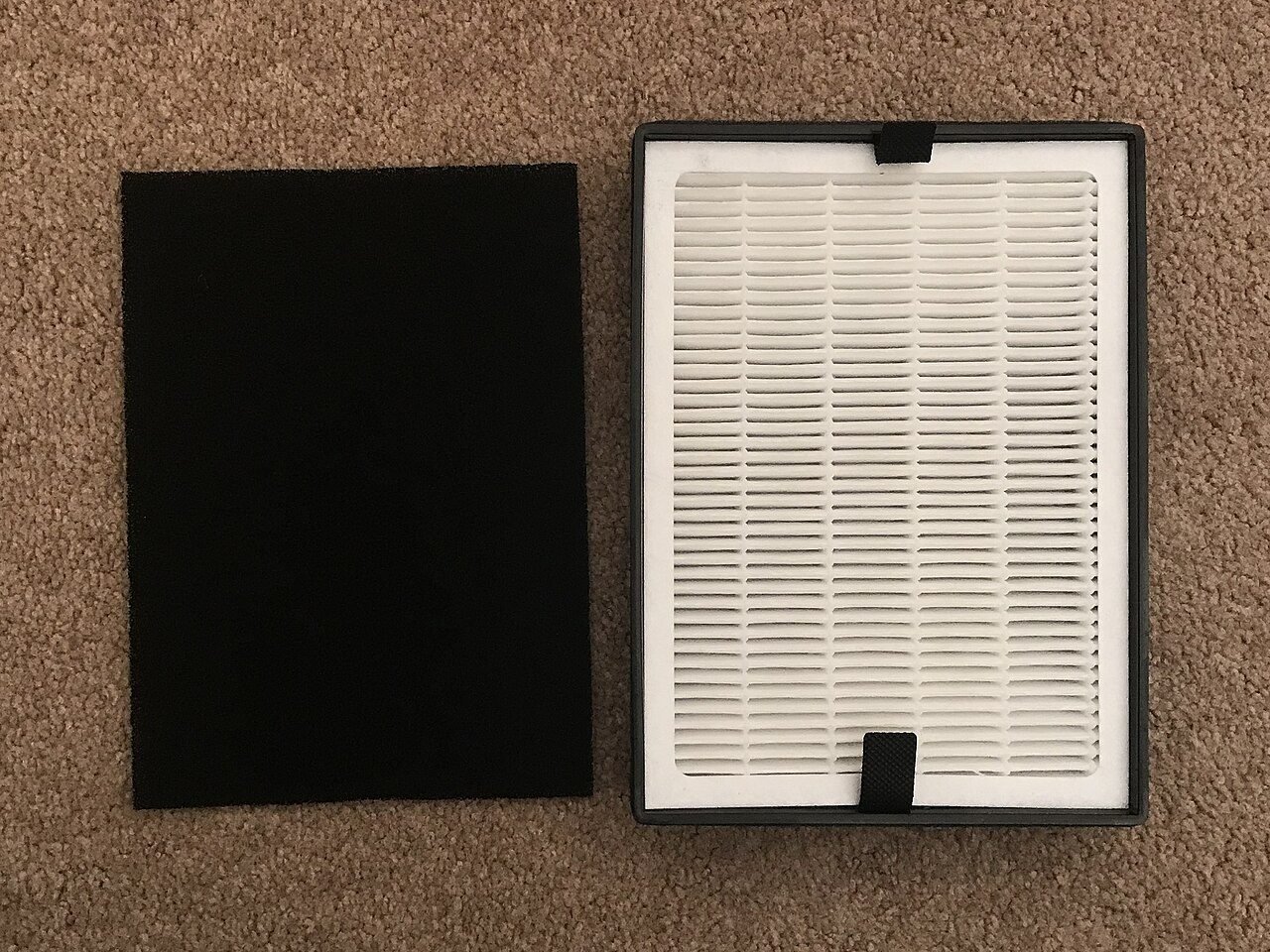
    Note that CADR covers particles only. The EPA says the CADR rating system is for particles, and that there are no widely used performance ratings for filters designed to remove gases. (US EPA) For odors and VOCs, the EPA suggests an activated carbon or other filter designed for gases, and notes these work best with a large amount of material.

    Other labels on the box

    • ENERGY STAR: this is about energy use only. The EPA says the label does not refer to air-cleaning effectiveness in any way. (US EPA) It’s still worth having, because purifiers often run for long hours.
    • Ionizers, “plasma”, UV: the EPA says air cleaners using electrostatic precipitators, ionizers, UV lights without adequate lamp coatings and plasma may have the potential to emit ozone, and advises avoiding air cleaners that intentionally produce ozone. Both the California Air Resources Board and AHAM keep lists of air cleaners tested to emit little or no ozone. (US EPA)
    • “Ozone generator” sold as an air purifier: the EPA says no federal government agency has approved these devices for use in occupied spaces.
    • MERV: a rating for furnace and HVAC filters, not portable purifiers. The EPA says MERV reports a filter’s ability to capture particles between 0.3 and 10 microns, and the higher the rating, the better it traps particles. (US EPA)

    Replacement filters: the label matters here too

    Replacement filters sold online vary a lot. AHAM warns that off-brand or unverified filters may look similar, but some may fail to meet the performance standards of the original, and it now runs a verification program for replacement filters. (AHAM Verifide) When you price a purifier, price its filters too, and check whether the replacements you plan to buy are the maker’s own or independently verified.

    The EPA’s advice applies whichever filter you use: all filters need regular replacement, and a dirty, overloaded filter won’t work well. (US EPA)

    A two-minute label check

    1. Find the smoke CADR. No CADR? Move on, unless the brand publishes test data you can check.
    2. Look for the AHAM Verifide mark.
    3. Check the room size. Smoke CADR at least two-thirds of your floor area in square feet (or equal to it for wildfire smoke, per AHAM).
    4. Read the filter wording. “HEPA” with an efficiency at 0.3 microns is meaningful. “HEPA-type” isn’t.
    5. Skip intentional ozone. No ozone generators, and check any ionizer or plasma feature against the CARB list.
    6. Price the replacement filters before you buy.

    Browse HEPA air purifiers on Amazon (US). Check each listing for a smoke CADR and the AHAM Verifide mark.

    How we wrote this

    • Definitions and sizing come from the US EPA and AHAM, linked where they’re used. The example of a challenged HEPA claim comes from the FTC.
    • We don’t name or rank products in this article; our small-apartment purifier guide does, using published smoke CADR.
    • We make no health claims about air purifiers. They filter particles from the air; they don’t treat anything.
    • We haven’t lab-tested any filters.

    Want a way to check what a purifier is actually doing in your room? See our guide to indoor air quality monitors. And for how we treat brand claims generally: How we judge green claims.

    Sources

    • US EPA, What is a HEPA filter?: epa.gov
    • US EPA, Guide to Air Cleaners in the Home: epa.gov
    • AHAM Verifide, Air Filtration Standards: ahamverifide.org
    • Federal Trade Commission, HEPA filter claims case: ftc.gov
  • Composting in an apartment: bokashi, worm bins, countertop units and drop-off

    Composting in an apartment: bokashi, worm bins, countertop units and drop-off

    You don’t need a backyard to keep food scraps out of the trash. You do need to pick the right method for your space, your building and what you actually throw away. A worm bin that’s perfect for vegetable peelings will struggle with leftover chicken. A countertop gadget that shrinks your scraps doesn’t, by itself, make compost.

    This guide compares four apartment-friendly options: worm bins, bokashi, countertop units and drop-off or collection programs. For each, we cover what it can and can’t take. Then we look at the “compostable” label, which often means something narrower than it sounds.

    First, what counts as composting

    The US EPA defines composting as the managed, aerobic (oxygen-required) biological decomposition of organic materials by microorganisms. The result is compost, a stable soil amendment. (US EPA, Composting at Home)

    For people without a yard, the EPA lists vermicomposting (worm composting) as a home option, and suggests that if you don’t have space, you join a local municipal or community composting program, which may collect your food scraps or offer a place to drop them off. (US EPA)

    Option 1: a worm bin (vermicomposting)

    Best for: fruit and vegetable scraps, coffee grounds, small households with a closet, balcony or under-sink space.

    The EPA says worm composting takes up little space, the materials are simple and inexpensive, and it can be done indoors or outdoors. A properly maintained bin should not emit odors or attract pests. (US EPA)

    What you need, per the EPA:

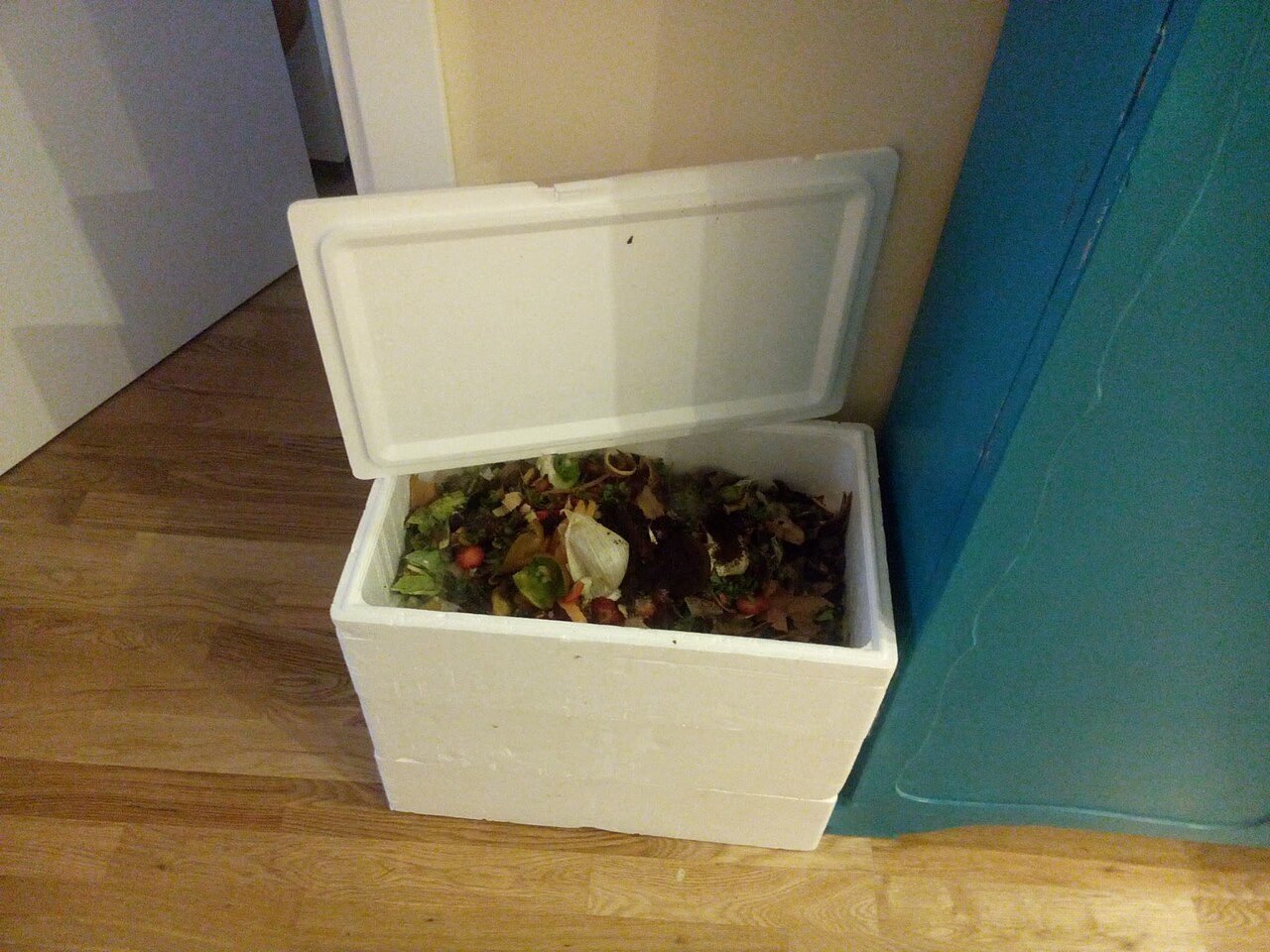
    • A bin with a tight-fitting lid, in a dark color to keep light out. You can make one from two plastic storage bins, one with air and drainage holes nested inside the other to catch liquid.
    • The right worms. The EPA says only a handful of earthworm species suit vermicomposting; one of the most used is the red wriggler (Eisenia fetida). Don’t use worms from the garden or a bait shop. It suggests starting with about one pound of worms, roughly 1,000.
    • Bedding: shredded non-glossy newspaper, office paper, cardboard or dry leaves, soaked and wrung out like a moist sponge, plus a handful of soil.
    • A comfortable spot. The EPA suggests keeping the bin at 59° to 77°F (about 15° to 25°C). On a balcony, insulate it in cold months.

    What worms can take: most fruit and vegetable scraps, coffee grounds and paper filters, paper tea bags without staples, and crushed eggshells.

    What to keep out: the EPA says to avoid citrus, onions and garlic, meat, dairy, greasy foods, bones and pet waste. Chop scraps small, bury each feeding under about two inches of bedding, and make sure the last batch is eaten before adding more. (US EPA)

    What you get: the EPA says you can harvest vermicompost (worm castings) after three to six months, and it doesn’t need to cure. Use it on houseplants, window boxes or balcony pots, or give it to a friend with a garden.

    Option 2: bokashi (fermentation)

    Best for: households that throw away cooked food, meat or dairy, and have somewhere to finish the result.

    A bokashi kit is usually an airtight bucket plus a bran that carries the fermenting microbes. You layer scraps and bran and keep the lid shut. Washington State University Extension says bokashi lets you compost almost all types of food waste, including fruit and vegetable scraps, cooked food, dairy, meat, and even small bones. (WSU Extension)

    Two things to know before you buy a bucket:

    • It’s fermentation, not finished compost. WSU Extension says the microbes ferment the food waste rather than allowing it to rot, and that bokashi is an anaerobic process. The result is not finished compost. (WSU Extension) Compare that with the EPA’s definition above, which requires oxygen.
    • You need a second step. Fermented scraps still have to break down somewhere. WSU says that after fermentation you bury the material in a garden bed or mix it into a traditional compost pile. (WSU Extension) In an apartment, that usually means a large planter, a community garden plot, a friend’s garden, or a drop-off program that accepts it. Check that last one first.

    A bokashi system is two buckets and a bag of bran. The finished ferment still needs soil or a compost program to finish breaking down.

    Option 3: countertop “composters”

    Best for: cutting the smell and volume of scraps before they go somewhere else.

    These are electric appliances that grind and dry food scraps. The EPA is direct about what they do: residential pre-processing appliances reduce the volume and weight of food scraps by grinding and dehydrating them, but they do not produce compost. What comes out is a dried food-scrap mixture that can be added to a composting system, at home or through a collection program. (US EPA)

    So if a countertop unit is marketed as turning scraps into “compost” or “fertilizer” overnight, read that as the brand’s claim. The output can be useful; it’s just not finished compost by the EPA’s definition. Before you buy one, ask:

    • Where will the output go? Your planters, a worm bin, or a collection program? Does your local program accept it?
    • How much power does it use per cycle, and how often will you run it? The brand should publish this.
    • What does it take? Check the manual’s list of items to keep out.
    • What filters or parts need replacing, and what do they cost?

    Option 4: drop-off and curbside collection

    Best for: almost everything a home system can’t take, if your local program accepts it.

    Many cities, counties and councils run food-scrap collection or drop-off sites. Chicago, for example, has added drop-off sites at public libraries. (WTTW News) The EPA points people without space toward a local municipal or community composting program. (US EPA)

    Programs that send scraps to a larger composting operation may accept more than a home bin can handle. The EPA notes that meat, fish, bones, dairy, fats and oils, and compostable food-service ware and bags can be composted at commercial composting facilities, but says to check first that your specific facility accepts them. (US EPA)

    To find a program, search your city, county or council website for “food scraps” or “organics”, and read its accepted-items list. Rules differ a lot from place to place.

    What each method can take, at a glance

    Worm bin Bokashi Countertop unit Drop-off / collection
    Fruit and veg scraps Yes Yes Check manual Check local list
    Citrus, onion, garlic Avoid (EPA) Check your kit’s guide Check manual Check local list
    Meat, fish, dairy No (EPA) Yes (WSU) Check manual Check local list
    Small bones No (EPA) Small ones (WSU) Check manual Check local list
    “Compostable” bags and cups No No No Only if the program says so
    Makes finished compost? Yes No, needs a second step No (EPA) Yes, off-site

    The “compostable” label: read the conditions

    This is where good intentions go wrong. Many products labeled “compostable” are designed to break down in commercial (industrial) composting facilities, which run hotter and are more tightly managed than a home bin.

    • Home piles don’t get hot enough for many of them. The EPA lists compostable food-service ware and compostable bags among the things to keep out of a backyard pile, because backyard piles generally do not reach high enough temperatures to fully decompose these materials. (US EPA) A worm bin or bokashi bucket is not a better bet.
    • The FTC expects sellers to say so. The FTC Green Guides say it’s deceptive to misrepresent that a product is compostable, and that a marketer should clearly and prominently qualify compostable claims if composting facilities aren’t available to a substantial majority of consumers where the item is sold. (16 CFR 260.7)
    • Certification labels tell you which kind. In the US, the Biodegradable Products Institute (BPI) certifies compostable products and distinguishes items certified for commercial compost facilities only from those certified for home composting too. (BPI) Read the label for which one applies.
    • Even certified items aren’t accepted everywhere. Check your local program’s list before you buy compostable bags or tableware for it.

    For more on what “compostable” and “biodegradable” mean on a label, including the Australian standards, see what “biodegradable” and “carbon neutral” really mean.

    Choosing your setup

    • Mostly produce scraps, a little space, happy to keep a pet bin: a worm bin.
    • Lots of cooked food or meat, and somewhere to bury or drop off the result: bokashi.
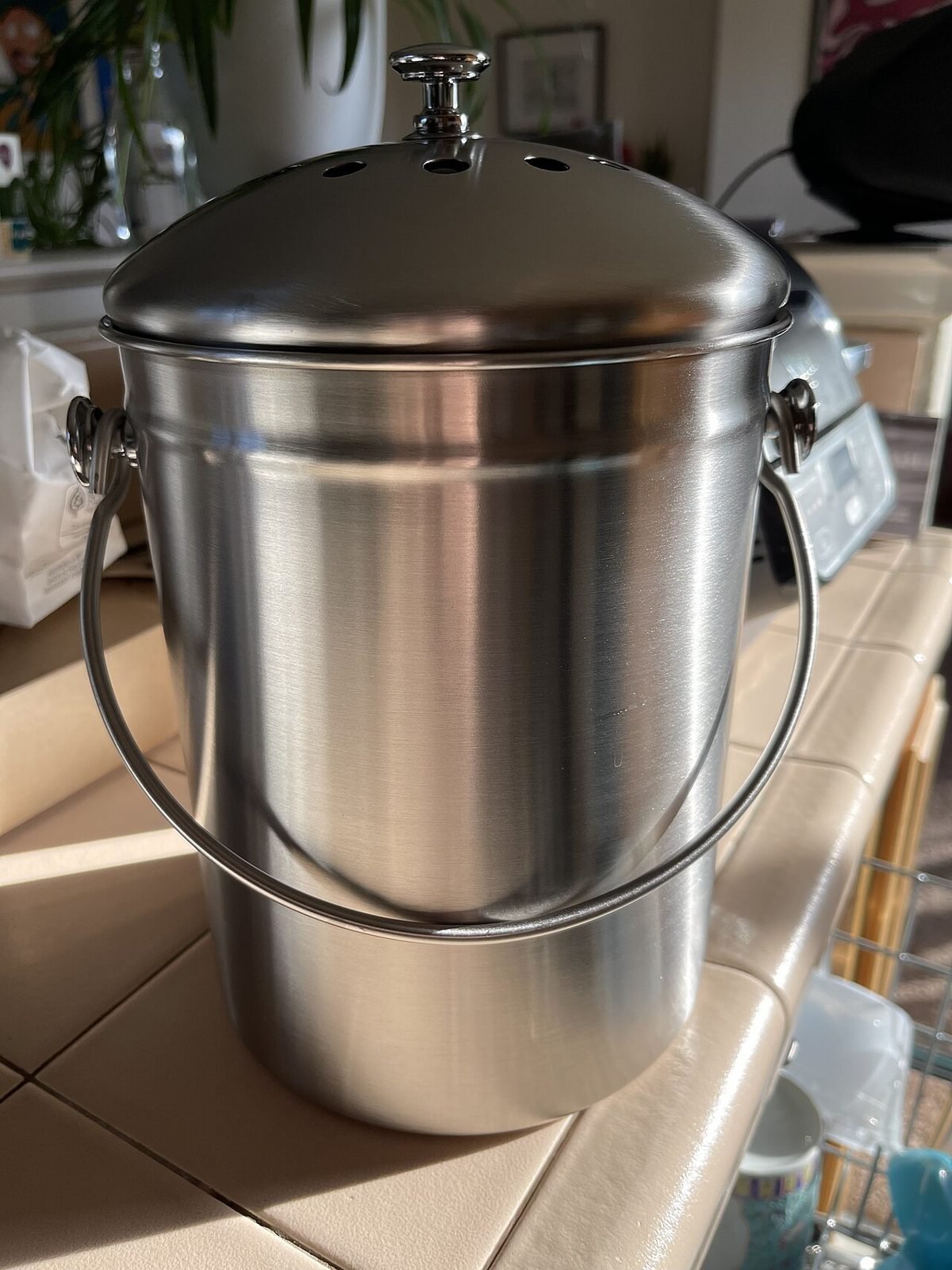
    • A good local collection program: a lidded caddy and the program may be all you need. A countertop unit can cut smell and volume between pickups, if the program accepts its output.
    • No program and no space: start with a small worm bin for produce scraps, and ask your city or council whether a drop-off site is planned.

    Browse worm composting bins on Amazon (US)

    Browse bokashi bucket kits on Amazon (US)

    For the worms themselves, the EPA suggests buying from a worm grower or asking a neighbor who already has a bin.

    How we picked

    • We compared methods using the US EPA’s home composting guidance, plus university extension guidance on bokashi, linked where used.
    • We link searches rather than single products because we haven’t verified specific bins or kits. Look for a tight-fitting lid and clear instructions.
    • We haven’t tested any composting products.
    • We quote brands’ “compost” and “compostable” claims as theirs, and say what conditions apply. See how we judge green claims.

    Sources

    • US EPA, Composting At Home: epa.gov
    • Washington State University Extension (Kitsap County), Bokashi Composting: extension.wsu.edu
    • FTC Green Guides, 16 CFR 260.7 (compostable claims): law.cornell.edu
    • Biodegradable Products Institute, Certification: bpiworld.org
  • What “biodegradable” and “carbon neutral” really mean

    What “biodegradable” and “carbon neutral” really mean

    “Biodegradable” and “carbon neutral” sound clear. In practice, both depend on conditions that labels often leave out. Here’s what regulators in the US and Australia expect these claims to mean, and the short list of questions that will tell you whether a claim holds up.

    Biodegradable

    What it should mean

    Something is biodegradable if microorganisms (bacteria and fungi) can break it down into natural substances such as water, carbon dioxide and biomass. In theory almost everything breaks down eventually. What matters is how long it takes and under what conditions.

    What US guidance says

    The FTC’s Green Guides (16 CFR 260.8) say an unqualified “biodegradable” or “degradable” claim implies that the entire item will completely break down and return to nature within a reasonably short time after customary disposal. The Guides treat “reasonably short” as no more than one year.

    That’s a problem for most products, because the customary way to dispose of them is the trash. The Guides say unqualified degradable claims for items customarily disposed of in landfills, incinerators and recycling facilities are deceptive, because those places don’t provide conditions in which complete decomposition will happen within one year. (16 CFR 260.8, eCFR)

    What Australian guidance says

    The ACCC’s guide for business says environmental claims must be accurate, backed by evidence, and must explain any conditions on them. Its examples are specific. A business selling kitchen items certified as industrially compostable, which “will not break down in home composting conditions”, is likely to mislead if it advertises them simply as “certified compostable”; “certified industrially compostable” is the clearer claim. For biodegradable claims, the guide says a business that has tested its product under certain conditions could advertise that it biodegrades and “specify the circumstances where this will happen”. (ACCC guide, PDF)

    Biodegradable isn’t the same as compostable

    Label What it should mean Where it actually breaks down
    Biodegradable Microbes can break it down, eventually Depends entirely on conditions; often not stated
    Compostable (industrial or commercial) Breaks down in a commercial composting facility, which runs hotter and is more controlled than a home bin Only if your area has a facility that accepts it
    Home compostable Breaks down in a well-managed backyard compost Your own compost, given time

    Australian standards: AS 4736 covers plastics that are compostable in industrial facilities, and AS 5810 covers home compostable plastics. The Australasian Bioplastics Association (ABA) runs certification to both, and only products verified through its program can carry its logos. A certified product should show which standard it meets. (Australasian Bioplastics Association)

    US: the FTC Green Guides say that if composting facilities aren’t available to a substantial majority of consumers where a product is sold, a compostable claim should say so. Third-party certification exists too, for example from the Biodegradable Products Institute (BPI), which certifies compostable products and packaging against ASTM standards in North America.

    Watch for “oxo-degradable” plastics

    Some plastics are sold as “degradable” because an additive makes them fall apart into smaller pieces. Falling into fragments isn’t the same as biodegrading, and it can leave microplastics behind. Some governments have banned these plastics. South Australia, for example, has made it an offence to sell, supply, distribute or manufacture oxo-degradable plastic products since 1 March 2022. (Replace the Waste, SA Government)

    Questions to ask about a biodegradable claim

    1. Biodegradable where? Landfill, soil, water, industrial compost, home compost?
    2. How fast? Is there a timeframe, and a test standard that supports it?
    3. The whole product, or part? A “biodegradable” coffee pod with a plastic lid isn’t biodegradable as a whole.
    4. Is there certification to a named standard, from a body you can look up?
    5. What will you actually do with it? If it’ll go in the general waste bin, the claim may not help much.

    Carbon neutral

    What it should mean

    “Carbon neutral” (or “net zero” for a product) means that the greenhouse gas emissions linked to a product, service or company have been measured and balanced out. That can happen through reductions, by buying carbon offsets, or both. The claim is only as good as the three parts behind it:

    1. The boundary. Which emissions are counted? Just the factory, or the materials, shipping and disposal too?
    2. The reductions. What has the company actually cut?
    3. The offsets. For what’s left, what kind of offsets were bought, and are they credible?

    What US guidance says

    The FTC Green Guides (16 CFR 260.5) say sellers of carbon offsets should use competent and reliable scientific and accounting methods to quantify emission reductions properly, and make sure the same reduction isn’t sold more than once. They also say marketers should clearly disclose if the offset’s emission reductions won’t occur for two years or longer. (16 CFR 260.5, eCFR)

    What Australian guidance says

    The ACCC’s guidance says businesses need evidence for their claims and shouldn’t hide important information. For carbon neutral claims, that means being clear about how much depends on offsets rather than actual emission cuts. In late 2026 the ACCC published separate guidance, Making emissions claims to consumers, which says businesses should use credible, science-based accounting standards and be transparent about their use of purchased carbon credits. (ACCC media release)

    Climate Active has been the Australian Government’s carbon neutral certification program. In July 2026 the government announced that it plans to end Climate Active certification, and consulted on how to close it. If you see the Climate Active logo, check the department’s page for the current status and transition timeline. (DCCEEW announcement, DCCEEW, Climate Active)

    Elsewhere: the European Union’s Directive (EU) 2024/825 bans claims, based on offsetting, that a product has a neutral, reduced or positive greenhouse gas impact. EU countries’ rules under it apply from 27 September 2026. That’s a sign of where regulation is heading.

    Questions to ask about a carbon neutral claim

    1. Neutral for what? The product, the shipping, or the company’s offices?
    2. How much is reduction, and how much is offsetting? Is there a published breakdown?
    3. What offsets? Named projects? Verified by a recognized standard? Retired on a public registry?
    4. Is it certified, and can you look up the certification?
    5. Is there a public report you can actually read?

    How we handle these claims on this site

    • We quote these labels as the brand’s claim, and link the brand’s evidence, such as a certification or a report.
    • We don’t call a product “biodegradable”, “compostable” or “carbon neutral” ourselves unless we can point to the certification and say what conditions apply.
    • When a claim leaves out something important (the compost conditions, the offset share), we say so.

    Read the full method: How we judge green claims.

    If you’re shopping for compostable products

    If you have a home compost, look for products certified home compostable (AS 5810 in Australia). If your council or city collects food scraps for commercial composting, check which certified items it accepts before you buy. Many programs don’t take compostable plastics at all. No yard? See composting in an apartment.

    Browse compostable bin liners on Amazon (US). Check each listing for the named certification.

    How we picked

    • We link a search for certified compostable liners, not a single product, because we couldn’t verify which individual listings carry a current certification.
    • What we look for in a listing: a named standard (AS 5810 or AS 4736 in Australia; a named certifier such as BPI in the US), a certificate or license number you can look up, and clear conditions (home or industrial).
    • We haven’t tested any compostable liners, and we don’t rank them.
    • The explanations in this article come from the regulators’ own guidance, linked below. They aren’t legal advice.

    Sources

    • US FTC, Guides for the Use of Environmental Marketing Claims, 16 CFR Part 260 (see 260.5 carbon offsets, 260.7 compostable, 260.8 degradable): ecfr.gov
    • ACCC, Making environmental claims: A guide for business (Dec 2023): accc.gov.au
    • ACCC, media release on the eight principles: accc.gov.au
    • ACCC, Making environmental claims (PDF): accc.gov.au
    • ACCC, media release on emissions claims guidance: accc.gov.au
    • DCCEEW, Evolving climate policy brings Climate Active certifications to a close: dcceew.gov.au
    • DCCEEW, Climate Active: dcceew.gov.au
    • Australasian Bioplastics Association: bioplastics.org.au
    • Biodegradable Products Institute: bpiworld.org
    • South Australian Government, oxo-degradable plastics ban: replacethewaste.sa.gov.au
    • Directive (EU) 2024/825: eur-lex.europa.eu
  • Black Friday green deals: what’s worth it, and what to skip

    Black Friday green deals: what’s worth it, and what to skip

    Black Friday falls on Friday 27 November 2026, with Cyber Monday on 30 November. Sales often start well before that. You’ll see plenty of “eco” deals.

    The lowest-impact purchase is usually the one you don’t make. But if there’s something you were going to buy anyway, a real discount on a better-made version is a good outcome. This guide is a framework, not a deals list. We don’t publish deal prices, because they change by the hour and “was” prices are easy to inflate. Use these checks to decide for yourself.

    Step 1: Is it on your list already?

    Write your list before the sales start. A good test: would you buy this at full price in January? If not, the discount is the reason, not the need.

    Good candidates are things you’d replace or buy anyway: – An appliance that’s failing, where a more efficient model would cut running costs. – A purifier or replacement filters before smoke or allergy season. – Gear that’s worn out: boots, a rain jacket, a pack. – Backup power you’ve been meaning to sort out before storm or fire season.

    Step 2: Is the deal real?

    • Check price history. Third-party price-history trackers (websites and browser extensions) can show what an item has sold for in the past, so you can see whether today’s “deal” is actually low. Use one you trust, and check its privacy terms before installing an extension.
    • Ignore the “was” price unless you’ve seen the item sell at that price. Compare against what it sold for over the past few months.
    • Compare like for like. Some sale items are special “doorbuster” variants with lower specs. Check the full model number.
    • Count the running costs. A cheap purifier with expensive filters, or a printer with costly ink, can cost more over a few years.
    • Australia: the ACCC treats misleading price claims as a consumer-law issue. Its guidance tells businesses not to make false claims about the price of any products or services, so check the official page for how that applies to “was/now” pricing. (ACCC, two-price comparison advertising) If a deal looks fake, you can report it to the ACCC.

    Step 3: Is the green claim real?

    Use the questions from our method page, How we judge green claims:

    1. What exactly is claimed? “Made with 50% recycled polyester” can be checked. “Planet-friendly” can’t.
    2. Who says so? The brand, or an independent certifier whose standard you can look up?
    3. What are the conditions? “Compostable” often means industrial composting only. See what “biodegradable” and “carbon neutral” really mean.
    4. Will it last? Durability, spare parts and repair options usually matter more than a recycled-content badge.

    What’s usually worth it

    These are categories where a genuine discount can line up with lower impact over the product’s life. Always check the specific model.

    Energy-efficient replacements for things that are failing

    Look for ENERGY STAR certification (US) or a high star rating on the Energy Rating Label (Australia) when you replace an appliance. Both programs publish their efficiency criteria and product lists, so you can check a model before you buy. (ENERGY STAR · Energy Rating) Renting and curious about induction? See induction cooking for renters.

    Browse ENERGY STAR products on Amazon (US)

    LED bulbs, if you still have older bulbs

    The US Department of Energy says LEDs use at least 75% less energy than incandescent bulbs and last 25 times longer. (US DOE, Guide to Energy-Efficient Lighting, PDF) Buy for the light you need (lumens) and color temperature, not the pack size.

    Browse ENERGY STAR LED bulbs on Amazon (US)

    An air purifier sized properly, plus spare filters

    If smoke season or a stuffy bedroom is on your mind, a sale is a fair time to buy, as long as the smoke CADR matches your room. Our guide explains how: Best air purifiers for small apartments. Buy a spare filter at the same time if it’s discounted.

    Backup power you’ll actually use

    Portable power stations are often discounted around Black Friday. Work out what you need to run first (watts and watt-hours), so you don’t pay for capacity you won’t use. See EcoFlow vs Jackery: portable power stations compared.

    Durable gear with a strong warranty or repair program

    For clothing and outdoor gear, the brand’s warranty and repair policy are worth more than a discount. Some brands run used-gear and repair programs; Patagonia’s Worn Wear is one example. A secondhand or repaired item can beat a new one on a sale. (Patagonia Worn Wear, plain link)

    Refurbished electronics from the manufacturer

    Manufacturer-refurbished electronics usually come with a warranty and keep a working product in use. Check the warranty length and the return policy.

    What to skip

    • Vague “eco” bundles. Packs of reusable this-and-that you won’t use. A reusable item only pays off if you use it many times.
    • “Biodegradable” plastics with no conditions stated. Most go to landfill, where they don’t break down as the label implies.
    • Duplicates of things you own. A second set of bamboo utensils is still more stuff.
    • Cheap versions of things you’ll replace in a year. Fast-wearing gear has a bigger footprint over time than one well-made item.
    • Gadgets that promise “clean air” without a CADR, or that rely on ozone or ionizers alone. The EPA advises choosing air cleaners that produce little or no ozone. (US EPA)
    • Anything bought for the discount alone. If it fails the January test, let it go.

    How we chose these categories

    • We focused on categories where buying a better version lowers running costs, waste or replacement frequency, and where you can check that with published data (efficiency ratings, CADR, warranty terms).
    • We haven’t listed specific deals or prices. If we add a live deal later, it’ll show the price at time of writing, the date checked and the retailer.
    • We have not tested specific products for this guide.

    A one-minute checklist

    • [ ] It was on my list before the sale.
    • [ ] I’d buy it at full price in January.
    • [ ] The price history shows it’s genuinely lower.
    • [ ] I’ve checked the exact model number and specs.
    • [ ] Any green claim is specific, with evidence I can check.
    • [ ] I know the warranty, repair and parts situation.
    • [ ] I’ve counted running costs (filters, energy, consumables).

    Sources