Category: Clean air

  • Indoor air quality monitors: what PM2.5 and CO2 readings can (and can’t) tell you

    Indoor air quality monitors: what PM2.5 and CO2 readings can (and can’t) tell you

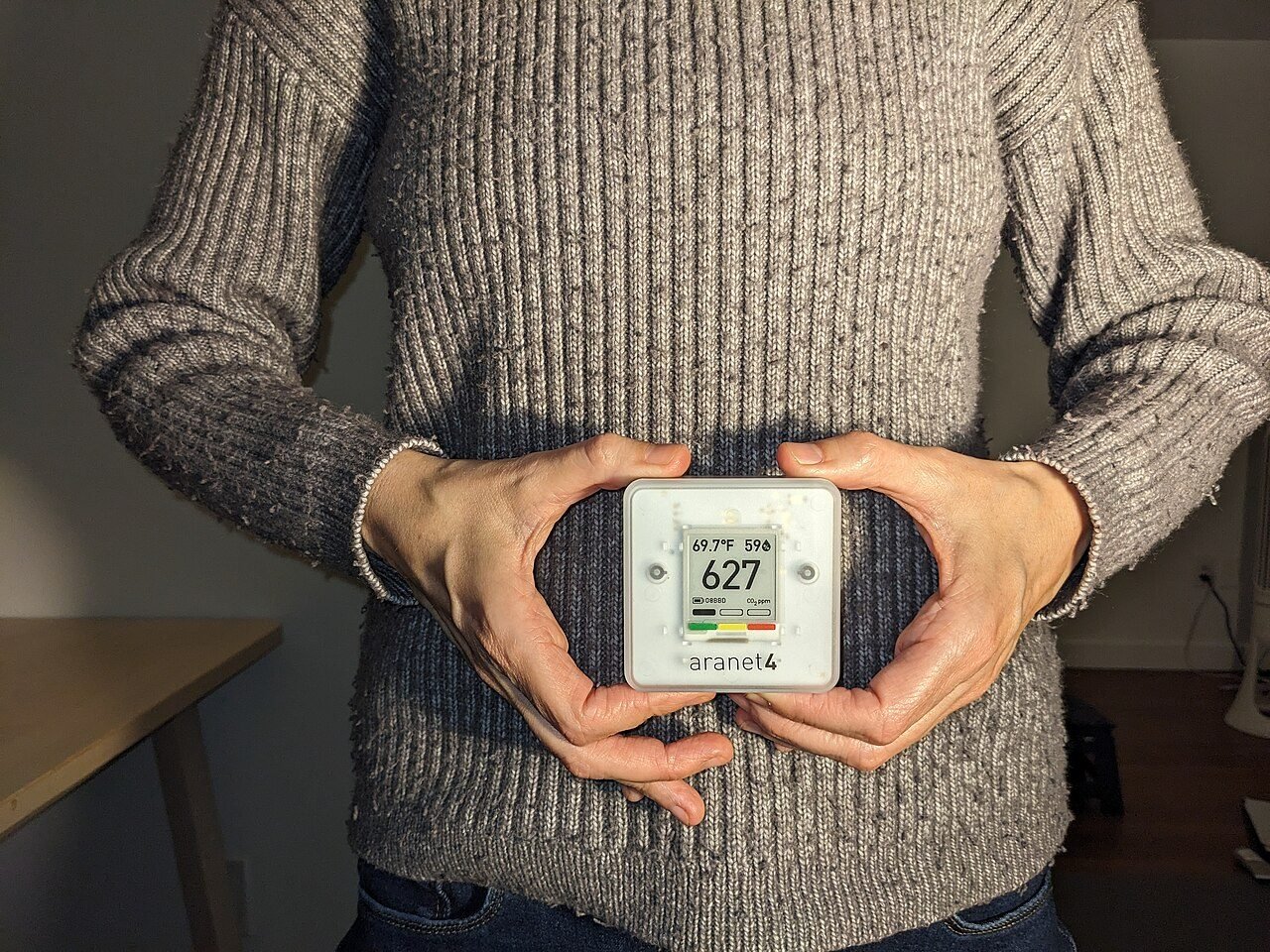
    A home air quality monitor turns something invisible into a number on a screen. That can be useful: you can see what cooking does to the air in a small apartment, whether your purifier is keeping up during a smoky week, or whether a closed bedroom gets stuffy overnight.

    It can also mislead. A green light doesn’t mean the air is “safe”, and a red one doesn’t mean you’re in danger. This guide explains what the two most common readings, PM2.5 and CO2, can and can’t tell you, and how to choose a monitor. We don’t make health claims; where health comes up, we point you to the EPA’s wording and to your doctor.

    What a consumer monitor is (and isn’t)

    The US EPA calls these devices low-cost air pollution monitors: devices that use one or more sensors to detect and report on specific pollutants, such as particulate matter or carbon dioxide, or environmental factors like temperature and humidity. (US EPA)

    Three things the EPA is clear about:

    1. It’s not an alarm. Unlike carbon monoxide alarms or smoke detectors, the EPA says alerts from these monitors are not designed to warn of the potential for immediate danger to your health or life. Keep a certified CO alarm and smoke alarms regardless of what else you buy.
    2. It only sees what it’s built to see. A monitor designed only for particles won’t tell you about other pollutants. The EPA’s example: a PM-only monitor would not alert you to radon or carbon monoxide.
    3. The color bands are the maker’s choice. The EPA says there are no widely accepted air concentration limits for most pollutants indoors, so the levels that trigger an alert are set by each manufacturer. Two monitors can show different colors for the same air.

    The EPA also notes that price doesn’t necessarily indicate performance. Cost tends to reflect the display, the housing, the number of sensors, connectivity and so on. (US EPA)

    PM2.5: what the number means

    PM2.5 is fine particulate matter: particles 2.5 micrometers across or smaller. The EPA describes particulate matter as a complex mixture of solid and/or liquid particles suspended in air that vary in size, shape and composition. (US EPA, Indoor PM) Consumer monitors usually report it in micrograms per cubic meter (µg/m³).

    What a PM2.5 reading can tell you

    • Change over time. This is where cheap sensors earn their keep. You can see the reading jump when you sear a steak or light a candle, and fall when you switch on the range hood or a purifier.
    • Which activities matter in your home. The EPA lists cooking, burning candles, fireplaces, unvented heaters and smoking among indoor sources of PM. (US EPA, Indoor PM)
    • Whether your fixes work. The EPA suggests using a monitor before, during and after an activity like cooking to see how it affects levels. If your PM monitor rises while you cook, the EPA suggests more exhaust ventilation, such as the range hood or an open window or door. (US EPA)

    What it can’t tell you

    • The exact concentration. The EPA says there’s limited information on the accuracy and precision of consumer monitors, and that placement, temperature, humidity and time in use can all affect them. Accuracy can vary between brands and even within one company’s product line. (US EPA)
    • What the particles are. Many consumer PM sensors are optical: they detect light scattered by particles. ASTM’s standard test for indoor PM2.5 sensors notes that a sensor’s response relative to a reference monitor can vary by a factor of two for different particle types. Smoke, cooking particles and dust may all read differently. (ASTM D8405)
    • Very small particles. The same ASTM standard says the lower detection limit for optical sensors is generally 0.3 µm.
    • What it means for your health. The EPA says you can’t fully understand potential health impacts or risks from a monitor’s reading alone. If you have concerns or symptoms, talk to a health care provider. (US EPA)

    CO2: a ventilation signal, not a pollution score

    Carbon dioxide builds up indoors when people breathe in a room that doesn’t get much fresh air. That’s why a CO2 reading is mostly useful as a ventilation signal. For how to read indoor CO2 levels, follow the EPA’s guidance at US EPA.

    What a CO2 reading can tell you

    • When a room gets stuffy. A bedroom with the door and window shut overnight, or a home office in winter, will usually show CO2 rising through the day or night.
    • When to air out. The EPA’s own example: if a CO2 monitor in a classroom shows rising levels, you may want to open a window to increase ventilation. (US EPA) The same logic works at home.
    • Whether a change helped. Crack a window, run a bathroom fan, or leave the door ajar, and watch the trend.

    What it can’t tell you

    • Anything about particles or other gases. CO2 doesn’t measure smoke, cooking particles, carbon monoxide or radon. A low CO2 reading with a smoky room is entirely possible, for example when you’ve opened a window during a bushfire.
    • A universal “safe” line. You’ll see thresholds quoted online. We haven’t used one here, and monitor makers set their own bands.

    Don’t confuse CO2 with CO. Carbon monoxide (CO) is a different gas. The EPA says CO alarms should be certified to the most current UL Standard 2034 or the IAS 6-96 standard. (US EPA) An air quality monitor that shows CO2 isn’t a CO alarm.

    How to choose a monitor

    1. Decide what you want to measure

    • Smoke, cooking, purifier performance: a monitor with a PM2.5 sensor.
    • Stuffiness and ventilation: a monitor with a CO2 sensor. Look for one that measures CO2 directly rather than estimating it from other gases; the product listing should say how.
    • Both: a combined unit. Many also report temperature and humidity.

    Extra sensors (VOCs, formaldehyde) add cost. The EPA notes that these monitors only detect contaminants for which they are designed, so more sensors give more numbers, but not a complete picture. (US EPA)

    2. Look for independent test results

    Independent testing is the closest thing to a quality signal:

    • AQ-SPEC. The South Coast Air Quality Management District runs the Air Quality Sensor Performance Evaluation Center, which tests commercially available sensors in the field and in a lab chamber and publishes the results. It doesn’t endorse products. (South Coast AQMD, AQ-SPEC) The EPA notes that independent evaluations have generally been based on outdoor conditions, which may not reflect indoor use.
    • ASTM D8405. This is a standard test method for PM2.5 sensors used indoors, run in a chamber. (ASTM) South Coast AQMD says the PM2.5 test method was validated using its AQ-SPEC environmental test chamber. (South Coast AQMD) If a brand says its device was tested to ASTM D8405, ask for the report.
    • The EPA doesn’t rate brands. It says it does not make recommendations or endorsements of specific indoor monitors, and generally evaluates sensors outdoors, not indoors. (US EPA) Treat “EPA-approved” marketing with suspicion.

    3. Check the practical details

    • Lifespan and calibration. The EPA says all monitors have a limited lifespan and can become less reliable over time, and suggests checking the maker’s service or replacement estimate before you buy.
    • Indoor labeling. Choose a monitor labeled for indoor use. The EPA says it’s uncertain how outdoor-only monitors perform indoors.
    • Data you can see over time. A trend graph is more useful than a single number.
    • Power and connectivity. Battery, USB or mains; app or no app. If you’d rather not create an account, check whether the display works without one.

    Where to put it

    The EPA suggests placing a monitor in the breathing zone, about 3 to 6 feet off the floor for a typical adult, where air can flow into it freely, not against a wall. Keep it away from stoves, fireplaces, stored cleaning products, heating and cooling vents and open windows, which can skew the reading. (US EPA)

    What to do with the numbers

    The EPA’s three basic strategies for improving indoor air quality are source control, ventilation, and filtration and air cleaning. (US EPA) A monitor helps you see which one to reach for:

    • PM spikes when you cook: range hood on, window open if the outdoor air is clean.
    • PM stays high on smoky days: keep windows shut and filter the air. Our bushfire smoke guide covers what health agencies advise.
    • PM is high in one room most of the time: a purifier sized to that room. See how CADR works and true HEPA vs “HEPA-type”.
    • CO2 climbs overnight: more ventilation, if outdoor air allows.

    Browse PM2.5 and CO2 monitors on Amazon (US). Check each listing for the sensor type and any independent test results.

    How we picked what to cover

    • We built this guide from the EPA’s consumer guidance on low-cost monitors, the ASTM D8405 test method summary, and South Coast AQMD’s AQ-SPEC program, linked where used.
    • We link a search rather than a single product because we haven’t verified independent indoor test results for specific current models.
    • We haven’t tested any monitors, and we don’t rank them.
    • We make no health claims. A monitor reading isn’t medical advice.

    Sources

    • US EPA, Low-Cost Air Pollution Monitors and Indoor Air Quality: epa.gov
    • US EPA, Can I measure carbon dioxide (CO2) indoors to get information on ventilation?: epa.gov
    • US EPA, Indoor Particulate Matter: epa.gov
    • US EPA, Air Sensor Toolbox: epa.gov
    • ASTM D8405-21, Standard Test Method for Evaluating PM2.5 Sensors or Sensor Systems Used in Indoor Air Applications: astm.org
    • South Coast AQMD, AQ-SPEC: aqmd.gov and ASTM test standards: aqmd.gov
  • True HEPA vs “HEPA-type”: what the labels mean, and why CADR matters more

    True HEPA vs “HEPA-type”: what the labels mean, and why CADR matters more

    Air purifier boxes are crowded with filter words: “HEPA”, “True HEPA”, “HEPA-type”, “HEPA-like”, “99% HEPA”. Some of these mean something specific. Others are there to borrow a respected name.

    Here’s the short version: “HEPA” has a definition; “HEPA-type” doesn’t. But even a true HEPA filter tells you about the filter, not the machine. To know how well a purifier cleans a room, the number to check is the CADR.

    What HEPA actually means

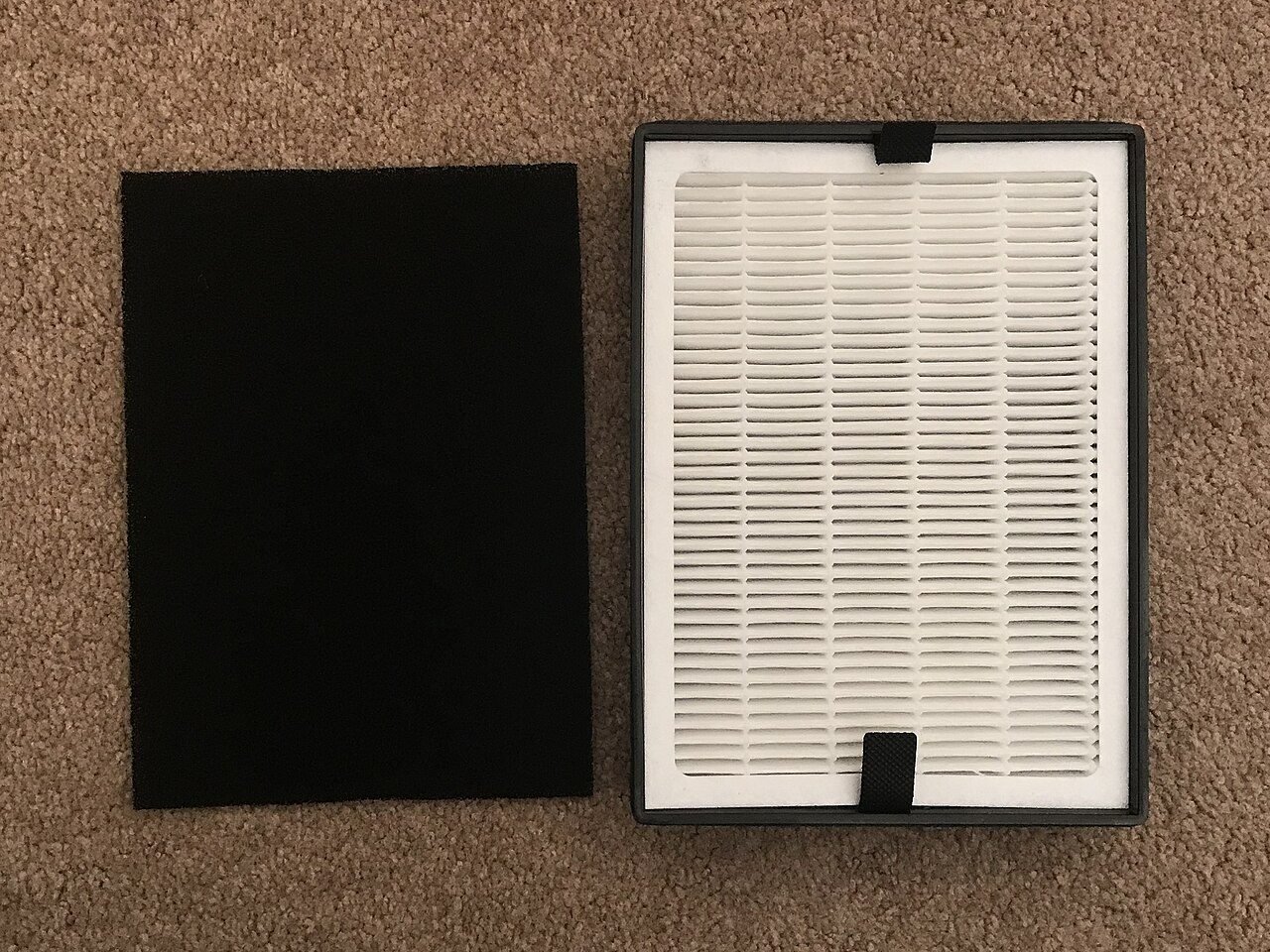
    HEPA stands for high-efficiency particulate air. The US EPA describes it as a type of pleated mechanical air filter, as officially defined by the US Department of Energy, that can theoretically remove at least 99.97% of dust, pollen, mold, bacteria and other airborne particles with a size of 0.3 microns. (US EPA, What is a HEPA filter?)

    Why 0.3 microns? The EPA explains that it’s the worst case, the most penetrating particle size. Particles larger or smaller than that are trapped with even higher efficiency. So the 0.3-micron figure is a floor, not a ceiling.

    Two things that definition doesn’t tell you:

    • How much air the machine moves through the filter. A perfect filter in a weak, slow machine cleans a room slowly.
    • Whether air leaks around the filter. Air that bypasses the filter through gaps in the housing isn’t filtered at all. That’s a property of the whole machine, not the filter media.

    What “HEPA-type” and “HEPA-like” mean

    Nothing formal. Neither is part of the HEPA definition above, so they don’t promise HEPA-level efficiency.

    HEPA claims have been challenged before. The FTC has taken action over them: in one case, a proposed agreement would prohibit a filter maker from misrepresenting that any air filter is a HEPA filter. (FTC)

    Our rule of thumb: if the box says “HEPA-type”, “HEPA-like”, “HEPA-style” or “99% HEPA”, assume it isn’t HEPA. If the brand says it is, look for the filter’s stated efficiency at 0.3 microns and who tested it.

    What about “True HEPA” and filter grades?

    “True HEPA” is how brands signal that they mean the real thing rather than “HEPA-type”. Treat it like any other HEPA claim and look for the efficiency statement. The same goes for letter-and-number filter grades: look for the standard named alongside the grade and the lab that tested it. A grade with no test behind it is just a label.

    Why CADR matters more than the filter label

    A filter label describes the filter. CADR (clean air delivery rate) describes what the whole machine delivers to the room.

    AHAM, the US appliance manufacturers’ association, explains that CADR indicates the volume of filtered air an air cleaner delivers, with separate scores for tobacco smoke, pollen and dust. The higher the number for each, the faster the unit filters the air. (AHAM Verifide)

    CADR captures what a HEPA label leaves out: fan power, airflow, filter efficiency and leaks around the filter, all in one tested number. The EPA puts it this way: portable air cleaners often achieve a high CADR by using a HEPA filter. (US EPA, Guide to Air Cleaners in the Home) HEPA is one route to a good CADR; the CADR is the result.

    Which CADR to read

    The EPA explains that the three CADR scores use tobacco smoke, dust and pollen as stand-ins for small, medium and large particles. To remove small particles, choose a purifier with a high smoke CADR. (US EPA) Smoke CADR is the number to use for fine particles such as PM2.5 and wildfire or bushfire smoke.

    Sizing: the two-thirds rule

    AHAM’s rule of thumb is that the CADR should be at least two-thirds of the room’s area in square feet. Its example: a 10 × 12 ft room (120 sq ft) needs a smoke CADR of at least 80. For wildfire smoke, AHAM recommends a smoke CADR equal to the room’s area in square feet. If your ceilings are higher than 8 feet, size up. (AHAM Verifide)

    Room area Minimum CADR (EPA chart, 8 ft ceilings)
    100 sq ft (about 9 m²) 65 cfm
    200 sq ft (about 19 m²) 130 cfm
    300 sq ft (about 28 m²) 195 cfm
    400 sq ft (about 37 m²) 260 cfm

    Source: US EPA, Guide to Air Cleaners in the Home. The EPA says the chart is for estimation only.

    For more on sizing and a shortlist of models, see Best air purifiers for small apartments (and how CADR works).

    Where to find a verified CADR

    AHAM runs the AHAM Verifide program, and says to look for its mark, usually on the side or back of the packaging. (AHAM Verifide) A CADR claimed without that mark may be accurate, but you’re taking the brand’s word for it.

    Note that CADR covers particles only. The EPA says the CADR rating system is for particles, and that there are no widely used performance ratings for filters designed to remove gases. (US EPA) For odors and VOCs, the EPA suggests an activated carbon or other filter designed for gases, and notes these work best with a large amount of material.

    Other labels on the box

    • ENERGY STAR: this is about energy use only. The EPA says the label does not refer to air-cleaning effectiveness in any way. (US EPA) It’s still worth having, because purifiers often run for long hours.
    • Ionizers, “plasma”, UV: the EPA says air cleaners using electrostatic precipitators, ionizers, UV lights without adequate lamp coatings and plasma may have the potential to emit ozone, and advises avoiding air cleaners that intentionally produce ozone. Both the California Air Resources Board and AHAM keep lists of air cleaners tested to emit little or no ozone. (US EPA)
    • “Ozone generator” sold as an air purifier: the EPA says no federal government agency has approved these devices for use in occupied spaces.
    • MERV: a rating for furnace and HVAC filters, not portable purifiers. The EPA says MERV reports a filter’s ability to capture particles between 0.3 and 10 microns, and the higher the rating, the better it traps particles. (US EPA)

    Replacement filters: the label matters here too

    Replacement filters sold online vary a lot. AHAM warns that off-brand or unverified filters may look similar, but some may fail to meet the performance standards of the original, and it now runs a verification program for replacement filters. (AHAM Verifide) When you price a purifier, price its filters too, and check whether the replacements you plan to buy are the maker’s own or independently verified.

    The EPA’s advice applies whichever filter you use: all filters need regular replacement, and a dirty, overloaded filter won’t work well. (US EPA)

    A two-minute label check

    1. Find the smoke CADR. No CADR? Move on, unless the brand publishes test data you can check.
    2. Look for the AHAM Verifide mark.
    3. Check the room size. Smoke CADR at least two-thirds of your floor area in square feet (or equal to it for wildfire smoke, per AHAM).
    4. Read the filter wording. “HEPA” with an efficiency at 0.3 microns is meaningful. “HEPA-type” isn’t.
    5. Skip intentional ozone. No ozone generators, and check any ionizer or plasma feature against the CARB list.
    6. Price the replacement filters before you buy.

    Browse HEPA air purifiers on Amazon (US). Check each listing for a smoke CADR and the AHAM Verifide mark.

    How we wrote this

    • Definitions and sizing come from the US EPA and AHAM, linked where they’re used. The example of a challenged HEPA claim comes from the FTC.
    • We don’t name or rank products in this article; our small-apartment purifier guide does, using published smoke CADR.
    • We make no health claims about air purifiers. They filter particles from the air; they don’t treat anything.
    • We haven’t lab-tested any filters.

    Want a way to check what a purifier is actually doing in your room? See our guide to indoor air quality monitors. And for how we treat brand claims generally: How we judge green claims.

    Sources

    • US EPA, What is a HEPA filter?: epa.gov
    • US EPA, Guide to Air Cleaners in the Home: epa.gov
    • AHAM Verifide, Air Filtration Standards: ahamverifide.org
    • Federal Trade Commission, HEPA filter claims case: ftc.gov
  • Bushfire smoke at home: keeping indoor air cleaner

    Bushfire smoke at home: keeping indoor air cleaner

    In an emergency, follow your local emergency services. This guide covers smoke at home when there’s no immediate fire threat. If a fire is threatening your area, follow official warnings: in Australia, your state fire service and ABC Emergency; in the US, local emergency management and AirNow. If you have health concerns, contact your doctor or a health service. In an emergency, call 000 (Australia) or 911 (US).

    Bushfire smoke can drift hundreds of kilometres and hang around for days. Most of what you can do at home comes down to three things: keep smoky air out, filter the air that’s inside, and know when it’s safe to air out again.

    This guide summarises what Australian and US health agencies advise, with links so you can read the original guidance.

    1. Check the air where you are

    Before you change anything, check current air quality:

    Air quality can change hour to hour, so check again before you open up.

    2. Keep smoke out

    Stay inside with doors and windows shut. NSW Health says this is the best way to reduce exposure to smoke. (NSW Health)

    Set your air conditioner to recirculate. If your system has a recirculate setting, NSW Health advises using it. (NSW Health)

    Don’t use evaporative coolers or air conditioners that draw air in from outside. WA Health advises against both while it’s smoky, and recommends reverse-cycle units that circulate indoor air. (HealthyWA)

    Close off outdoor air. If your heating and cooling system has a fresh-air intake, the US EPA says to set it to recirculate mode or close the outdoor intake damper. (US EPA, Wildfires and indoor air quality)

    Don’t add indoor smoke. The EPA’s clean-room guidance lists things to avoid while it’s smoky, including smoking or vaping indoors, gas or wood stoves, aerosol sprays, frying or broiling food, burning candles or incense, and vacuuming unless the vacuum has a HEPA filter. (US EPA, Create a clean room)

    If your home is leaky and smoke gets in easily, WA Health suggests spending time in a public building with better indoor air, such as a library or shopping center. (HealthyWA)

    3. Filter the air inside

    A portable HEPA air purifier

    NSW guidance supports HEPA air purifiers sized for small, well-sealed rooms. (NSW Air Quality) The US EPA gives a sizing rule: choose a purifier whose smoke CADR is at least two-thirds of the room’s floor area in square feet (for an 8-foot ceiling). (US EPA)

    Metric version of the same rule: one square meter is about 10.8 sq ft. A 15 m² bedroom (about 160 sq ft) needs a smoke CADR of at least about 108 cfm. A 25 m² living area (about 270 sq ft) needs about 180 cfm. Some brands publish CADR in m³/h instead; 1 cfm ≈ 1.7 m³/h.

    The EPA also advises: – Run the purifier continuously on its highest setting while it’s smoky, in the room where people spend the most time. – Choose a model that produces little or no ozone. – Keep spare filters, and expect to change them more often during heavy smoke.

    (US EPA, Indoor Air Filtration)

    What doesn’t help: NSW advises that humidifiers, negative ion generators and odor absorbers don’t remove the fine particles in bushfire smoke. (NSW Air Quality)

    For help choosing a purifier, see Best air purifiers for small apartments, and how CADR works.

    Browse HEPA air purifiers on Amazon (US)

    Ducted systems (US homes with central HVAC)

    The EPA notes that a higher-efficiency filter in a central heating and cooling system can help, if the system can take it. It suggests a MERV 13 filter, or as high a rating as your system can accommodate, and says you may need an HVAC technician to tell you what your system can handle. It also suggests setting the fan to “On” instead of “Auto” to remove particles while the air quality is poor. (US EPA, Wildfires and indoor air quality)

    Browse MERV 13 HVAC filters on Amazon (US)

    A DIY box-fan filter, as a fallback

    The US EPA has researched do-it-yourself air cleaners made from a box fan and one or more furnace filters, which can reduce smoke particles indoors. EPA says commercial portable air cleaners with a known CADR are generally preferred, and the DIY option is a fallback if those aren’t available or affordable. (US EPA, DIY air cleaner research)

    If you build one, follow EPA’s safety notes. EPA recommends using only a newer box fan (made in 2012 or later) with a UL or ETL safety mark, because those have fused plugs and thermal cutoffs, and says older fans may pose fire risks. If you must use a fan built before 2012, EPA says not to leave it unattended and not to use it while sleeping. (US EPA, DIY air cleaners)

    4. Set up a “clean room”

    If you can’t filter the whole home, the EPA suggests making one room the cleanest: usually a bedroom with as few windows and doors as possible. Close it up, run a properly sized portable air cleaner in it, and avoid activities that add particles. (US EPA, Create a clean room)

    Keep the room comfortable. Bushfire smoke often comes with heat, and a sealed room can get hot. The US EPA says scientific evidence suggests that exposure to smoke and heat at the same time may be much worse for your health than exposure to either of them alone, and suggests running fans or setting your air conditioner to recirculate. (US EPA, Protect yourself from heat and smoke)

    5. Air out when it clears

    When the smoke clears, open up and let fresh air through. Queensland Health advises airing out your home when there’s a break in smoky conditions. (Queensland Health) Check the air quality reading first. Then check your purifier and HVAC filters, which may need replacing after a heavy smoke event.

    6. Masks

    NSW Health advises considering a “P2/N95 mask to protect you from bushfire smoke if you are unable to avoid exposure”, and says the masks must fit properly “with an air-tight seal to work well. Surgical and cloth masks do not protect you from smoke.” (NSW Health) If you have a heart or lung condition, or you’re thinking about a mask for a child, follow the official advice at NSW Health, P2/N95 masks. Read your state health department’s current guidance before relying on a mask.

    People who may be more affected

    NSW Health lists groups at higher risk from bushfire smoke, including people with heart or lung conditions (such as asthma, angina or emphysema), pregnant people, infants and children, and people over 65. (NSW Health, Know if you are at higher risk) If that’s you or someone you care for, follow any action plan from your doctor and the advice of your local health department.

    A smoke-season checklist

    • [ ] Bookmark your local air quality site (or AirNow in the US).
    • [ ] Learn your air conditioner’s recirculate setting.
    • [ ] Choose a room to be your clean room.
    • [ ] If you have a purifier, check its smoke CADR suits that room, and buy a spare filter.
    • [ ] Find a public building nearby with good indoor air, in case your home gets smoky.
    • [ ] Save your state’s fire and emergency warnings app or website.

    How we wrote this

    Everything in this guide comes from government health and environment agencies. We have linked each source next to the advice it supports. We don’t give medical advice, and we haven’t added any health claims of our own. Where we couldn’t confirm a point against a current agency page, we left it out.

    Sources

    • NSW Health, Protect yourself from bushfire smoke: health.nsw.gov.au
    • NSW Government, Bushfire health advice (Air Quality NSW): airquality.nsw.gov.au
    • HealthyWA, Smoke hazards from bushfires: healthywa.wa.gov.au
    • Queensland Health, Bushfire conditions (PDF): health.qld.gov.au
    • Australian Government Department of Health, Bushfire smoke: general information fact sheet (Dec 2020, still the current version on the department’s publications page as of 31 Oct 2026): health.gov.au
    • US EPA, Indoor Air Filtration: epa.gov
    • US EPA, Create a Clean Room to Protect Indoor Air Quality During a Wildfire: epa.gov
    • US EPA, Wildfires and Indoor Air Quality: epa.gov
    • US EPA, DIY Air Cleaners: epa.gov
    • US EPA, Protect Yourself from Heat and Smoke: epa.gov
    • NSW Health, P2/N95 masks: health.nsw.gov.au
    • NSW Health, Know if you are at higher risk from bushfire smoke: health.nsw.gov.au
    • US EPA, Research on DIY Air Cleaners to Reduce Wildfire Smoke Indoors: epa.gov
    • AirNow: airnow.gov
  • Best air purifiers for small apartments (and how CADR works)

    Best air purifiers for small apartments (and how CADR works)

    If you live in a small apartment, the “best” air purifier is mostly a sizing question. A machine that’s too small for the room will hum away without moving enough air to matter. One that’s far too big costs more, takes up floor space and is louder than you need.

    The good news is that there’s one number that does most of the work: CADR. Once you understand it, choosing gets much easier.

    How CADR works

    CADR (clean air delivery rate) measures how much filtered air a purifier delivers, in cubic feet per minute (cfm), at its highest setting. It’s tested under a standard from AHAM (the Association of Home Appliance Manufacturers). Through its AHAM Verifide program, independent labs check that a model’s stated CADR holds up.

    You’ll usually see three CADR numbers:

    • Smoke: the smallest particles, around 0.1 to 1 micron.
    • Dust: mid-sized particles.
    • Pollen: the largest particles.

    For fine particles such as PM2.5 and wildfire or bushfire smoke, the smoke CADR is the one to use. It’s normally the lowest of the three, so it’s the most conservative.

    The two-thirds rule

    The US EPA suggests choosing a portable air cleaner with a smoke CADR of at least two-thirds of the room’s floor area in square feet. That assumes a ceiling of about 8 feet; with higher ceilings, size up.

    Room size Minimum smoke CADR (two-thirds rule)
    100 sq ft (about 9 m²) 67 cfm
    150 sq ft (about 14 m²) 100 cfm
    200 sq ft (about 19 m²) 133 cfm
    300 sq ft (about 28 m²) 200 cfm
    400 sq ft (about 37 m²) 267 cfm

    Why two-thirds? With an 8-foot ceiling, it works out to about five air changes per hour: the purifier pushes the room’s full volume of air through its filter roughly five times an hour.

    Reading “room size” claims on the box

    Brands often print a recommended room size. Many US models use AHAM’s method, which assumes 4.8 air changes per hour in a room with an 8-foot ceiling. That works out to smoke CADR × 1.55 = recommended square feet, which is close to the EPA rule.

    Watch out for much bigger numbers, such as “up to 1,000 sq ft”. These usually assume one air change per hour, which is far less filtration. If the box shows two room sizes, use the smaller one.

    What a HEPA purifier does and doesn’t do

    • A true HEPA filter is designed to capture fine particles: smoke, dust, pollen and pet dander.
    • An activated-carbon pre-filter can reduce some odors, but a thin carbon layer has limited capacity for gases.
    • Particle filters don’t remove carbon monoxide.
    • A purifier doesn’t replace ventilation when the outdoor air is clean, or fix a mold or moisture problem.

    The EPA advises choosing air cleaners that produce little or no ozone. In the US, the California Air Resources Board (CARB) keeps a list of certified air cleaners that meet its ozone emission limit. Several popular purifiers include an ionizer or similar feature. If yours has one, check whether you can switch it off.

    How we picked

    • Published smoke CADR from the manufacturer, ideally AHAM Verifide. We matched each model to a room size using the two-thirds rule.
    • True HEPA filtration with replacement filters that are easy to buy.
    • Renter-friendly: plugs into a standard outlet, small footprint, no installation.
    • Widely available in the US. Most of these are sold in Australia too, sometimes as different model numbers, so check the local spec sheet.
    • What we didn’t do: we haven’t run lab tests or hands-on testing of these units. The specs below are as published by each brand, and we’ve noted where sources disagree or where we couldn’t confirm a number.

    Four purifiers matched to small spaces

    For a bedroom or small home office (about 150–200 sq ft): Levoit Core 300

    Brand-stated smoke CADR: 143 cfm. Levoit lists a recommended room size of 222 sq ft at 4.8 air changes per hour. Its larger “1,066 sq ft” figure is at one air change per hour. (Levoit Core 300-P)

    Under the two-thirds rule, 143 cfm suits rooms up to about 215 sq ft. That fits a typical bedroom or a small studio sleeping area. It’s compact, and replacement filters are widely sold. The model has gone through versions (Core 300, Core 300-P, Core 300S with app control), and published figures differ slightly between them: Levoit lists the smart Core 300S-P at 141 cfm, for example. (Levoit Core 300S-P)

    Check Levoit Core 300 on Amazon

    For a studio or a small living room (about 250–350 sq ft): Coway Airmega AP-1512HH (“Mighty”)

    Brand-stated CADR: 233 cfm smoke, 246 dust, 240 pollen (Coway’s published ratings). (Coway) Retailers list it for rooms of about 361 sq ft at 4.8 air changes per hour.

    Under the two-thirds rule, 233 cfm covers about 350 sq ft, which is enough for many studios or an open living area. It has a long track record and is one of the most commonly reviewed purifiers in the US. It includes an ionizer, so check whether you can switch that function off if you’d rather avoid it, and look the model up on CARB’s certified list (linked under Sources) if ozone is a concern.

    Check Coway Airmega AP-1512HH on Amazon

    For the same size, as an alternative: Winix 5500-2

    Published CADR: we couldn’t confirm a smoke CADR for this model from a source we could check, so read it off the box or Winix’s product page before you buy. Winix’s user manual gives a verified room size of 360 sq ft. (Winix 5500-2 manual, PDF)

    Compared with the Coway, the Winix differs in shape, controls and filter design: it uses a washable pre-filter, a HEPA filter and a carbon filter. It has a “PlasmaWave” feature, an ionizing technology. The manual explains how to turn PlasmaWave on or off with its own button.

    Note that Winix sells a newer model, the 5510, with a different rating. Don’t mix up the two models’ numbers.

    Check Winix 5500-2 on Amazon

    For very small rooms (under about 150 sq ft): Blueair Blue Pure 411 series

    Blueair’s 411 line is designed for small rooms such as a nursery-sized bedroom or a home office. It’s compact, light and simple to run.

    We’re not quoting a CADR here because published figures vary between listings and between variants (411, 411 Auto, 411+, 411i Max). They range from about 105 to 132 cfm smoke. Pick the exact model you’re considering and check its smoke CADR on Blueair’s product page (Blueair Blue Pure 411i Max) against the table above before buying.

    Check Blueair Blue Pure 411 models on Amazon

    Quick comparison

    Model Smoke CADR (published) Fits rooms up to (two-thirds rule) Notes
    Levoit Core 300 143 cfm ~215 sq ft Compact; check which version you’re buying
    Coway Airmega AP-1512HH 233 cfm ~350 sq ft Includes ionizer
    Winix 5500-2 Check the model Check the model (manual: verified room size 360 sq ft) PlasmaWave can be switched off (manual)
    Blueair Blue Pure 411 series Varies by variant Check the model For the smallest rooms

    Specs as published by each brand, checked 31 Oct 2026. We haven’t measured them ourselves.

    Getting the most from a small purifier

    • Put it where you spend time. For most people that’s the bedroom overnight. The EPA suggests placing it in the room where people spend the most time.
    • Close the door of the room you’re cleaning. A purifier sized for 200 sq ft can’t keep up with a whole open-plan apartment.
    • Run it on a higher setting when it matters, for example during smoke events. The EPA advises running it continuously on high when smoke is present. Noise is the trade-off.
    • Keep it a little away from walls and furniture so air can flow in and out.
    • Change filters on schedule, and more often during heavy smoke. A clogged filter moves less air.
    • Count the running costs. Before you buy, look up the price and availability of replacement filters, and the brand’s suggested replacement interval.

    A note for renters

    Purifiers are about as renter-friendly as clean-air upgrades get: no drilling, no landlord sign-off, and you take it with you. If your apartment gets smoky during fire season, see our guide to keeping indoor air cleaner during bushfire and wildfire smoke. Confused by filter labels? See true HEPA vs “HEPA-type”. To check how a purifier is doing in your room, see our guide to indoor air quality monitors.

    Sources