
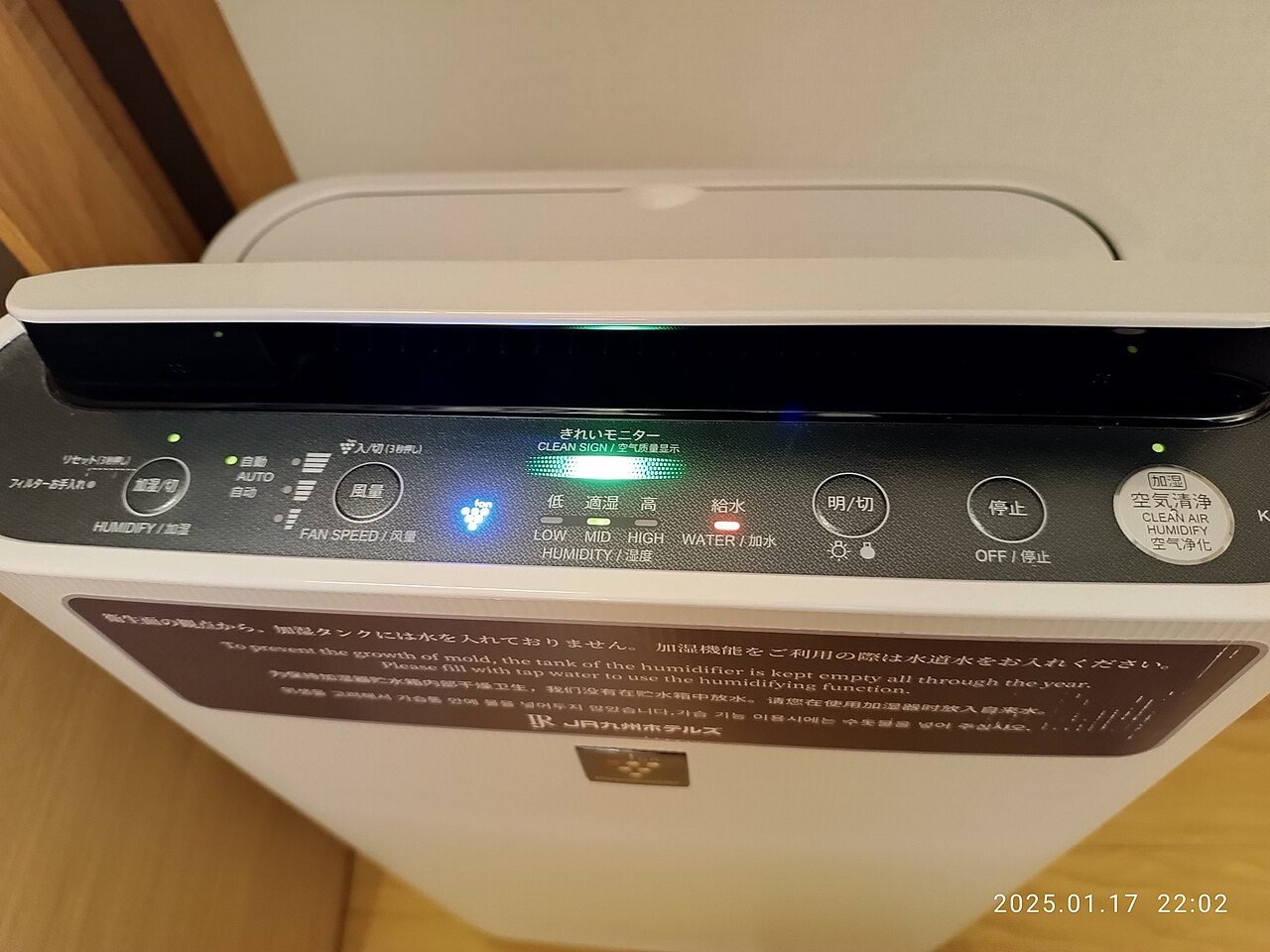
They sit side by side in the same store aisle, they’re often similar boxes with a fan inside, and some of them even look alike. But an air purifier and a humidifier do opposite kinds of jobs. One takes something out of the air. The other puts something in.
The short answer:
- An air purifier removes particles (dust, pollen, smoke) by pulling air through a filter. It doesn’t change how humid the room is.
- A humidifier adds water vapor to dry air. It doesn’t filter anything, and if it’s not kept clean, it can add things to the air you’d rather it didn’t.
So the question isn’t which one is better. It’s which problem you actually have.
What an air purifier does
A portable air purifier (the EPA calls them “portable air cleaners”) uses a fan to push room air through a filter that traps particles. The EPA notes that portable air cleaners often achieve a high CADR by using a HEPA filter. (US EPA, Guide to Air Cleaners in the Home) CADR, the clean air delivery rate, is the tested number that tells you how much filtered air the machine delivers.
Two things to know about the limits:
- CADR is about particles. The EPA says the CADR rating system is for particles only, and there are no widely used performance ratings for portable air cleaners designed to remove gases. (US EPA) For odors and gases, look for a filter designed for them, such as activated carbon.
- It doesn’t touch humidity. A purifier is a fan and a filter. It isn’t built to add or remove water vapor, so a dry room stays dry and a damp room stays damp.
If you’re buying one, the number to check is the smoke CADR. The EPA says to remove small particles, choose a portable air cleaner that has a high CADR for tobacco smoke. (US EPA) For sizing and a shortlist, see Best air purifiers for small apartments. For what the filter labels on the box mean, see True HEPA vs “HEPA-type”.
What a humidifier does
A humidifier evaporates or disperses water into the room to raise the relative humidity. Common home types include evaporative (a fan blows over a wet wick), steam vaporizers (water is boiled), and “cool mist” ultrasonic or impeller units (water is broken into a fine mist).
The type matters. The EPA says studies show that ultrasonic and impeller (“cool mist”) humidifiers can disperse materials, such as microorganisms and minerals, from their water tanks into indoor air, while steam vaporizer and evaporative humidifiers are not expected to disperse substantial amounts of minerals. (US EPA, Use and Care of Home Humidifiers)
That doesn’t make cool-mist units off-limits. It means the water you use and how often you clean the tank matter more with them.
What the EPA says about humidity levels
This is the part that decides whether a humidifier helps or causes a new problem. The EPA gives a range and a ceiling:
- The range: the EPA’s mold guidance says indoor relative humidity (RH) should be kept below 60 percent — ideally between 30 percent and 50 percent, if possible. (US EPA, Mold Course Chapter 2)
- The ceiling for humidifying: in its humidifier guidance, the EPA says do not humidify to indoor relative humidity levels exceeding 50 percent, because higher humidity levels may encourage the growth of biological organisms in the home. (US EPA)
In practice: if you add moisture, aim to stay at or under 50% and never let the room sit above 60%. You can’t judge that by feel, so measure it. A digital hygrometer (a humidity meter) does that job. If you already own an indoor air quality monitor, check whether it shows humidity; our guide to indoor air quality monitors explains what those devices measure.
We’re quoting the EPA’s numbers as written and not making health claims about dry or humid air. If you’re thinking of a humidifier for a medical reason, ask your doctor.
Which one do you need? Start with the symptom
| What you notice | Likely the issue | What helps |
|---|---|---|
| Visible dust settling quickly, pollen season, smoke from cooking or outdoor fires | Particles in the air | Air purifier (check smoke CADR) |
| Wildfire or bushfire smoke outside | Fine particles getting in | Air purifier, plus keeping smoke out; see our smoke guide |
| Hygrometer reads below 30% for days, often in heated winter rooms | Dry air | Humidifier, kept at or under 50% |
| Condensation on windows, musty smell, hygrometer above 60% | Too much moisture | Neither. Ventilate, fix leaks, or use a dehumidifier |
| Lingering odors | Gases, not particles | Ventilation first; a purifier with a substantial carbon filter may help |
The damp row matters. A humidifier makes a damp home worse, and a purifier won’t dry it. The EPA’s mold guidance links humidity control to moisture problems, and notes that low humidity may also discourage pests (such as cockroaches) and dust mites. (US EPA)
When you need both
It’s common to want both in winter: heated air indoors can read dry, and the same closed windows keep dust and cooking particles around. Running both is fine. A few practical points:
- Put them apart. Don’t point a mist humidifier straight at the purifier’s intake. Damp filters are not what you want.
- Start with the hygrometer. Run the humidifier only until the room reaches your target, not around the clock. Some units have a built-in humidistat; check the reading against a separate meter.
- Mind the water in cool-mist units. Given the EPA’s note that ultrasonic and impeller units can disperse minerals from the tank, follow its advice on low-mineral water (see below).
Combo units (purifier and humidifier in one box) exist. Judge each half separately: the purifier half on a published smoke CADR, the humidifier half on type, tank access for cleaning, and whether it has a humidistat. If the brand doesn’t publish a CADR, treat the “purifier” claim as unverified.
Humidifier care: the EPA’s checklist
A humidifier is only as clean as its tank. The EPA’s guidance for portable units:
- Water: use water with low mineral content, such as distilled water, to prevent releasing minerals into the air. (US EPA)
- Daily: empty the tank, wipe all surfaces dry, and refill the water in portable humidifiers daily to reduce any growth of microorganisms.
- Every third day: clean portable humidifiers every third day to reduce the buildup of scale and microorganisms. Unplug the unit first.
- Cleaning agents: if you use a cleaning or disinfecting agent to clean your humidifier, rinse the tank thoroughly to avoid releasing chemicals into the air.
- Console and whole-house units: follow the manufacturer’s directions.
Before you buy, picture doing that routine. A tank with a wide opening you can reach into with a brush is far easier to keep up with than one with a narrow neck.
Purifier care, briefly
The purifier’s maintenance is simpler but not optional. The EPA says that if a filter is dirty and overloaded, it won’t work well. (US EPA) Check the replacement filter’s cost and availability before you buy the machine, not after.
What we’d buy first
- If your main concern is smoke, dust or pollen: a HEPA air purifier with a published smoke CADR sized to your room. Browse HEPA air purifiers on Amazon (US).
- If your hygrometer confirms dry air: an evaporative or steam humidifier you can clean easily, given the EPA’s note on mineral dispersal from cool-mist types. Browse evaporative humidifiers on Amazon (US).
- If you’re not sure: a hygrometer first. It tells you whether you need a humidifier at all, or whether a dehumidifier would serve you better. Browse indoor hygrometers on Amazon (US).
How we wrote this
- Humidity ranges and care steps are quoted from the US EPA and linked where they’re used. We haven’t added ranges from other sources.
- We don’t name or rank products here. Our small-apartment purifier guide does, using published smoke CADR.
- We make no health or medical claims. Purifiers filter particles; humidifiers add moisture. Neither treats anything.
- We haven’t tested any units. Brand claims, such as a combo unit’s “purifying” feature, are the brand’s until a CADR backs them up. More on our approach: How we judge green claims.