
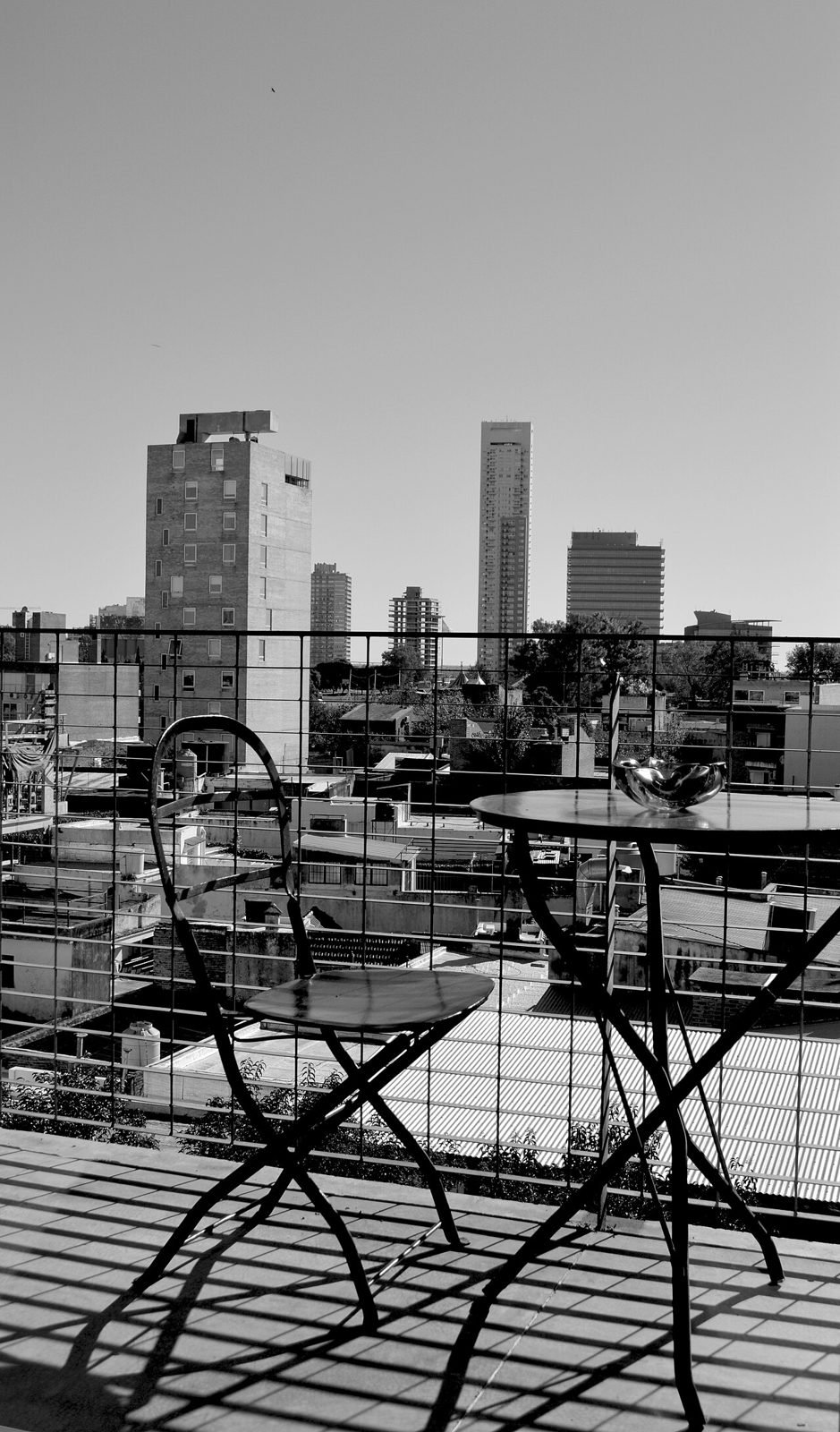
A balcony the size of a parking space can still be the best seat in the house: somewhere to drink coffee, grow herbs and get fresh air without leaving home. The trick, for renters, is setting it up with things you can take with you and that don’t break any rules.
That last part matters. Balcony rules vary by building, landlord, homeowners’ association and city. What’s fine in one building can breach a lease or a local fire code in the next. So before anything else:
First, check the rules
Read your lease and any building rules, and ask the building manager if something isn’t covered. Things that are commonly restricted:
- Grills and open flames (more on this below).
- Anything attached to the building: screws in walls or railings, awnings, satellite dishes, mounted lights.
- Items hung over the railing, such as planters on the outside, laundry or flags.
- Weight: large planters full of wet soil, water features, hot tubs. Ask about load limits for anything heavy.
- Privacy screens and reed fencing, which some buildings treat as a change to the façade.
- Storage: bikes, boxes and furniture you don’t use.
If in doubt, ask in writing and keep the reply. It’s also worth photographing the balcony before you move anything in, for your move-out inspection.
Grills: read this before you buy
Many people’s first idea for a balcony is a barbecue. Here, we only repeat what the US fire safety agencies say:
- The NFPA advises: place the grill well away from the home, deck railings, and out from under eaves and overhanging branches. (NFPA)
- The US Fire Administration’s outdoor fire safety advice is: do not store or use a grill on a porch or balcony. (USFA)
Many buildings and local fire codes also set their own rules on grills, including electric models. Check your lease and your local fire department’s guidance before buying any kind of grill for a balcony. We’re not giving our own grill-safety advice beyond that.
Plants that suit a small space
Plants make the biggest difference for the least floor space. A few principles:
- Check your light. Watch the balcony for a day. How many hours of direct sun does it get, and when? Herbs like basil and rosemary want sun; ferns and many leafy houseplants prefer shade.
- Go up, not out. Railing planters (hung on the inside of the railing, if allowed), tiered plant stands and hanging baskets keep the floor clear.
- Use lightweight pots. Fiber, fabric grow bags and plastic weigh less than terracotta and ceramic, which helps with weight limits and with moving out.
- Self-watering planters have a reservoir that helps on hot, windy balconies, where pots dry out quickly.
- Mind the drip. Use saucers or trays so water doesn’t run onto the balcony below. Your downstairs neighbors will thank you.
- Wind. Higher floors can be windy. Choose low, sturdy plants and heavier bases, and bring light pots in before storms.
Edible ideas for a sunny balcony: herbs, salad leaves, cherry tomatoes and chilies in containers. For shade: mint, parsley and leafy greens often cope better than fruiting plants.
Browse self-watering railing planters on Amazon (US) · Browse fabric grow bags on Amazon (US)
Got food scraps?
A balcony is one place a small worm bin or bokashi bucket can live, if it’s shaded and your building allows it. Our guide to composting in an apartment explains which method suits which space, and what each can take.
Seating that folds away
For a narrow balcony, choose furniture that folds or stacks:
- A folding bistro set (a small table and two chairs) is the classic.
- A drop-leaf or rail-mounted bar table that clips onto the inside of the railing, if your building allows it.
- Floor cushions or a weatherproof pouf for a balcony too small for chairs. Bring them in when it rains.
- A storage bench doubles as seating and somewhere to keep cushions dry.
Measure before you buy, including the door swing and the path to it. Leave a clear route out.
Browse folding bistro sets on Amazon (US)
If you’re picking furniture, a durable piece you’ll keep through several moves usually beats a cheap set you’ll replace. Our buy-less outdoor gear guide applies the same idea to outdoor gear.
Shade and privacy without drilling
- A freestanding umbrella with a weighted base, sized to the space. Close it in wind.
- A tension-rod shade sail or privacy screen, if your building allows it. Many attach with ties to the railing rather than screws.
- Tall plants in pots, such as grasses or bamboo in a container, make a soft screen. Containers keep spreading plants contained.
- Outdoor curtains on a tension rod for covered balconies.
Browse balcony privacy screens on Amazon (US)
Lighting
- Solar string lights or lanterns need no outlet. They depend on enough daylight on the panel, so a north-facing or heavily shaded balcony may not charge them well.
- Rechargeable lanterns work anywhere and come inside to charge.
- Plug-in outdoor-rated lights, if you have an outdoor outlet. Use only products rated for outdoor use.
Keep lights pointed down and away from neighbors’ windows.
Browse solar string lights on Amazon (US)
The floor
An outdoor rug or interlocking deck tiles can make a concrete slab feel like a room. Choose ones that let water drain, and lift them now and then so the surface underneath can dry. Check your lease before laying anything that covers the whole floor.
When the air outside isn’t great
A balcony is less appealing on smoky days. If wildfire or bushfire smoke is in your area, check the air quality before sitting out, and see our guide to keeping indoor air cleaner during smoke events. If you run a purifier indoors, our air purifier vs humidifier explainer covers what it does and doesn’t do.
A move-out-friendly checklist
- [ ] Read the lease and building rules; ask about anything unclear, in writing.
- [ ] No grill unless the building and local fire rules clearly allow it.
- [ ] Nothing screwed into walls, floors or railings without permission.
- [ ] Planters inside the railing, on saucers, light enough to move.
- [ ] Furniture that folds, stacks or doubles as storage.
- [ ] Lights that are solar, rechargeable or outdoor-rated.
- [ ] A clear path to and from the door.
- [ ] Photos of the balcony before and after you set up.
How we picked
- We suggest product types that renters can take with them and that don’t need drilling. Links are Amazon US searches; we haven’t tested specific products and don’t list prices.
- Grill guidance is quoted from the NFPA and the US Fire Administration and linked. We don’t add our own safety advice.
- Rules differ by building and city, so treat this as a checklist of questions, not permission.
- No brand paid to be included. On product claims like “weatherproof” or “eco”, see How we judge green claims.
Sources
- NFPA, Grilling safety: nfpa.org
- US Fire Administration, Outdoor fire safety: usfa.fema.gov