
Most “eco gift guides” are lists of bamboo things. Some of those gifts are useful. Plenty end up in a drawer, which is the opposite of low-waste.
Our test for a low-waste gift is simple: will it be used often, for a long time, and replace something disposable? If yes, the materials matter less than you’d think. If no, a “plastic-free” label doesn’t save it.
This guide has two parts: gift ideas that pass that test, and a short guide to reading the green claims printed on gifts and wrapping.
Before you buy: three questions
- Does the person already own one? A second water bottle is clutter, however it’s made.
- Will it replace a disposable? Rechargeable batteries replace single-use ones. A good storage container replaces plastic wrap. A decorative “eco” ornament replaces nothing.
- Can it be repaired or refilled? Gifts with spare parts, refills or a repair service tend to outlast ones you have to throw out when one piece breaks.
If you can’t answer the first one, ask, or give something consumable or an experience.
Gifts that tend to get used
We’ve grouped these by the kind of person you’re buying for. Every link is a search, not a single product, so you can compare listings. Look for a published warranty and spare parts before you choose.
For the person who’s always out the door
- An insulated stainless steel bottle or travel mug. It replaces disposable cups and bottles only if it’s carried daily, so pick a size that fits their bag and cup holder. Check whether the lid’s seals can be bought separately; lids often fail first. Browse insulated bottles on Amazon (US)
- A rechargeable headlamp or flashlight, for walks, power cuts and camping. USB charging means no drawer of half-dead batteries. Browse rechargeable headlamps on Amazon (US)
For the home cook
- A cast iron or carbon steel pan. With basic care, these can be re-seasoned rather than replaced when the surface wears. Browse cast iron skillets on Amazon (US)
- Glass or stainless food storage containers to cut down on cling film and takeout tubs. Glass lets you see what’s inside, which helps leftovers get eaten. Browse glass storage containers on Amazon (US)
- A knife sharpener or whetstone. It keeps a knife they already own in use. Browse whetstones on Amazon (US)
Thinking bigger? A portable induction burner can be a renter-friendly way to try induction; see induction cooking for renters.
For the gadget drawer
- Rechargeable AA/AAA batteries and a charger. One of the clearest swaps: a set that’s recharged many times replaces a lot of single-use cells. Ask whether they already have a charger. Browse rechargeable batteries on Amazon (US)
- LED bulbs, if they still have older bulbs. The US Department of Energy says LEDs use at least 75 percent less energy than incandescent bulbs and last 25 times longer. (US DOE, PDF) Not glamorous, but it’s a useful gift for a new renter.
- An indoor air quality monitor, for someone who worries about smoke or stuffy rooms. See our guide to air quality monitors for what they can and can’t tell you.
For the outdoors person
- A gear repair kit: repair tape for jackets and tents, a needle and heavy thread, spare buckles and cord locks. It keeps the gear they already own going. Browse gear repair kits on Amazon (US)
- Secondhand or repaired gear from a brand’s own resale program. We cover the ones we could check in Buy-less outdoor gear: repair, resale and lifetime picks.
For the person with a balcony
- A self-watering planter or herb kit they’ll actually tend. Our balcony and small-space outdoor living guide has ideas that suit renters.
- A worm bin, for the right person (someone who cooks a lot and has a cool, shaded spot). Read composting in an apartment first: worms aren’t for everyone.
Gifts with no packaging at all
- An experience: a class, a museum or park membership, concert tickets.
- Your time: a cooked meal, a repair job, an afternoon of babysitting.
- Consumables they love: good coffee, local food, a refill of the soap or cleaner they already buy.
These are often the lowest-waste option on the list, because there’s nothing left to store or throw out.
Reading green claims on gifts
The holiday aisle is full of “eco”, “green” and “planet-friendly” labels. Here’s how the US rules treat them, and what to look for instead. Our full method is on How we judge green claims.
“Eco-friendly” and other broad claims
The FTC’s Green Guides say it is deceptive to misrepresent, directly or by implication, that a product, package, or service offers a general environmental benefit. (16 CFR 260.4, eCFR) In one of the Guides’ own examples, a brand name like “Eco-friendly” is treated as deceptive because it is highly unlikely that the marketer can substantiate these claims.
What to look for instead: a specific, checkable claim. “Made with 70% recycled steel” can be checked. “Kind to the planet” can’t.
“Biodegradable”
The Green Guides say unqualified degradable claims for items that are customarily disposed in landfills, incinerators, and recycling facilities are deceptive, because those places don’t let the item fully break down within a year. (16 CFR 260.8, eCFR) A “biodegradable” phone case that ends up in the trash is, in practice, trash. We explain this in more detail in What “biodegradable” and “carbon neutral” really mean.
“Compostable” wrapping, tape and cups
The Guides say it is deceptive to misrepresent, directly or by implication, that a product or package is compostable, and that a marketer should clearly and prominently qualify compostable claims if composting facilities aren’t widely available. (16 CFR 260.7, LII) Check whether the claim means home composting or industrial facilities. In North America, BPI’s Commercial Only Certification certifies that items will break down in commercial compost facilities, not in a home bin. (BPI)
Our view: a “compostable” item is only low-waste if the person receiving it can actually compost it.
“Carbon neutral” gifts
A “carbon neutral” label usually involves offsets. The Green Guides ask for proper accounting and disclosure; see our explainer. For a gift, the label tells you less than whether the thing will be used for years.
Wrapping without the waste
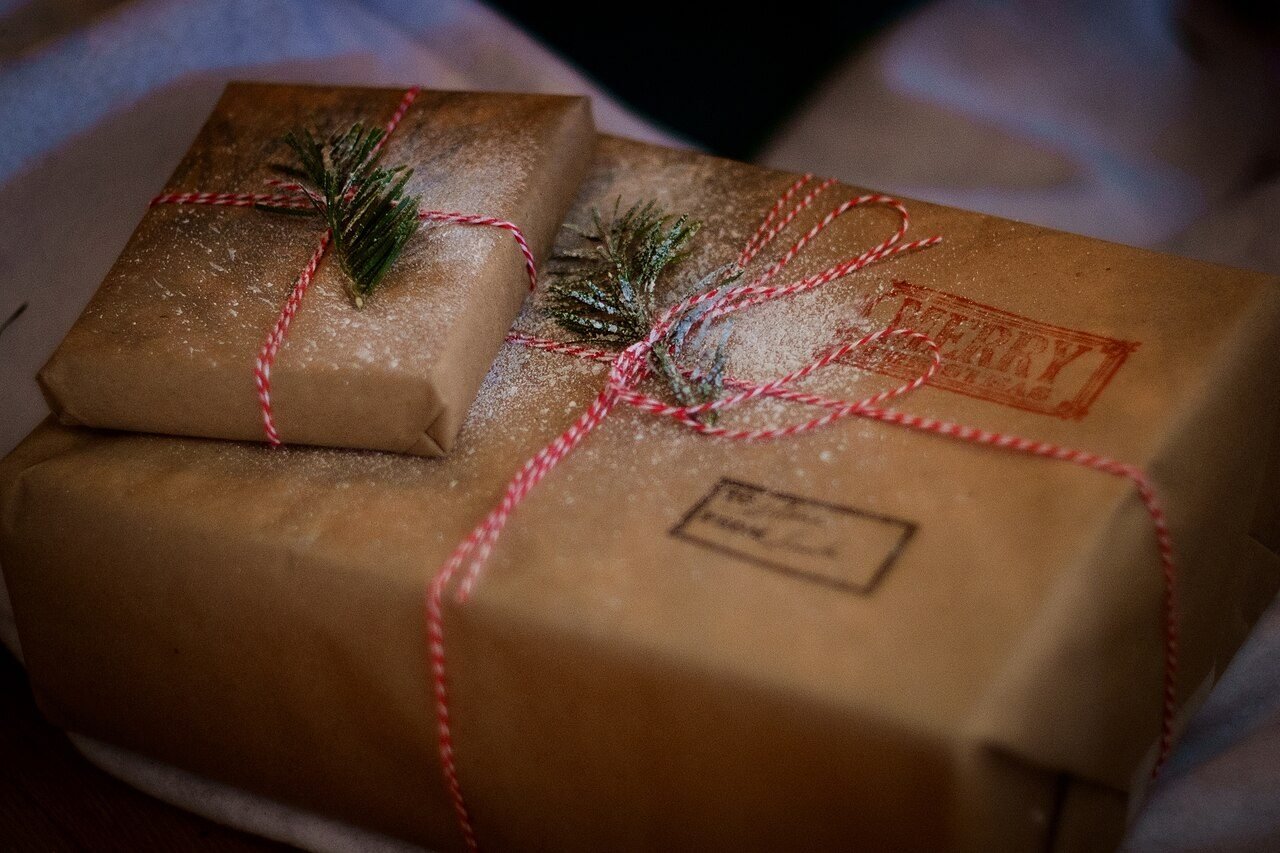
- Reuse what you have: gift bags, boxes and paper from last year, maps, newspaper, kids’ drawings.
- Fabric wrap (a scarf, a tea towel, a square of cloth tied in the Japanese furoshiki style) becomes part of the gift.
- Skip glitter, foil and plastic-coated paper if you want the paper to be recyclable. Recycling rules vary by city, so check your local program’s list for wrapping paper.
- Paper tape or string instead of plastic tape and curling ribbon.
- Combine online orders so they arrive in fewer boxes.
What we’d skip
- “Zero waste starter kits” full of items the person already owns versions of.
- Novelty gifts with a green label, such as a bamboo gadget used once.
- Anything sold mainly on a vague claim (“eco”, “green”, “conscious”) with nothing specific behind it.
- Cheap reusables that won’t last. A reusable item that breaks after a few uses can end up worse than the disposable it replaced.
Shopping during the sales? Our Black Friday green deals guide has a framework for deciding whether a discount is worth it.
How we picked
- We chose gift types, not specific products, using one question: will it be used often and replace something disposable?
- Links are Amazon US searches so you can compare listings; we haven’t tested any products, and we don’t list prices.
- Rules on green claims come from the FTC Green Guides (16 CFR Part 260), linked where they’re used. Brand claims you see on listings are the brand’s.
- No brand paid for a place in this guide.
Sources
- FTC Green Guides, 16 CFR 260.4 (general environmental benefit claims): ecfr.gov
- FTC Green Guides, 16 CFR 260.7 (compostable claims): law.cornell.edu
- FTC Green Guides, 16 CFR 260.8 (degradable claims): ecfr.gov
- BPI, Certification: bpiworld.org
- US Department of Energy, Guide to Energy-Efficient Lighting (PDF): energy.gov