
A power outage turns a quiet appliance into the thing you worry about most. If you are thinking about backup power, the first question is how many watts a refrigerator really uses, and the answer depends on which number you mean.
This guide shows how to read the labels on your own fridge, do the sizing math honestly, and avoid buying more backup gear than you need.
Quick answer: Averaged over a full day, a modern full-size fridge uses a few dozen watts. From the yellow EnergyGuide label: average watts = kWh/year × 1,000 ÷ 8,760. That average is not the same as running watts (what the compressor pulls while it is on) or a power station’s continuous output rating. Size backup energy (watt-hours) from the average, then add headroom for inverter losses, usable battery capacity and runtime. Check that the inverter’s continuous rating covers running watts and its surge rating covers the startup spike.
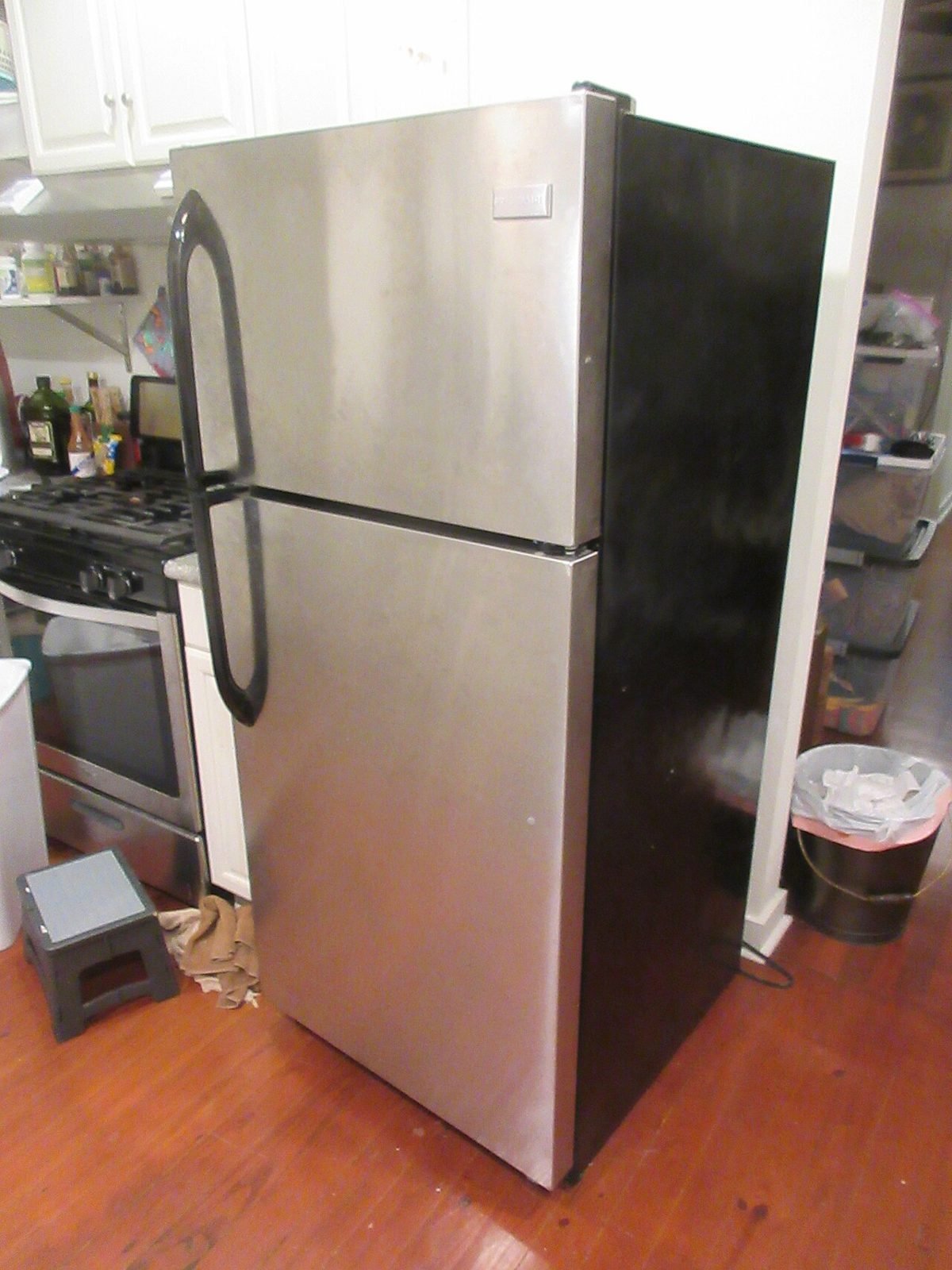
Three numbers that get confused
Most confusion comes from three different figures all being called “watts.”
- Running watts: what the fridge pulls while the compressor is on. This is often the number on a nameplate or spec sheet.
- Starting (surge) watts: a brief spike when the compressor starts. It lasts moments, but a power station or generator has to be able to supply it.
- Average watts: annual energy use spread across every hour of the year (kWh/year × 1,000 ÷ 8,760). A fridge cycles on and off, so this sits well below its running watts. Do not confuse it with a power station’s continuous output rating, which is the steady wattage the inverter can supply.
The average decides how long a battery lasts. The running and starting numbers decide whether the equipment can handle the load at all.
ENERGY STAR says certified refrigerators are “about 9 percent more energy efficient” than models that meet the federal minimum, and that top-freezer models tend to use the least energy. We could not verify a single official median wattage, so we use worked examples below instead of a headline figure. Your own label is a better guide than any general range.
How to read your own fridge
You have three places to look.
- The yellow EnergyGuide label (on new models, or on the manufacturer’s product page) shows estimated kWh per year.
- The ENERGY STAR mark means the model is certified. The ENERGY STAR product finder lists certified models.
- The rating plate inside the cabinet, or the maker’s spec sheet, lists volts and amps. Multiply them (amps × volts = watts) for a rough running-watts ceiling.
Worked example (kWh to average watts). Say a label reads 438 kWh per year. Multiply by 1,000 to get 438,000 Wh, then divide by 8,760 hours in a year. The answer is 50 W on average. A label reading 630 kWh per year works out to about 72 W.
Running watts while the compressor is on are usually a multiple of that average. Retail and hobby sites often put the ratio at roughly two to three times, but the compressor’s duty cycle varies with the model, room temperature and door openings, so treat any ratio as a rough guess and check your own unit.
Label and spec-sheet cheat sheet
| Metric | What it means | How to find it | Why it matters for backup |
|---|---|---|---|
| Annual kWh | Estimated energy use over a year | EnergyGuide label or maker page | The starting point for average watts and daily Wh |
| Average watts | kWh/year × 1,000 ÷ 8,760 | Calculate from the EnergyGuide annual kWh | Sets how many watt-hours you need for runtime |
| Running watts | Draw while the compressor is on | Spec sheet, nameplate, or a plug-in meter | Must sit under the power station’s continuous output |
| Starting (surge) watts | Brief spike when the compressor starts | Rarely printed; ask the maker, or use a meter that records peak watts | Must fit under the inverter’s surge rating |
| Amps | Current draw at rated voltage | Rating plate inside the fridge | With volts, gives a running-watts estimate |
| Voltage | Supply voltage, typically about 115-120 V in US homes | Rating plate | Needed for the amps × volts math |
| ENERGY STAR | Certified more efficient than the federal minimum | Mark on the unit or the product finder | Lower average watts means a smaller backup system |
| Ice maker / through-door features | Extra motors, heaters and water or ice systems | Manual and model page | Can add load; check whether they can be switched off |
Backup-sizing math, with assumed numbers
The honest approach is simple: watt-hours needed = average watts × hours you want the fridge to stay cold, plus a buffer. That buffer should cover inverter losses, the gap between advertised and usable battery capacity, extra door openings, and the runtime you actually want. Separately, confirm the power station’s continuous output covers running watts and its surge rating covers the compressor startup spike.
Here is an example. These are assumed figures for illustration, not measurements of any product:
- Average draw: 60 W (about 525 kWh per year).
- Outage you want to cover: 24 hours.
- Base need: 60 × 24 = 1,440 Wh.
- Buffer of about 25 percent for inverter losses and extra door openings: roughly 1,800 Wh.
- Startup spike: assume anywhere from about 600 to 1,200 W. The retail and hobby sources we found vary widely, so check your own fridge.
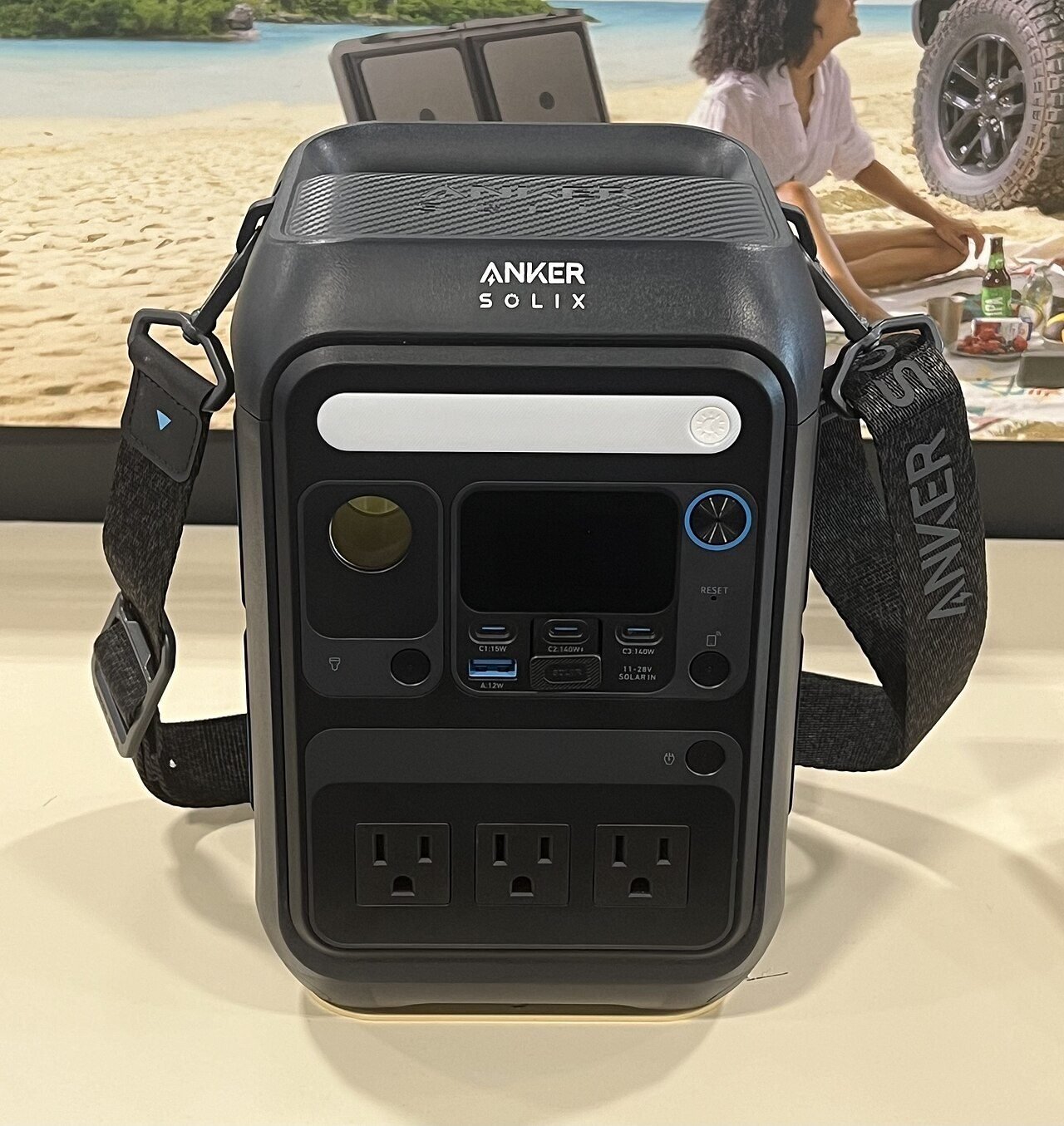
A power station whose usable capacity is comfortably above 1,800 Wh, and whose surge rating clears the startup spike, would cover that fridge. If you add a freezer, lights or a phone charger, add their watt-hours too.
Capacity labels can be quoted before conversion losses, so our guide on how to read a power station spec sheet explains rated versus usable capacity and surge ratings. For the bigger picture, see solar generator home backup, and what a power station runs shows other appliances for comparison. If you are weighing brands, EcoFlow vs Jackery covers that. This article stays on the fridge’s load.
How long food stays cold
USDA and FoodSafety.gov guidance says to keep refrigerator and freezer doors closed as much as possible. According to that guidance, an unopened refrigerator keeps food safe for about 4 hours. A full freezer holds its temperature for about 48 hours, and a half-full freezer for about 24 hours. Food should stay at 40°F or below in the fridge and 0°F or below in the freezer, and an appliance thermometer is the way to check.
Backup power does not change those limits, but it can keep the fridge cold so you are not racing the clock. Check the current guidance on foodsafety.gov before deciding what to keep or throw out.
Ways to use less power
A smaller average draw means a smaller, less wasteful backup system. Practical steps, mostly from ENERGY STAR’s refrigerator saving tips:
- Set the temperature right. ENERGY STAR says to keep your refrigerator at 35 to 38 degrees Fahrenheit. USDA advises a freezer at 0°F or below.
- Check the door seals. ENERGY STAR says to make sure the seals around the door are airtight, and to replace them if not.
- Minimize door-open time, keep the coils clean, and leave a few inches of air space behind the fridge.
- Keep the freezer reasonably full but not packed, so air can still move. A fuller freezer also holds cold longer in an outage.
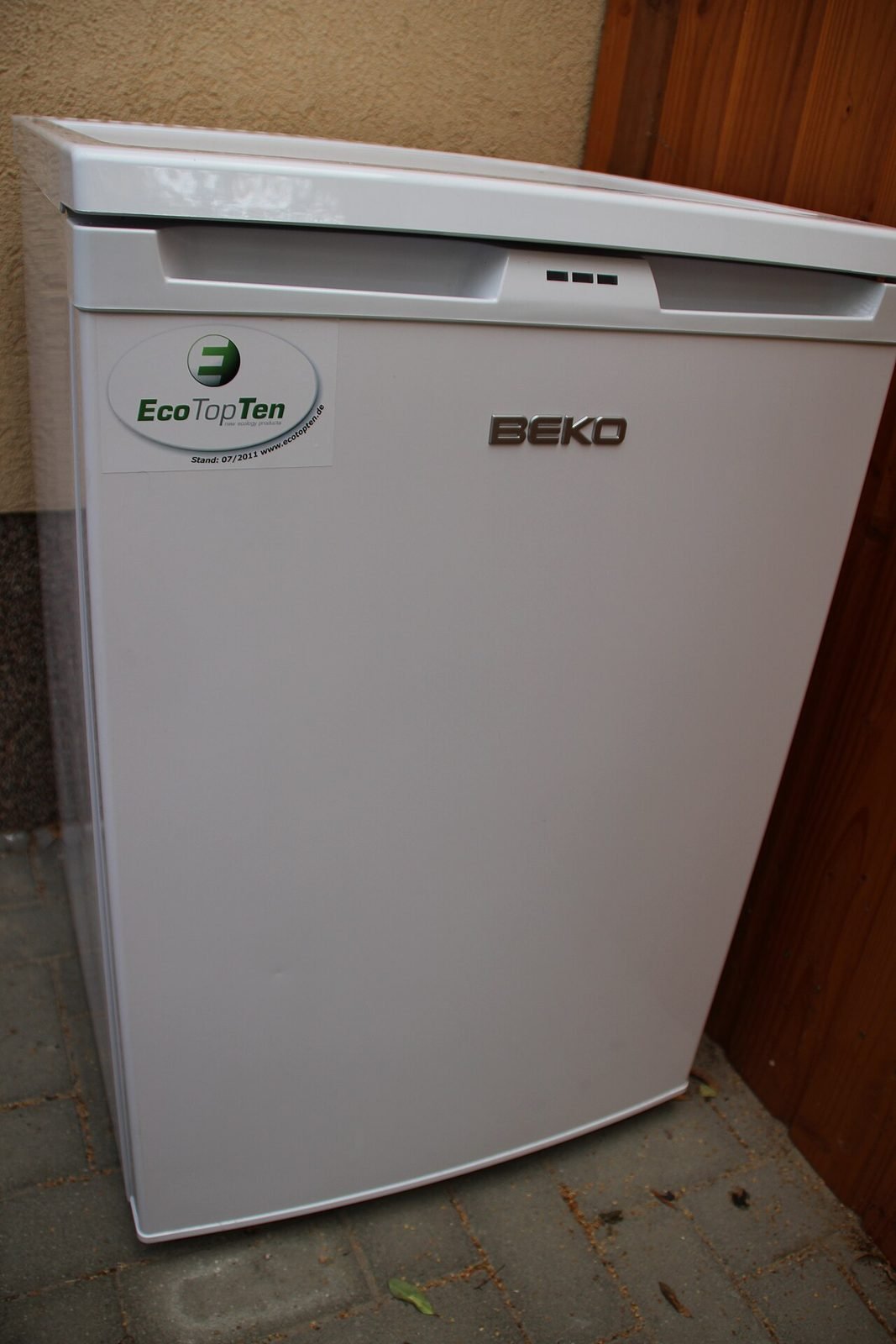
- Retire a rarely used second fridge. ENERGY STAR says to consider replacing an old fridge and recycling an old second refrigerator, and says an old refrigerator uses about 20 percent more energy on average than an ENERGY STAR model.
- Read the EnergyGuide when buying. Fewer doors means less air leakage.
Efficiency claims deserve a look at what is being measured, which is why we explain how we judge green claims. “Efficient” should come with a kWh number you can check.
Buying and measuring checklist
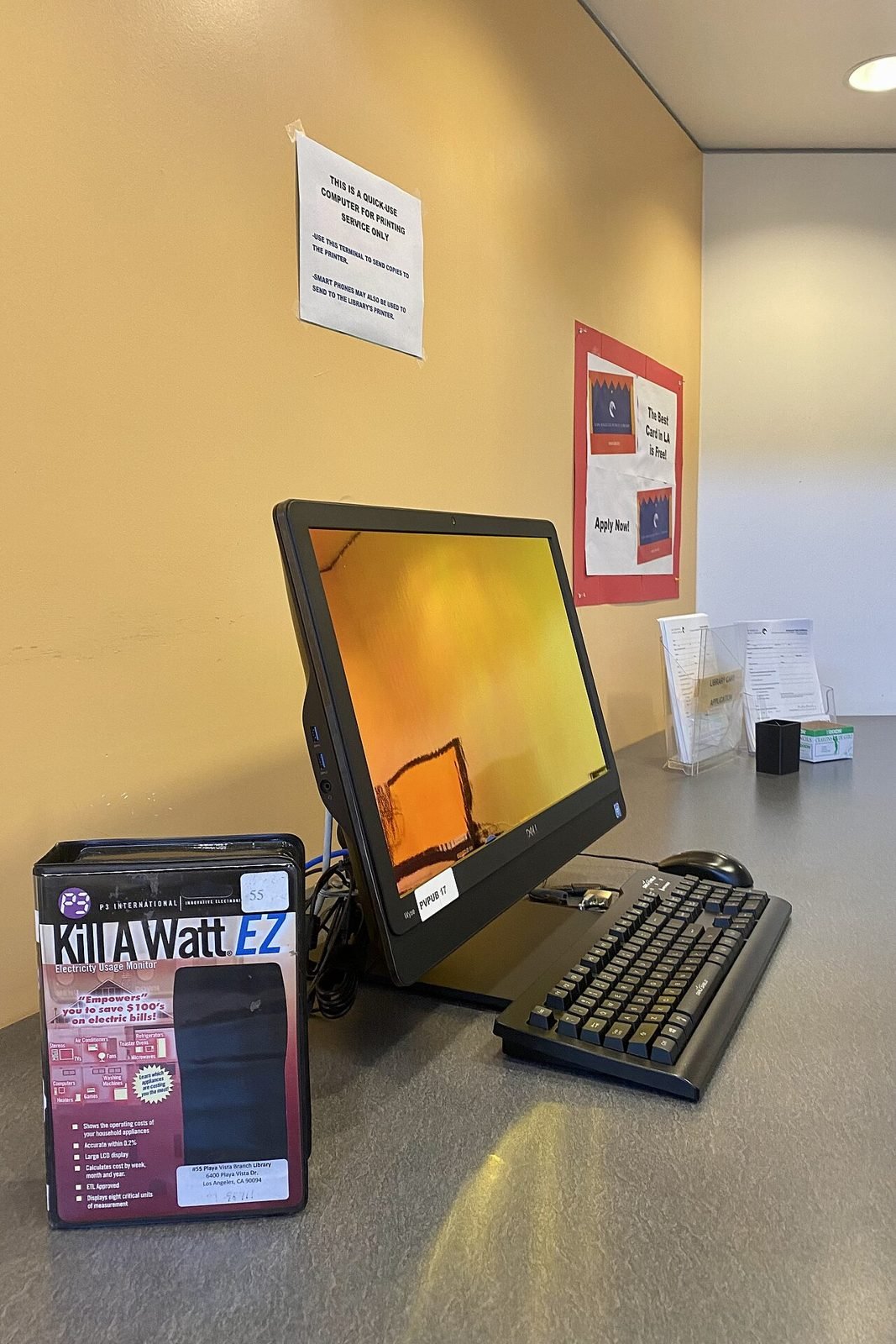
- A plug-in energy meter. The Kill A Watt P4400 from P3 International lists a large LCD display, a cumulative kilowatt-hour monitor, and display of volts, amps, watts, Hz and VA, with a 15 A maximum current. Leave your fridge on one for a day or two to see real kWh.
- A fridge and freezer thermometer. Any appliance thermometer will show whether food is staying at or below 40°F and 0°F.
- Your EnergyGuide label or the maker’s model page.
- The surge and continuous ratings on any power station label. Check both against your fridge.
- The ice maker. If your manual allows it, switching the ice maker off during an outage may trim the load.
If you shop around Black Friday, compare kWh and surge ratings, not just discounts. Our Black Friday green deals guide shows how we judge them.
See Kill A Watt plug-in energy meter on Amazon (US)
See AcuRite fridge and freezer thermometer on Amazon (US)
See Taylor analog fridge thermometer on Amazon (US)
See Taylor fridge thermometer 2-pack on Amazon (US)
Search plug-in energy meters on Amazon (US)
Search refrigerator thermometers on Amazon (US)
Confirmed vs. not
Confirmed (as of November 2026):
- ENERGY STAR advises 35 to 38°F for the refrigerator, airtight door seals, and replacing or recycling an old second fridge (energystar.gov, checked 6 November 2026).
- The Kill A Watt P4400 features above come from the maker’s page (p3international.com).
- The food-safety times come from USDA and FoodSafety.gov guidance (foodsafety.gov power-outage chart, checked 6 November 2026).
Not confirmed:
- The exact surge draw of your unit. Retail and hobby sources give wide ranges.
- Any official median wattage for ENERGY STAR refrigerators.
- Brand runtime claims, and current stock.
FAQ
How many watts does a refrigerator use on average?
It depends on the model, but you can work it out from the EnergyGuide label. A label of 438 kWh per year is about 50 W on average, and 630 kWh per year is about 72 W.
What is the difference between running and starting watts?
Running watts are what the fridge draws while the compressor is on. Starting watts are a brief spike when it kicks in, and your power source needs to be able to supply it.
How do I convert kWh/year to watts?
Multiply the annual kWh by 1,000 to get watt-hours, then divide by 8,760 hours in a year.
Can a portable power station run a fridge?
Often yes, if its continuous output covers the running watts, its surge rating covers the startup spike, and its usable capacity covers the hours you need. Check each number against your own fridge.
How long will food stay safe in a fridge during an outage?
USDA and FoodSafety.gov guidance says about 4 hours if the fridge stays closed. A full freezer holds for about 48 hours and a half-full one for about 24 hours.
How we wrote this
- We researched this topic; we did not test any product.
- Product features are quoted as the brand states them.
- No brand paid for a mention.
- Numbers labelled “assumed” are illustrations, not measurements.
Sources
- ENERGY STAR: Refrigerators
- P3 International: Kill A Watt P4400
- FoodSafety.gov: Food Safety During Power Outages
Written by the Sunshine and Fresh Air team. Last checked: 6 November 2026.