
Winter storms and grid strain make a lot of people look at their pantry and wonder whether it would hold up for a few days without power. The good news is that official guidance is simple, and you can build a plan from groceries you already eat.
This guide walks through water, food, and a few small tools, with a low-waste approach: store what you use, rotate it, and skip the dusty bucket in the garage.
Quick answer: The CDC says to store at least 1 gallon of water per person per day for 3 days, and to try for a 2-week supply if you can. Ready.gov asks for at least a several-day supply of non-perishable food you will actually eat, plus a manual can opener. Start with three days, add gradually, and rotate everything so nothing goes to waste.
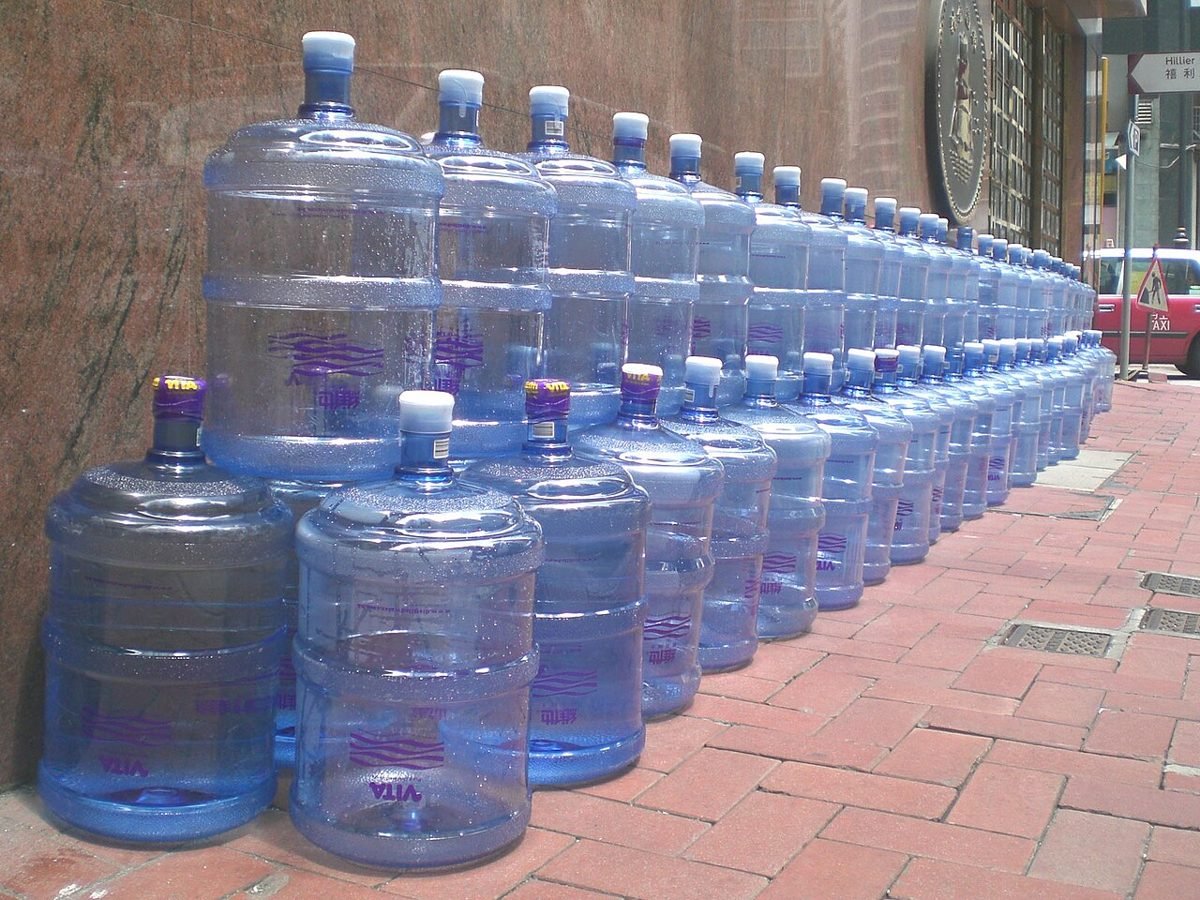
Featured photo: File:1989 HK Sheung Wan Bonham Strand VITA Distilled Water.jpg by DWatdonSHAM at Chinese Wikipedia, public domain (released by the author), via Wikimedia Commons.
Water: how much, how long, and how to store it
Ready.gov says to store at least one gallon of water per person per day for several days, for drinking and sanitation. The CDC puts numbers on it: at least 1 gallon per person per day for 3 days, and “try to store a 2-week supply if possible.” The CDC also says to store more for pregnant women, sick people, pets, or a hot climate, and Ready.gov notes that water needs can double in very hot temperatures.
For pets, Ready.gov suggests a water bowl and several days of water. Ready.gov does not give a per-pet amount, so ask your vet about your animal.
Containers matter more than most people expect. The CDC recommends food-grade water storage containers. If you fill your own, it says to use a container with a tight lid, made of durable, unbreakable material (not glass), and never one that held bleach, pesticides, or other toxic chemicals. Wash it with soap and rinse it completely. To sanitize the container itself, the CDC says to mix 1 teaspoon of unscented liquid household chlorine bleach (5%–9% sodium hypochlorite) in 1 quart (4 cups) of water, cover the container tightly and shake so the solution touches all inside surfaces, wait at least 30 seconds, pour the solution out, let the container air-dry, then fill it with clean water and a tight lid. This mixture is for sanitizing the empty container only; it is not a dose for drinking water, so do not add it to water you plan to drink.
Label each container “drinking water” with the date. The CDC says to keep it cool (50 to 70 degrees F), out of direct sunlight, and away from gasoline or pesticides. Both the CDC and Ready.gov say to replace water you filled yourself every six months. Store-bought bottled water carries its own date, so follow that.
If your stored water runs low
Boiling is the first choice. The CDC says to bring clear water to a rolling boil for 1 minute (3 minutes above 6,500 feet), then let it cool. Cloudy water can be strained through a clean cloth or coffee filter first. If you cannot boil, the CDC and EPA both describe disinfecting with regular unscented household bleach. The right drops-per-gallon depend on your bleach strength, so use the current table on the CDC page or the EPA page rather than a number from memory. Both say to let treated water stand for 30 minutes.
Chemical contamination is a different matter. The CDC notes that water with fuel, toxic chemicals, or radioactive materials cannot be made safe by boiling or disinfecting. If officials warn about that, use another source.
What a portable filter does and does not do
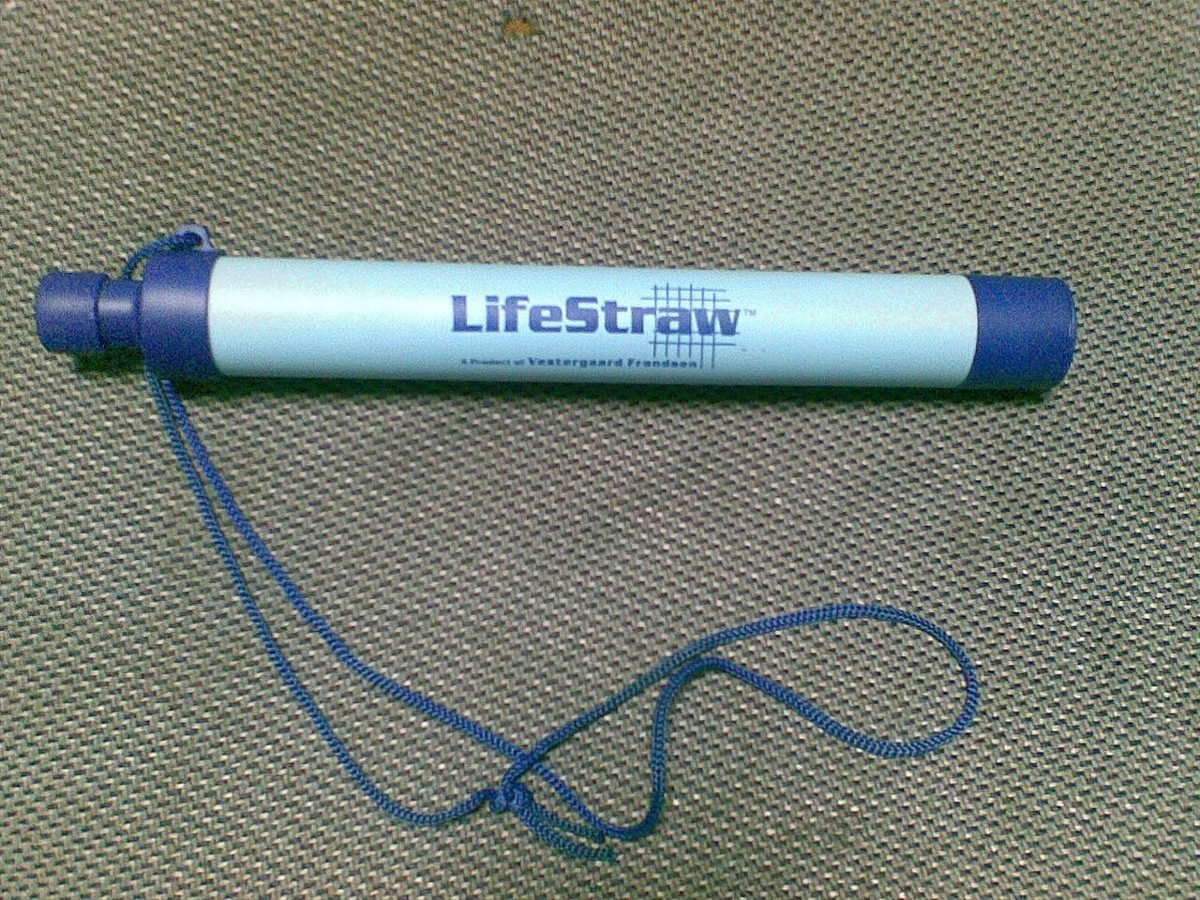
The CDC says portable filters do not remove all germs. They will not remove viruses, and the pore size must be small enough (0.3 micron or smaller for bacteria, 1 micron or smaller for parasites such as Giardia and Cryptosporidium). The CDC says to add a chemical disinfectant after filtering to deal with viruses. Straw-style filters such as the LifeStraw Personal Water Filter are described by the maker as being for bacteria and parasites, which fits that picture. They are a handy backup, not a substitute for stored water.
Food: no-cook, shelf-stable, and familiar
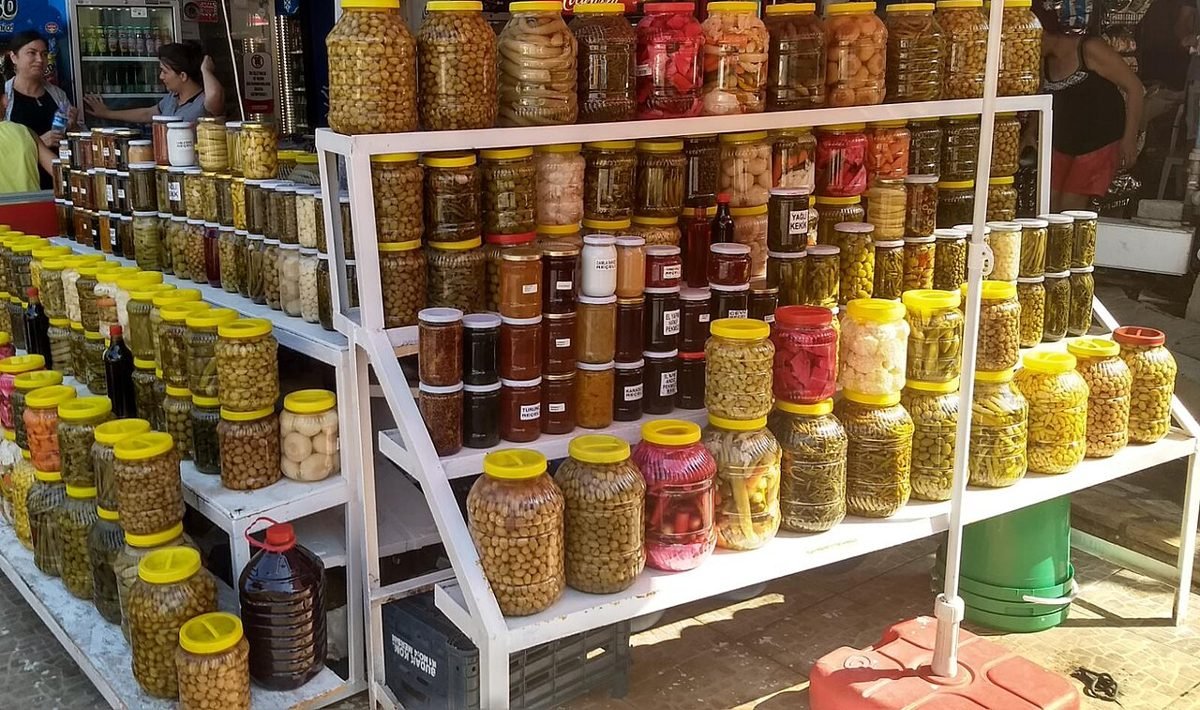
Ready.gov’s list is refreshingly ordinary: ready-to-eat canned meats, fruits and vegetables, protein or fruit bars, dry cereal or granola, peanut butter, dried fruit, canned juices, non-perishable pasteurized milk, and comfort foods. Its advice is “choose foods your family will eat,” and to remember any special dietary needs. Include a manual can opener and eating utensils.
For infants, Ready.gov suggests ready-to-feed formula; if you must mix powder, use bottled or boiled water as a last resort. For pets, keep several days of food in an airtight, waterproof container, per Ready.gov.
Fridge and freezer food needs its own plan. Ready.gov says an unopened refrigerator keeps food cold for about four hours, and that perishable food above 40 degrees F for two hours or more should be thrown out. For more detail, and for what a backup power source can run, see our guide to refrigerator watts and home backup. Keep the doors shut as much as possible.
A right-sized shopping list
| Item | How much / how many | Shelf life or rotation note | Low-waste tip |
|---|---|---|---|
| Drinking water | 1 gallon per person per day, 3 days minimum (CDC); 2 weeks if possible | Replace self-filled water every 6 months; follow the date on bottled water | Reuse clean food-grade jugs; use older water for plants or cleaning |
| Canned meat, fish, fruit, vegetables | Several days’ worth, then add a few cans per shopping trip | Check the printed date; skip swollen, dented, or corroded cans | Buy what you cook with, and put new cans behind old ones |
| Dry cereal, granola, crackers | A few boxes for the household | Keep in tightly closed plastic or metal containers (Ready.gov) | Decant into reusable jars to keep pests and staleness out |
| Peanut butter or other nut butter | One or two jars | Check the best-by date on the jar | Use the open jar first, then open the stored one |
| Manual can opener | One, kept with the food | No expiry; test it once a year | A sturdy one lasts for years and replaces a gadget |
| Water filter or treatment | One per person or household | Filters have a rated lifespan; read the pack | Treat a filter as a backup so you do not overbuy |
| Unscented household bleach | One small bottle | EPA says to use bleach stored at room temperature for less than one year | Buy small; use it for cleaning before it ages out |
| Pet food and water | Several days’ supply (Ready.gov) | Airtight, waterproof container; rotate with the current bag | Refill the stored container each time you open a new bag |
| Infant formula (if needed) | Ready-to-feed, several days | Follow the package date | Rotate into daily use before it expires |
What about a 90-day supply?
You may have seen searches for 90-day plans. Official storage guidance centers on at least 3 days of water, with a 2-week supply if possible, and a several-day supply of food. A longer pantry is a personal choice, not a requirement, and nothing here says you need one.
If you want to go beyond two weeks, scale up slowly. Add one or two extra items to each grocery trip, such as rice, beans, oats, canned tomatoes, or shelf-stable milk. Check three limits as you grow: storage space (cool, dry, off the floor), rotation (you must be able to eat what you store), and budget. A pantry of foods you cook with weekly is cheaper and wastes less than a stack of one-off purchases.
Pre-packed long-shelf-life kits can work for some households. If you consider one, check the calories per day it actually provides rather than the number of “servings,” look at the sodium, and ask whether your family would eat it. Shelf-life claims are the brand’s own, so treat them as claims and read the date on the package.
Power and light for cooking and staying safe
A battery or hand-crank radio keeps you informed, and our guide to emergency weather radios covers what to look for. If you want to charge phones or run small loads, see solar generators for home backup and what a camping power station can run.
Carbon monoxide deserves a firm rule. The CDC says never to use a generator inside your home or garage, even with doors and windows open, to run generators outside and more than 20 feet from windows, doors, and vents, and never to burn charcoal or use a portable gas camp stove indoors. Ready.gov likewise says charcoal grills and camp stoves are for outdoor use only. The CDC also advises a battery-powered or battery-backup CO detector.
Low-waste rotation habits
- Store what you eat, eat what you store. Build the supply from foods already in your meals.
- Label dates. Write the purchase or fill date on containers and shelf edges.
- First in, first out. New items go to the back, older ones to the front.
- Donate before expiry. Food banks may have their own rules about dates and packaging, so call first.
- Refill water containers on a six-month schedule, such as when you change smoke detector batteries.
The same habits help after a big holiday meal: our Thanksgiving leftovers guide covers USDA fridge and freezer times and what to do with a full fridge if the power goes out.
Helpful items to consider
- LifeStraw Personal Water Filter: a lightweight straw-style filter the maker positions for bacteria and parasites. Keep the CDC limits above in mind.
- Reliance Aqua-Tainer 7-gallon water container: a rigid, stackable container with a spigot, according to retailer listings. Keep it out of direct sunlight.
- OXO Good Grips soft-handled can opener: a manual opener with a stainless steel cutting wheel and a large turning knob, per the maker’s description.
- WaterBOB bathtub water storage bag: the maker says it holds up to 100 gallons, fits a standard bathtub, and is made from food-grade FDA-approved plastic for one-time use. It is a short-term option, so follow the maker’s storage times. Stock can vary.
Find LifeStraw Personal Water Filter on Amazon (US)
Find Reliance Aqua-Tainer 7-gallon containers on Amazon (US)
See OXO Good Grips can opener on Amazon (US)
Find WaterBOB bathtub water storage on Amazon (US)
Browse water storage containers on Amazon (US)
Confirmed vs. not
Confirmed against official pages as of November 2026: the CDC amounts for water (1 gallon per person per day, 3 days, 2 weeks if possible), the six-month replacement for self-filled water, boiling for 1 minute, the limits of portable filters, the CDC carbon monoxide rules, and Ready.gov’s food list, can opener advice, and four-hour refrigerator note.
Not confirmed: brand shelf-life and performance claims, how long your own outage will last, and what stores have in stock. Bleach drop amounts vary by bleach strength, so check the current CDC or EPA table.
FAQ
How much water should I store for a power outage?
The CDC says at least 1 gallon per person per day for 3 days, and to try for 2 weeks if possible. Store more for pets, illness, pregnancy, or hot weather.
How much emergency food do I need per person?
Ready.gov asks for at least a several-day supply of non-perishable food. Choose foods you will eat, and add dietary needs, infant food, and pet food as needed.
Do I really need a 90-day food supply?
Official guidance centers on several days to about two weeks. A longer supply is optional. If you want one, build it slowly from foods you already eat and rotate it.
How often should I replace stored water?
Both the CDC and Ready.gov say to replace water you filled yourself every six months. For store-bought bottled water, follow the date on the package.
Is a LifeStraw enough for emergency water?
It is a useful backup, but not a full plan. The CDC says portable filters do not remove viruses, and cannot make chemically contaminated water safe. Pair it with stored water and a boiling or disinfection plan.
How we wrote this
- We researched official guidance and maker pages; we did not test any product.
- Product features are quoted or paraphrased as the brand describes them.
- No brand paid for a mention. We may earn a commission from Amazon links.
Sources
- Ready.gov: Water
- Ready.gov: Food
- Ready.gov: Build a Kit
- Ready.gov: Pets
- CDC: How to Create an Emergency Water Supply
- CDC: How to Make Water Safe in an Emergency
- CDC: Carbon Monoxide Basics
- EPA: Emergency Disinfection of Drinking Water
- WaterBOB product page
Written by the Sunshine and Fresh Air team. Last checked: 8 November 2026.