
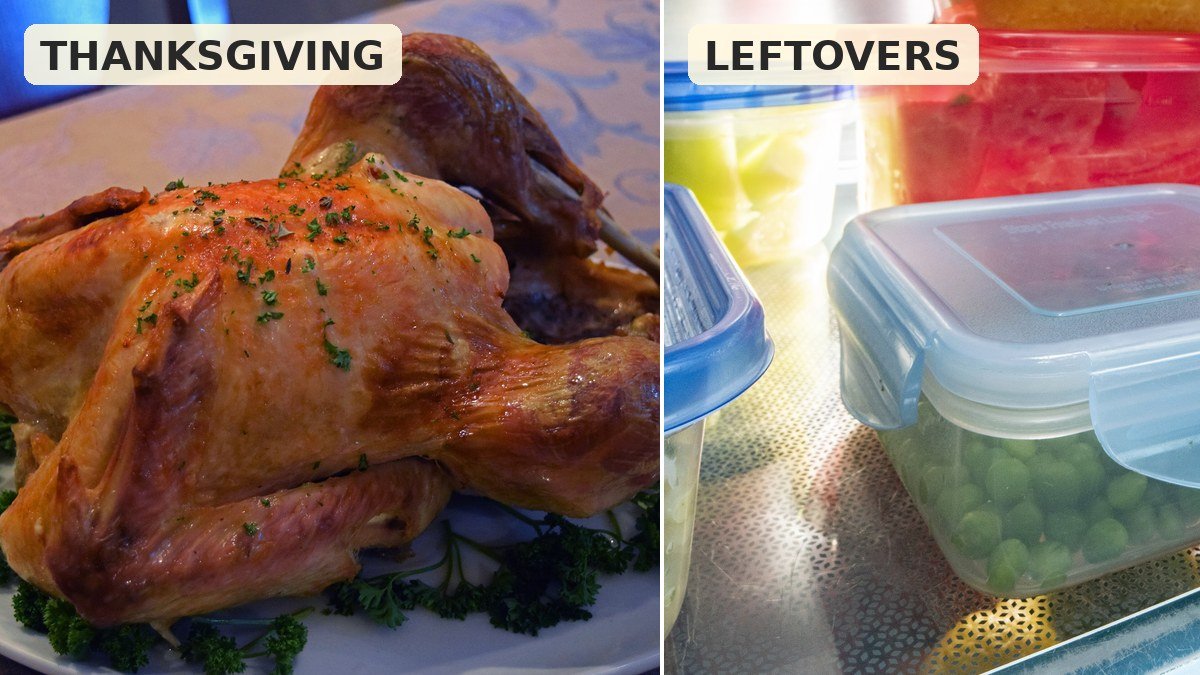
Thanksgiving is about gratitude and sharing a table, and the leftovers are part of the joy. A little planning means every plate gets eaten safely and less food ends up in the trash. Here is a calm, practical plan for your Thanksgiving leftovers, built on USDA food-safety guidance.
Quick answer: USDA guidance says to refrigerate food within 2 hours (1 hour if it is above 90°F outside), keep the fridge at 40°F or below, and eat cooked leftovers within 3 to 4 days. Freeze what you will not finish by then, and reheat leftovers to 165°F. Freezer times are about quality, not safety.
Featured photo (top), composite: “2021 roast turkey” by Mark Miller / Wikimedia Commons, CC BY-SA 4.0; “Food Safety – Cut Waste in Refrigerators (20200608-FSIS-LSC-0179)” by U.S. Department of Agriculture (USDAgov) / Wikimedia Commons, Public domain (cropped and combined; composite shared under CC BY-SA 4.0).
Store it right the first time
Most leftover trouble comes from slow cooling, not from the food itself. USDA’s Food Safety and Inspection Service (FSIS) says perishable food should be refrigerated within 2 hours of cooking or of coming off a warming appliance, and within 1 hour when the temperature is above 90°F. Plan a cleanup moment about an hour and a half after the meal. Dessert and coffee can happen while the containers cool.
FSIS also recommends dividing leftovers into shallow containers so they chill quickly, and cutting the turkey into smaller pieces before refrigerating it (slice the breast meat; legs and wings can stay whole). A big pot of gravy or a whole turkey takes a long time to cool in the middle, while a thin layer in a shallow dish cools fast.
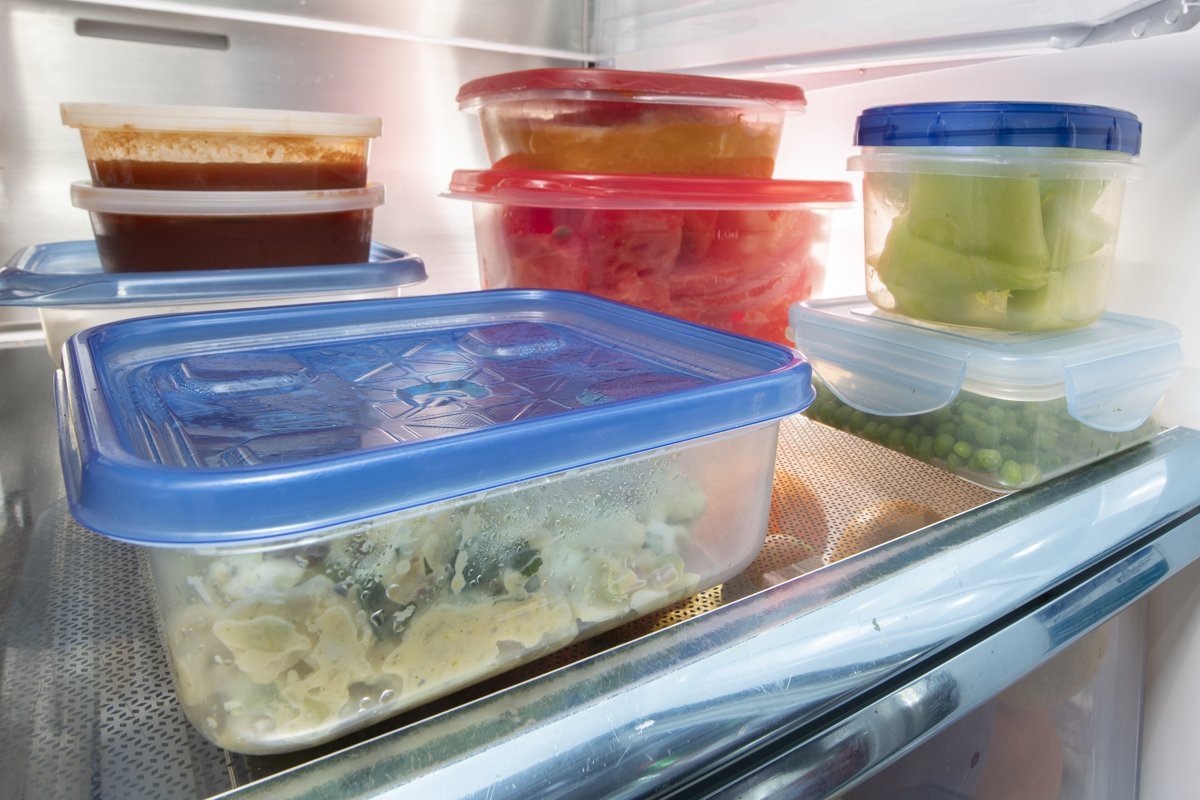
Check your fridge, too. USDA says to keep it at 40°F or below and the freezer at 0°F, and an inexpensive fridge/freezer thermometer is the easy way to know. Clear out older items before Thursday so the new containers have room to cool.
How long Thanksgiving leftovers last
For cooked leftovers, USDA’s general rule is 3 to 4 days in the fridge. FoodSafety.gov lists the same window for leftover cooked poultry and for pumpkin or pecan pie. Where we have no item-specific figure, the table uses that general rule.
| Leftover | Fridge (40°F or below) | Freezer (0°F) quality | Tip |
|---|---|---|---|
| Turkey | 3-4 days | 2-6 months for best quality (cooked poultry) | Cut into smaller pieces and store in shallow containers. |
| Stuffing | 3-4 days (general USDA guidance for cooked leftovers) | 3-4 months (FSIS general guidance for frozen leftovers) | Freeze in meal-size portions and reheat to 165°F. |
| Gravy | 3-4 days (general USDA guidance for cooked leftovers) | 3-4 months (FSIS general guidance for frozen leftovers) | USDA says to bring gravy to a rolling boil when reheating. |
| Mashed potatoes | 3-4 days (general USDA guidance for cooked leftovers) | 3-4 months (FSIS general guidance); texture may change | Freeze flat in silicone bags to thaw quickly. |
| Cranberry sauce | 3-4 days (general USDA guidance for cooked leftovers) | 3-4 months (FSIS general guidance for frozen leftovers) | Homemade sauce is a cooked leftover, so label and date it. |
| Pumpkin or pecan pie | 3-4 days after baking | About 1-2 months for pumpkin pie | Refrigerate pie within 2 hours of serving. |
| Cooked vegetables and casseroles | 3-4 days | 2-3 months (FSIS chart, leftovers including casseroles) | Cool in shallow dishes, cover, and date. |
USDA notes that food kept frozen at 0°F stays safe indefinitely. The freezer times above describe when flavor and texture are at their best. FSIS lists three safe ways to thaw leftovers: in the refrigerator, in cold water (in a leak-proof bag), or in the microwave, heating it to 165°F. You can also reheat frozen leftovers without thawing; it just takes longer.
A Thursday-to-Monday use-it-up plan
If dinner is on Thursday, the 3-to-4-day fridge window closes on Sunday or Monday. Decide on Friday what you will freeze, rather than hoping everything gets eaten.
| Day | Use first | Low-waste move |
|---|---|---|
| Thursday | Fresh dinner | Chill everything within 2 hours, label and date. Send guests home with plates. |
| Friday | Turkey sandwiches, pie | Simmer the carcass for stock. Freeze stuffing and potato portions. |
| Saturday | Soup, hash, or pot pie | Freeze anything you will not eat by Monday. |
| Sunday | Remaining turkey and sides | Eat it or freeze it today or tomorrow at the latest. |
| Monday | Last day for Thursday’s fridge leftovers | Freeze or compost what is left, and note what is in the freezer. |
Leftover ideas that use it all up
You do not need full recipes, just a few reliable ideas:
- Turkey stock and soup: simmer the carcass with onion, carrot and celery, strain, and freeze in jars or bags. Add leftover turkey and vegetables for soup.
- Pot pie: turkey, vegetables and a little gravy under a crust, baked until hot in the center.
- Sandwiches and wraps: turkey with cranberry sauce is the classic for a reason.
- Hash: diced turkey, potatoes and sides crisped in a pan.
- Stuffing and mashed potatoes: freeze in portions, then bake as a side or turn potatoes into patties.
- Cranberry sauce: stir into oatmeal or yogurt, or spread on toast.
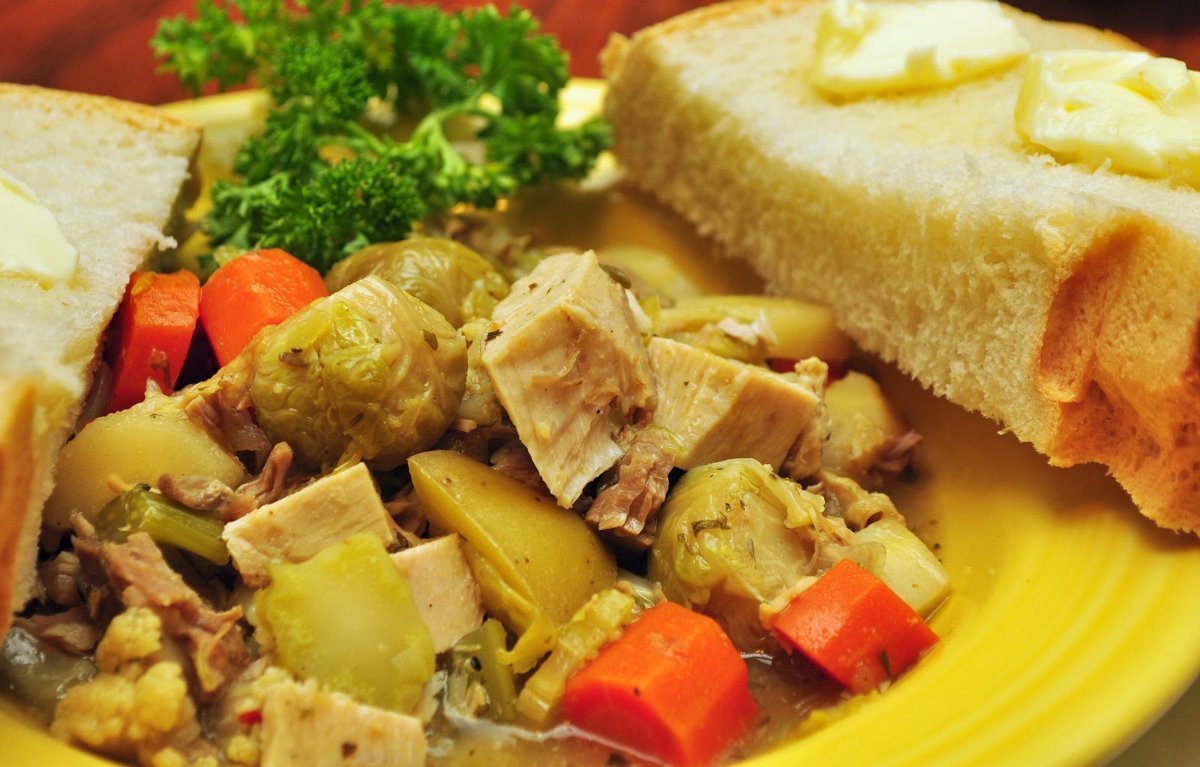
If you cook on an apartment stovetop, a pot of stock is also a good excuse to try efficient cooking. Our guide to induction cooking for renters covers options that fit rental kitchens.
A quick low-waste leftovers checklist
- Plan portions before the day, so you cook for your guests and a few planned extras.
- Follow the 2-hour rule (1 hour above 90°F).
- Use shallow containers and carve the turkey off the bone.
- Label and date every container.
- Keep the fridge at 40°F or below.
- Freeze what you will not eat within 3 to 4 days.
- Reheat leftovers to 165°F, and bring gravy to a rolling boil.
- Make stock from the carcass.
- Send guests home with food in reusable or recyclable containers.
- Compost food scraps where you can. Our apartment composting guide shows how.
Storage gear worth a look
You probably own some of this already. If you shop, here are the features to look for, by category:
- Glass food storage containers with lids: they do not hold odors and are easy to see through. Look for lids that seal well, and check the label to see whether the container is oven-safe or freezer-safe.
- Reusable silicone food storage bags: good for flat-freezing soup, stock and mashed potatoes. Look for a wide opening and a reliable seal.
- Beeswax food wraps: a reusable cover for bowls and cut pie. Manufacturers commonly say not to use them with raw meat, so use them for cooked or ready-to-eat items and follow the care label.
- A fridge/freezer thermometer: a simple dial or digital model that shows 40°F and 0°F at a glance.
See glass food storage containers on Amazon (US)
See silicone food storage bags on Amazon (US)
See beeswax food wraps on Amazon (US)
See fridge and freezer thermometers on Amazon (US)
Sharing, donating and wasting less
EPA says more than one-third of food in the US goes uneaten and is thrown away (EPA Feed It Onward page, updated June 2026). Even a small home plan helps. Plan portions, ask guests what they like to take home, and share with a neighbor who lives alone.
EPA notes that most food banks collect non-perishable foods such as canned goods, so home-cooked leftovers are usually not what they take. If you want to donate, ask your local food bank or food rescue group what they accept first. Unopened, non-perishable extras are the safest bet. For gift ideas that also waste less, see our low-waste gift guide.
If the power goes out
Holiday storms can knock out power right when the fridge is fullest. USDA says a refrigerator keeps food safe for about 4 hours if the door stays closed, and a full freezer for about 48 hours (24 hours if half full). Use an appliance thermometer to check. Our guides to emergency food and water and refrigerator watts for home backup help you plan ahead.
Confirmed vs. not
Confirmed guidance (USDA FSIS, FoodSafety.gov and EPA; checked as of 21 November 2026):
- Refrigerate within 2 hours, or 1 hour above 90°F.
- Fridge at 40°F or below, freezer at 0°F.
- Cooked leftovers last 3 to 4 days in the fridge.
- Reheat leftovers to 165°F, and bring gravy to a rolling boil.
- Frozen leftovers keep best quality for 3 to 4 months (FSIS); cooked poultry 2 to 6 months and pumpkin or pecan pie 1 to 2 months (FoodSafety.gov chart).
- Power outage times: about 4 hours (fridge), 48 hours (full freezer), 24 hours (half full).
Estimates, quality-only guidance and our suggestions: freezer times are about quality, not safety. For stuffing, gravy, mashed potatoes and cranberry sauce we use the general FSIS leftovers times, not item-specific figures. The Thursday-to-Monday plan, the product features and the beeswax note (common manufacturer guidance) are our suggestions.
FAQ
How long do Thanksgiving leftovers last in the fridge?
USDA guidance says cooked leftovers keep for 3 to 4 days at 40°F or below. If dinner is Thursday, use them by Sunday or Monday.
Can you freeze Thanksgiving leftovers?
Yes. Food kept at 0°F stays safe indefinitely, though FSIS says leftovers are best within 3 to 4 months (2 to 6 months for cooked turkey). Freeze in portions within 3 to 4 days.
How long can leftovers sit out?
USDA says no more than 2 hours, or 1 hour if it is above 90°F.
Do I need to refrigerate pumpkin pie?
Yes. Refrigerate pumpkin pie within 2 hours of serving. FoodSafety.gov lists 3 to 4 days in the fridge.
How do I reheat leftover turkey safely?
USDA says to reheat leftovers to 165°F, measured with a food thermometer. Bring gravy to a rolling boil.
How we wrote this
- We researched this from official food-safety guidance. We did not hands-on test the products.
- No brand paid for placement.
- Guidance can change, so check the sources below.
Sources
- USDA FSIS: Leftovers and Food Safety
- FoodSafety.gov: Cold Food Storage Chart
- USDA FSIS: Keep Food Safe! Food Safety Basics
- USDA FSIS: Keep Your Food Safe During Emergencies
- FoodSafety.gov: Food Safety During Power Outage
- EPA: Feed It Onward
- EPA: Food Donation Basics
Written by the Sunshine and Fresh Air team. Last checked: 21 November 2026.