
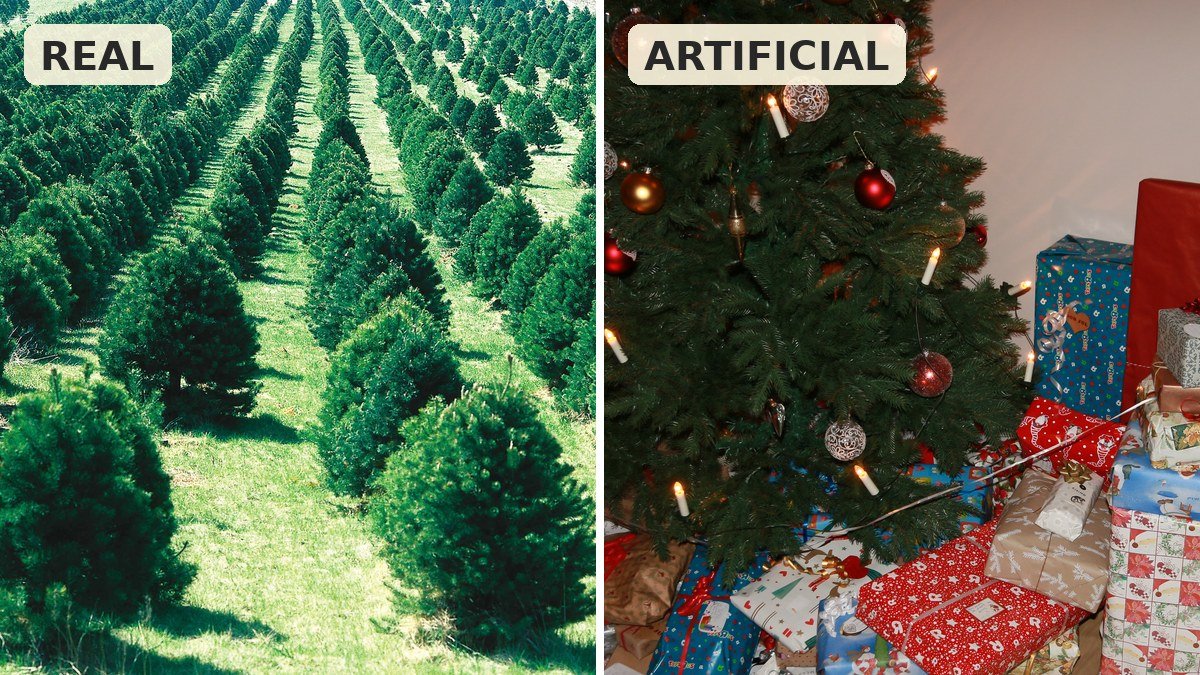
As tree shopping season starts, the same question comes up in a lot of homes: is a real or an artificial Christmas tree the greener pick? The honest answer is that both can be a reasonable choice, and the details matter more than the label.
Quick answer: In the real vs artificial Christmas tree debate, the greenest tree is usually the one you already own. If you are buying, published life-cycle studies suggest an artificial tree needs to be used for many years (estimates range from about 5 to about 20) before it beats a real tree, and a real tree does best when it is bought nearby and mulched afterward. Either way, keep it fresh or keep it long, and skip the guilt.
Featured photo (top), composite: “Christmas tree farm IA” by USDA Natural Resources Conservation Service / Wikimedia Commons, Public domain; “Christmas gifts under plastic christmas tree” by Øyvind Holmstad / Wikimedia Commons, CC BY-SA 4.0 (cropped and combined; composite shared under CC BY-SA 4.0).
What life-cycle studies say (and who paid for them)
Life-cycle assessments add up the emissions from making, shipping, using and disposing of a product. Two are cited most often, and the results depend on assumptions.
- 2018, WAP Sustainability: This assessment was commissioned by the American Christmas Tree Association (ACTA), which represents artificial tree makers. It reported a break-even point of about 4.7 years: use an artificial tree longer than that and it has a lower footprint than buying a real tree each year. Critics have noted that it left out some factors, such as carbon stored in roots left in the soil on farms.
- 2009, Ellipsos (Montreal): This study, as reported by CBC News, found real trees generally came out ahead unless an artificial tree is kept for about 20 years, or unless you would have to drive a long way to buy a real one.
Why do the numbers differ so much? Three things swing the result: how many years you keep an artificial tree, how far you drive to get a real one, and what happens to the real tree afterward. Mulching or chipping is generally better than landfill. The National Christmas Tree Association (NCTA) represents growers, so it is worth remembering that both industries have a stake. We found no single study that settles it, and that is the honest takeaway.
Real vs artificial at a glance
| Factor | Real tree | Artificial tree |
|---|---|---|
| What it is made of | A farm-grown conifer | Mostly plastic (PVC) and metal |
| Footprint | Farming, driving to get it, and disposal matter most | Mostly in making and shipping; spread over the years you keep it |
| Years to break even | Not applicable (bought yearly) | Roughly 5 to 20 years, depending on the study |
| Yearly effort | Shop, cut, water daily, dispose | Fluff, assemble, store |
| Fire safety care | Fresh tree, daily water, 3 feet from heat | Look for a “fire resistant” label, 3 feet from heat |
| Indoor air and allergies | Can bring in pollen or mold spores for some people | Can collect dust in storage |
| End of life | Mulch or recycle through local programs | Usually trash; donate if it still works |
| Best for | Anyone who enjoys the yearly ritual and has a recycling option | Anyone who will reuse it for a decade or more |
Real trees: a crop, not a forest
According to Illinois Extension, citing the NCTA, about 98 percent of Christmas trees are grown on farms rather than cut from the wild. The NCTA says it takes about seven years, on average, to grow a tree six to seven feet tall, and that growers plant one to three seedlings for each tree harvested. Buying from a nearby farm or lot keeps the driving short, which is one of the biggest levers you control.
Buying and caring for a real tree
- How early can you buy? Illinois Extension says many fresh-cut trees last three to four weeks with proper care, and NC State Extension rates a well-watered Fraser fir at four to six weeks. Buying in the last week of November or early December works well for most homes.
- Freshness test: Run a branch through your hand. Few needles should come off. Bend a needle; a fresh one snaps or feels springy.
- Fresh cut: Just before the tree goes in the stand, cut a straight 1/2-inch disk off the base of the trunk (Illinois Extension). This removes the sealed, resin-coated end so the tree can drink.
- Water: Use a stand that holds at least 1 quart of water per inch of trunk diameter (Illinois Extension), and check it every day. NC State Extension notes a cut tree drinks about that much per day. Never let the base dry out.
A stand with a large water reservoir makes the daily check easier, and a long-spout watering can or watering funnel helps you reach the stand without moving the tree.
See Christmas tree stands on Amazon (US)
See tree watering cans and funnels on Amazon (US)
Artificial trees: make them last
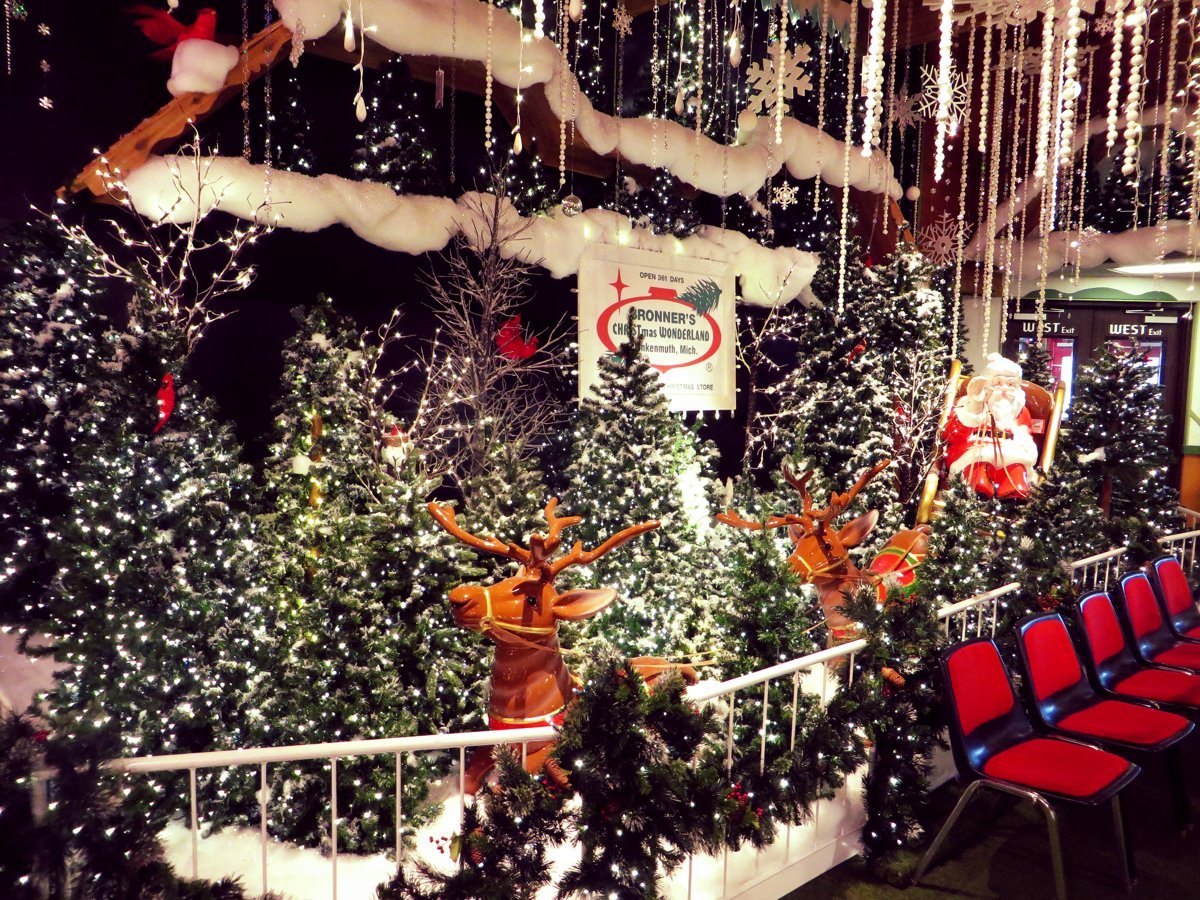
Most artificial trees are made of PVC and metal, and many are made overseas (we could not verify an exact share, so we will not quote one). They are generally not accepted in curbside recycling. That makes the years of use the whole story: the longer you keep yours, the better its footprint looks.
- Fluffing: Work from the bottom up, separating each branch tip and fanning it outward. Take it outdoors or to a garage first, since stored trees collect dust.
- Storage: Keep it in a bag or box in a dry spot, not a damp basement or hot attic.
- Safety: When shopping, the CPSC advises looking for a “Fire Resistant” label. It does not mean the tree cannot burn, only that it resists burning better.
- If you want one: A used tree from a neighbor or secondhand shop avoids a new purchase entirely.
A storage bag keeps dust and moisture off between seasons.
See artificial tree storage bags on Amazon (US)
Cost over the years, in plain terms
A real tree is a smaller purchase made every year. An artificial tree is a bigger purchase made once. The break-even logic is the same as the footprint logic: if you will use an artificial tree for many seasons, the one-time purchase tends to come out ahead; if your tastes or space change often, a yearly real tree may suit you better.
Safety and indoor air
Fire safety guidance from NIST (and the NFPA tip sheet it links to) is to keep the tree at least 3 feet from heat sources such as space heaters, candles, fireplaces and heat vents. Our space heater safety guide covers keeping that clearance in a cold house. Dry real trees burn fast, so water daily and remove the tree when it dries out. Lights matter too; see our LED vs incandescent Christmas lights comparison.
Some people notice sneezing or itchy eyes around a real tree, which may relate to pollen or mold on the branches. We could not confirm firm figures on this from a medical source, so if you have allergies, shaking the tree outdoors first is a sensible step, and an artificial tree wiped down after storage is another. Talk with your doctor if symptoms are significant.
What to do with a real tree afterward
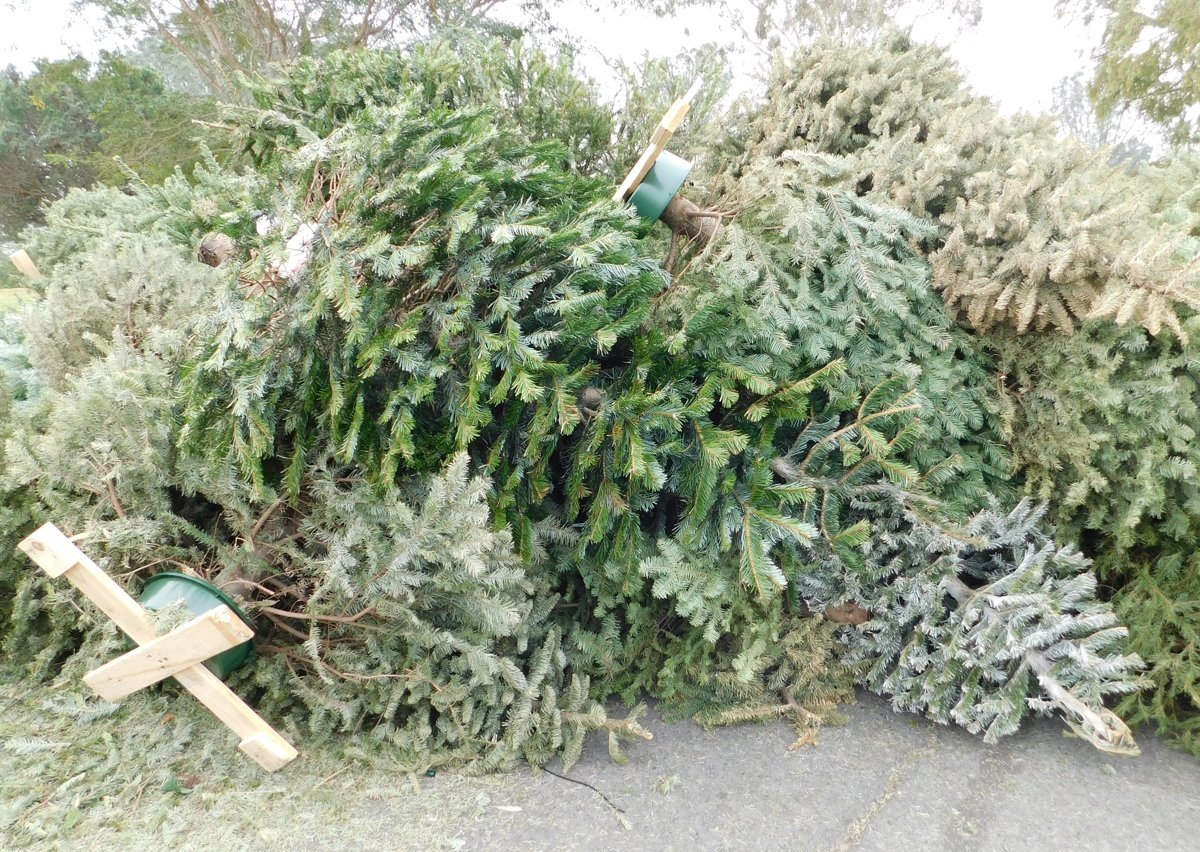
Many cities offer curbside pickup or drop-off “treecycling” programs after the holidays, and the NCTA reports thousands of local programs across the country. Check your city or county website for dates and rules. Before you go, remove the tinsel, lights, ornaments and stand. Mulched trees are often used for trails and erosion control. If you compost at home, our apartment composting guide may help with smaller trimmings.
Third options
- Living or potted tree: It can be planted later, but it can only stay indoors for a short time, and it is hard to plant in frozen ground. Check your local extension office for how long it can stay inside in your climate.
- Rented living tree: Some local nurseries offer this; availability varies.
- Tabletop tree: Smaller, less to water, and easy in an apartment.
- Used artificial tree: Gives an existing tree another home.
Which is greener in your situation?
| Your situation | Greener choice | Why |
|---|---|---|
| You will keep an artificial tree 10+ years | Artificial | Its footprint is spread over many seasons |
| You buy from a nearby farm and mulch the tree | Real | Short travel and a good end of life |
| You already own an artificial tree | Keep using it | The footprint of making it is already spent |
| Small apartment | Tabletop tree | Less material and less to dispose of |
| Allergies | Artificial (cleaned) or a tabletop tree | Avoids fresh pollen and mold; clean off dust first |
A quick low-waste tree checklist
- Keep what you have; the tree you already own is usually the greenest.
- If buying real, buy local from a nearby farm or lot.
- Do the freshness test before you pay.
- Make a fresh cut and water daily.
- Keep the tree 3 feet from heat sources.
- Use LED lights on a timer.
- For an artificial tree, look for a fire-resistant label.
- Recycle or mulch a real tree after the holidays.
- Store an artificial tree carefully so it lasts.
- Donate a working tree rather than trashing it.
For more gentle ideas, our low-waste gift guide and buy less outdoor gear article follow the same keep-it-longer approach.
Confirmed vs. not
Confirmed (as of 20 November 2026):
- The 2018 WAP Sustainability study, commissioned by ACTA, reported a 4.7-year break-even (via secondary reporting).
- The 2009 Ellipsos study reported about 20 years (via secondary reporting).
- About 98 percent of Christmas trees are farm-grown (Illinois Extension, citing NCTA), and about seven years to grow a 6-7 foot tree (NCTA).
- Keep trees at least 3 feet from heat (NIST/NFPA); a stand holding at least 1 quart of water per inch of stem diameter and a 1/2-inch fresh cut (Illinois Extension); look for a “Fire Resistant” label (CPSC).
Estimates, assumptions or industry-funded: break-even years depend on assumptions, and the ACTA study was funded by artificial tree makers; how long a cut tree lasts varies by species and care; the allergy comments are cautious general suggestions; the checklist is our suggestion.
FAQ
Is a real or artificial Christmas tree better for the environment?
It depends. Studies point to the number of years you keep an artificial tree, how far you drive for a real one, and how the real tree is disposed of. Keeping the tree you already have is usually the greenest option.
How many years do you need to keep an artificial tree?
Published estimates range from about 5 years (an industry-commissioned 2018 study) to about 20 years (a 2009 Canadian study). Longer is better.
How early can you buy a real Christmas tree?
With daily water, many fresh-cut trees last three to six weeks indoors depending on species, so late November or early December works for most homes.
Are real Christmas trees a fire risk?
A dry tree can burn quickly. Choose a fresh tree, make a fresh cut, water daily, keep it at least 3 feet from heat, and remove it once it dries out.
What do I do with my tree after Christmas?
Check your city for curbside pickup or a drop-off treecycling program. Remove lights, tinsel and the stand first. Donate an artificial tree if it still works.
How we wrote this
- Researched from official guidance and published studies; we did not test products by hand.
- No brand paid for a place in this article.
- Where sources disagree, we say so.
Sources
- The Conversation: coverage of the WAP Sustainability study (2018)
- CBC: coverage of the Ellipsos study
- Illinois Extension: Christmas Tree Facts
- NCTA: Quick Tree Facts
- Illinois Extension: Caring for Christmas Trees
- NC State Extension: Christmas Tree Care
- NIST: Holiday fire safety (links to NFPA tip sheet)
- CPSC: Dos and Don’ts of Holiday Decorating
Written by the Sunshine and Fresh Air team. Last checked: 20 November 2026.