
As heating season starts, many homes swing between two problems: dry skin and static shocks on one hand, foggy, dripping windows on the other. Both come down to the same number, indoor relative humidity. This guide explains the range to aim for, how to measure it, and how to adjust it without creating condensation.
Quick answer: The EPA says to keep indoor relative humidity below 60 percent, ideally between 30 and 50 percent. In winter, the lower half of that range is usually the safer target, because warm, moist indoor air condenses on cold window glass. Measure with a small hygrometer first, adjust slowly, and use your windows each morning as a built-in test.
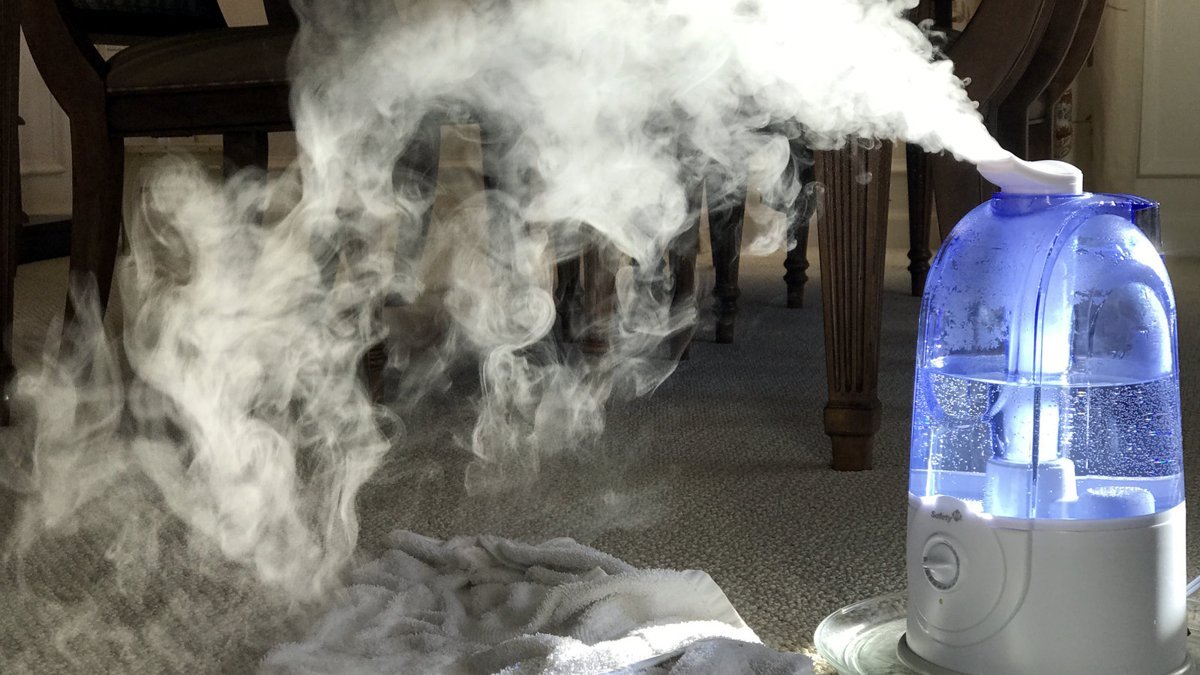
Featured photo (top): “Humidifier Action” by Bill Smith (byzantiumbooks) / Flickr, CC BY 2.0 (cropped and resized)
What is the ideal indoor humidity in winter?
The EPA’s mold guidance says to “keep indoor humidity below 60 percent (ideally between 30 and 50 percent) relative humidity.” Its humidifier guidance is more specific about the top end: do not humidify to indoor relative humidity levels exceeding 50 percent, because higher levels may encourage the growth of biological organisms in the home.
Relative humidity compares the water vapor in the air with the most the air could hold at its current temperature. Warm air can hold more water vapor than cold air, which is why the same amount of moisture feels dry in a warm room and damp in a cold one.
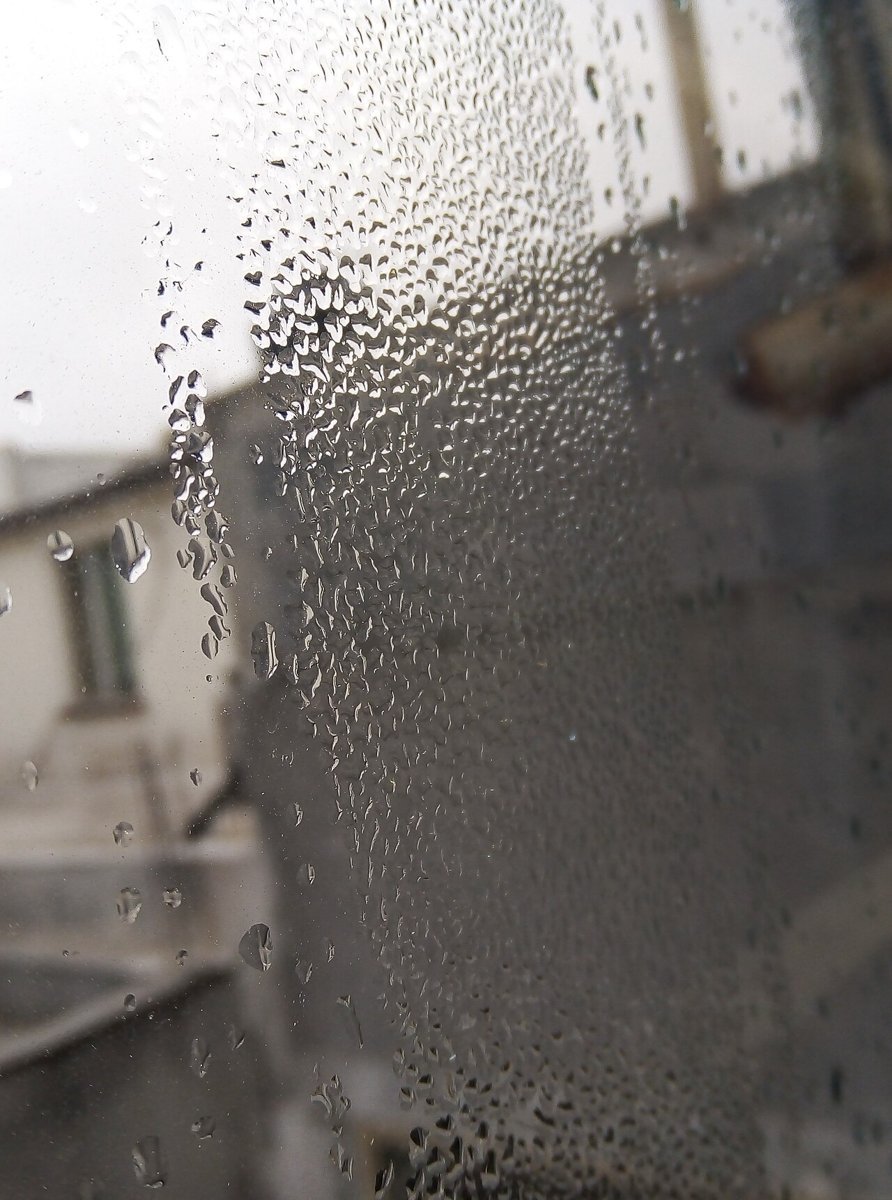
The low end matters in deep cold because of the dew point, the temperature at which air can no longer hold its moisture and water turns to droplets. Window glass is often the coldest surface in a room. If the glass is colder than the dew point of your indoor air, moisture collects on it. As the weather turns colder, the glass cools too, so an indoor humidity that was fine in October can fog windows in January. People in cold climates often run a little lower during the coldest spells for this reason. Exact thresholds depend on your windows, so we do not give a one-size-fits-all chart. Your windows will tell you.
Why winter air gets dry
Cold outdoor air holds very little water vapor. When that air leaks or is drawn into your home and is heated, it can hold far more than it carries, so its relative humidity drops. Unless you add moisture from cooking, showers, or a humidifier, heating season tends to leave indoor air drier than the rest of the year.
Signs the air is too dry or too humid
The EPA notes that people commonly use humidifiers to relieve the discomfort of a dry nose, throat, lips, and skin, and that added moisture can also help with static electricity and cracks in paint and furniture. If you have a medical concern, such as frequent nosebleeds or breathing symptoms, ask a clinician rather than relying on humidity alone.
Too much moisture shows up differently. The EPA says condensation on windows, walls, or pipes can be a sign of high humidity and should be dried quickly. Other signs are a musty smell and mold spots on walls, ceilings, or window frames. Mold and dust mites are both associated with damp indoor air, and the National Institute of Environmental Health Sciences suggests keeping humidity at or below 50 percent as part of dust mite control.
| Reading (relative humidity) | What you may notice | What to do |
|---|---|---|
| Below 30% | Static shocks, dry lips and skin, a scratchy nose or throat | Raise it gently, and recheck your hygrometer before adding more |
| 30-40% | Usually comfortable, with little condensation on glass | A good winter target, especially in deep cold |
| 40-50% | Comfortable, but windows may fog on the coldest mornings | Fine in mild weather; lower it if glass is wet |
| 50-60% | Window condensation, a stuffy feel, a possible musty smell | Above the EPA’s ideal range; ventilate, reduce moisture sources, turn the humidifier down |
| Above 60% | Wet windows, mold spots, a damp smell | Above the EPA’s limit; find and reduce the moisture source, and consider a dehumidifier |
Measure first
The EPA says relative humidity can be measured with a humidity meter, a small, inexpensive instrument sold at many hardware stores. Many digital thermometers and indoor air quality monitors include one. Our guide to indoor air quality monitors covers the options.
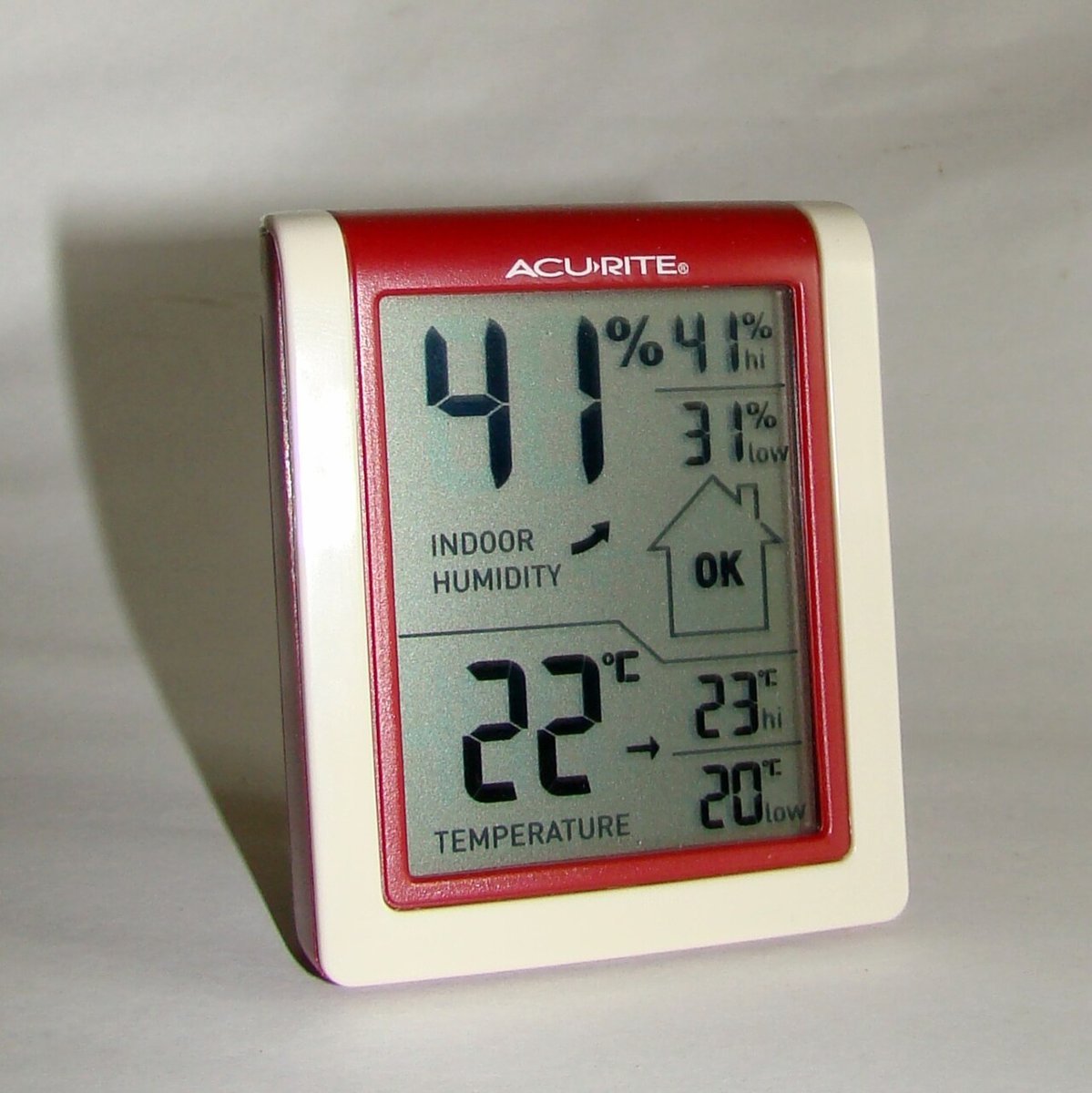
- Place it on an interior wall at roughly chest height, away from humidifiers, kettles, bathrooms, and direct heat vents.
- Check a few rooms and different times of day. Bedrooms and kitchens can differ a lot.
- Readings can vary between units, so if a number surprises you, compare two meters side by side.
Raising humidity safely
If readings sit below about 30 percent, a few low-cost habits can help before you buy anything. Dry laundry on a rack indoors, leave bath water to cool in the tub before draining it, and keep a few houseplants. Plants add only a small amount of moisture, so treat them as a bonus rather than a fix. You can also simmer a pot on the stove, but only while you are in the room, and never let it boil dry.
If you want a humidifier, the right type depends on your home and household.
| Humidifier type | How it works | Good for | Watch out for |
|---|---|---|---|
| Evaporative cool mist | A fan blows air across a wet wick or filter | Bedrooms and homes with children, since there is no hot water | Wick filters need regular replacement; fan noise; daily water changes |
| Ultrasonic cool mist | A vibrating plate turns water into fine mist | Quiet rooms | Tap water can leave “white dust” minerals on surfaces; use distilled or low-mineral water |
| Warm mist / steam | Heats water to make steam or warm vapor | People who prefer warm output | Hot water and steam can burn; keep away from children and pets |
| Whole-home (furnace-mounted) | Adds moisture to the air your furnace circulates | Larger homes where you want even humidity | Fitted by an installer; follow the manufacturer’s directions and set it lower in deep cold |
The EPA advises using water with low mineral content, such as distilled water, to avoid releasing minerals into the air. It notes that ultrasonic and impeller humidifiers can disperse minerals and microorganisms from the tank. It also advises emptying the tank, wiping surfaces dry, and refilling daily, and following the manufacturer’s cleaning directions. See our step-by-step humidifier cleaning guide. If you are weighing a humidifier against a purifier, our air purifier vs. humidifier comparison explains which does what.
Warm-mist units use hot water, and Mayo Clinic notes that hot water or steam can burn a child who gets too close. Many families with young children choose a cool-mist model and place it out of reach.
The EPA also suggests that if water condenses on windows, walls, or pictures, you relocate the humidifier, lower its humidistat setting, or use it less.
Lowering humidity and stopping condensation
If your hygrometer reads high or your windows are wet each morning, work on the moisture sources first:
- Run the bathroom fan during and after showers, and use the kitchen exhaust fan while cooking or running the dishwasher, as the EPA recommends.
- Put lids on pots, and skip drying large loads of laundry indoors on the coldest days.
- Turn the humidifier down or off instead of adding more.
- Open curtains and blinds so warmer room air can reach the glass.
- Wipe sills and frames dry so mold has less to feed on.
- Use a small dehumidifier in a damp basement; the EPA lists dehumidifiers as an option when needed.
- Seal drafts, which chill glass and frames. Our draft-proofing guide for renters has low-cost ideas.
If you use space heaters to take the chill off, see our space heater safety and efficiency guide. And if dry air has you thinking about dust, this article on air purifiers and dust sets realistic expectations.
A simple 7-day plan
- Day 1: Place a hygrometer in the main living area and the bedroom. Note morning and evening readings.
- Day 2: Check whether your windows are wet when you wake up. Wipe them and note which ones.
- Day 3: If readings are below 30 percent, add one low-cost step, such as a laundry rack or a cooled bath.
- Day 4: If you use a humidifier, fill it with distilled water, empty and refill it daily, and aim to keep the room in the 30-40 percent range.
- Day 5: If readings or windows say it is too humid, run the exhaust fans longer and open curtains by day.
- Day 6: Compare readings in a second room, or against a second hygrometer if the numbers seem off.
- Day 7: Settle on a routine. Revisit it when the weather turns much colder, since glass cools further and condensation can appear at lower humidity.
Useful gear (category-level)
These are the kinds of items that fit the steps above. Compare features such as a readable display, replaceable wick filters, and tank size, and check each product’s own instructions.
- A digital hygrometer/thermometer to measure humidity.
- An evaporative cool-mist humidifier, plus replacement wick filters.
- An ultrasonic humidifier, used with distilled water.
- A small dehumidifier for a damp basement or closet.
See digital hygrometers on Amazon (US)
See cool-mist humidifiers on Amazon (US)
See small dehumidifiers on Amazon (US)
Confirmed vs. not
Confirmed guidance (checked 15 November 2026):
- EPA mold guidance: keep indoor relative humidity below 60 percent, ideally between 30 and 50 percent; condensation on windows can signal high humidity.
- EPA humidifier guidance: do not humidify above 50 percent; use low-mineral water such as distilled; empty and refill portable units daily; follow manufacturer cleaning directions; ultrasonic and impeller units can disperse minerals.
- Mayo Clinic: hot water or steam from warm-mist units can burn a child.
Rule of thumb, our suggestion, or varies by home and climate:
- Aiming for the lower half of the range in deep cold. Exact condensation thresholds depend on window type, air movement, and room temperature.
- Houseplants, laundry racks, and cooled baths as modest helpers.
- Where to place a hygrometer, and how much meters differ from one another.
FAQ
What is the ideal indoor humidity in winter?
The EPA says to keep indoor relative humidity below 60 percent, ideally between 30 and 50 percent. In cold weather, many people aim for the lower half to avoid window condensation.
Is 30% humidity too low?
It is at the low end of the EPA’s range, not outside it. You may notice static or dry skin. If you are comfortable and your windows stay clear, there is no need to add more moisture.
Why are my windows wet in the morning?
Warm, moist indoor air is condensing on cold glass. The EPA says condensation can be a sign of high humidity. Lower the humidifier setting, use exhaust fans, and wipe the glass dry.
Should I run a humidifier all night?
You can if the room stays in range, but check with a hygrometer. Turn it down if you see condensation, and empty and refill the tank daily.
Can a humidifier cause mold?
Over-humidifying can. The EPA says humidity above 50 percent may encourage the growth of biological organisms, and unclean tanks can harbor microorganisms. Keep levels in range and clean the unit as directed.
How we wrote this
- Researched from official guidance, including EPA pages.
- We did not test products hands-on.
- No brand paid for placement.
Sources
- EPA: A Brief Guide to Mold, Moisture, and Your Home
- EPA: Use and Care of Home Humidifiers
- NIEHS: Dust Mites and Cockroaches
- Mayo Clinic: Cool-mist vs. warm-mist humidifiers
Written by the Sunshine and Fresh Air team. Last checked: 15 November 2026.